




The main difference between a shower bath vs standard bath is the dedicated showering area; shower baths feature a wider end (L-shaped or P-shaped) to allow for comfortable standing movement. A standard bath is a uniform rectangle designed primarily for reclining and soaking. For the average UK home where space is at a premium, a shower bath is often the most practical choice because it combines two essential functions into a single footprint. However, if you have a separate shower enclosure, a standard straight bath offers a cleaner, more minimalist look for the room
Choosing between a shower bath and a standard bath is one of the most common bathroom dilemmas in the UK. This decision is rarely just about style. It is usually a trade-off between space, functionality, and how you live your daily life.
In this blog,we will provide a practical comparison based on real-world use. We will look at what works best for different layouts and lifestyle needs.
What Is a Shower Bath vs a Standard Bath?
To make the right choice, you must first understand the design differences.
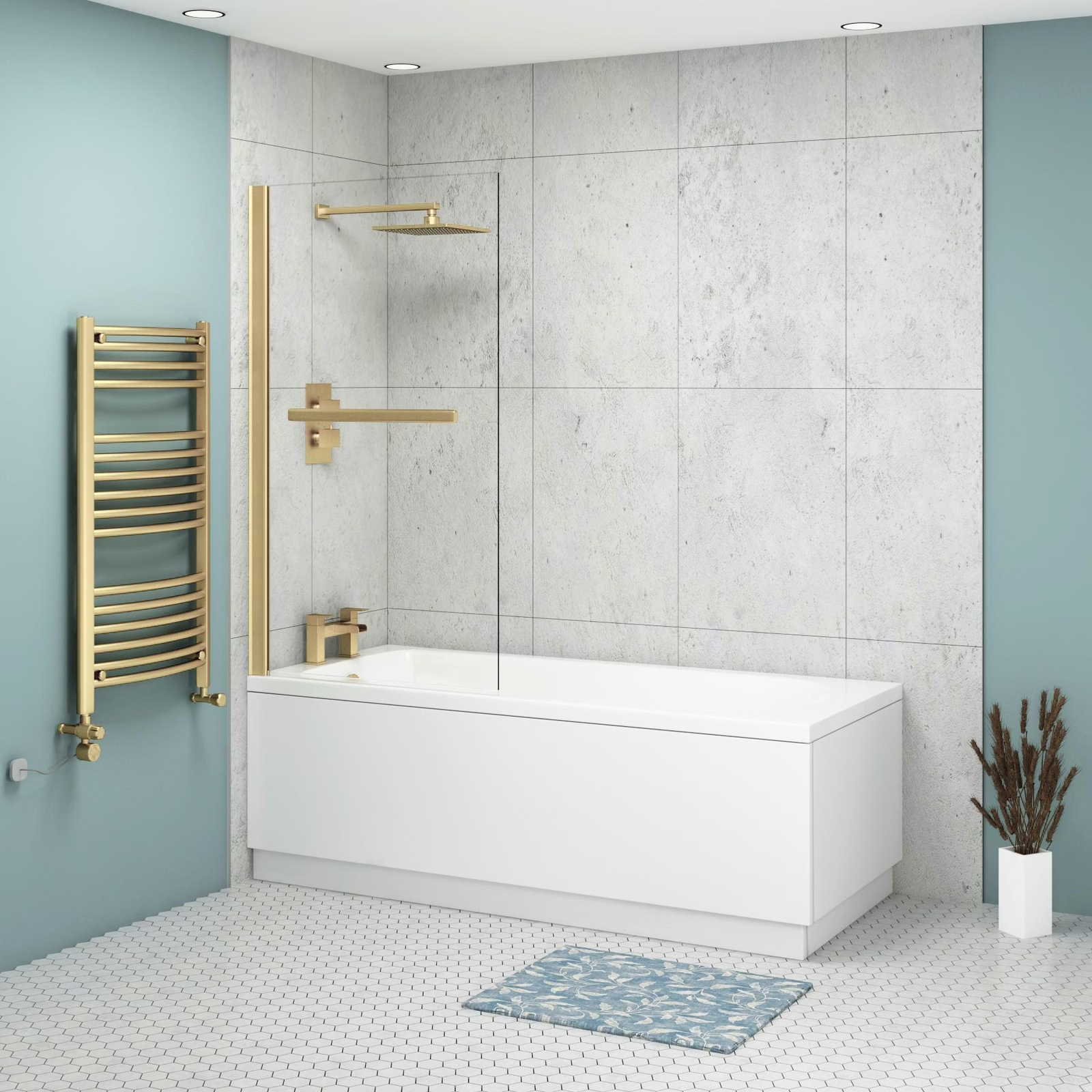
Standard Baths are often called straight baths. They are traditional, rectangular tubs with straight sides. They are designed primarily for sitting or lying down. While you can add a shower over a straight bath, the narrow width can feel restrictive when you are standing up.
Shower Baths are dual-purpose designs. They are specifically shaped to give you more room at one end. They usually come in two main styles: L-Shaped Baths that have a sharp, modern corner at the showering end. They offer a very structured look that fits well in contemporary bathrooms. On the other hand, P-Shaped Baths have a soft, curved showering area. They provide a more organic feel and are often preferred in family homes.
Space and Layout – Which Works Better?
In the UK, bath sizes usually range from 1400mm to 1800mm in length. The 1700mm bath is the standard for most homes because it fits the width of a typical bathroom.
A shower bath is the ideal solution for small bathrooms that cannot fit a separate shower enclosure. It takes up the same length as a standard tub but gives you a luxury showering experience. Because the showering end is wider (usually around 800mm to 850mm), it creates a dedicated “zone” for standing. This makes the room feel more functional without needing a larger footprint.
In comparison, standard straight baths are better if you already have a separate shower cubicle. If the bath is only for occasional soaking, you don’t need the extra width of a shower bath. Standard tubs are also easier to place in long, narrow rooms where a wider “L” or “P” shape might block the walkway to the toilet or sink.
Everyday Usability and Convenience
How you use your bathroom daily should guide your decision.
Shower baths are significantly better for busy households. In the morning, most people want a quick, powerful shower. In the evening, families with young children need a tub. A shower bath handles both routines perfectly. The wider end is great for standing, and the “P” or “L” shape still allows for plenty of water depth for a relaxing soak.
Standard baths are focused on the art of reclining. Because they have uniform sides, they often feel more symmetrical and “cosy” for a long soak. However, if you try to shower in a narrow 700mm wide straight bath, you will likely find yourself knocking your elbows against the wall or the bath screen. This can make your morning routine feel frustrating rather than refreshing.
Design and Aesthetic Impact
The look of your tub defines the “mood” of the bathroom.
Shower baths have a modern and practical appearance. Because they require a specific bath screen, they become a dominant feature in the room. They say, “this is a high-performing, modern space.”
Straight baths on the other hand offer a clean and minimalist look. They are very versatile. You can dress them up with different bath panels to change the style.
- Acrylic bath panels are budget-friendly, waterproof, and easy to clean.
- MDF bath panels are heavier and can be matched to your vanity units for a premium, fitted look.
Standard baths are often preferred by those who want a “hidden” or understated look, especially in traditional or Victorian-style renovations.
Installation and Practical Considerations
Installation is another area where these two differ.
Standard baths are the easiest to install. They fit into a standard alcove and use a basic bath waste system. Because they are symmetrical, they are very predictable for a plumber.
Shower baths require a bit more planning.
- You must ensure you buy the correct “handing” (Left or Right-handed). This depends on which corner the shower will be in.
- They require a specific bath screen that matches the L or P shape. These screens are usually heavier and need secure fixing to the wall.
- The bath panels for shower baths are also specially shaped, so you must buy the matching set to ensure a tidy finish.
Both types of baths require a high-quality bath waste to ensure water drains away quickly. This is especially important for shower baths, as the high-pressure flow from a modern shower can lead to water pooling if the waste is too slow.
Which Option Is More Practical for Small UK Bathrooms?
If you live in a typical UK terrace or semi-detached house, the shower bath has a strong advantage. Most UK bathrooms are just wide enough to fit a 1700mm tub along the back wall. In these spaces, there is rarely enough room for a separate 900mm shower enclosure.
A shower bath gives you that luxury showering space without the cost of a full wet room or a separate cubicle. It is the best way to maximize the value of a small room. A straight bath is still useful in a small room, but only if you are happy with a “standard” showering experience. If you are a landlord or planning to sell, a shower bath is often seen as a more desirable feature by modern buyers.
Long-Term Flexibility and Value
Consider your lifestyle five or ten years from now.
Shower baths offer long-term flexibility. They adapt as your family grows. They are safe for bathing toddlers and efficient for adults. This multi-purpose design ensures the bathroom remains useful even if your needs change.
Standard baths offer simplicity. There are fewer moving parts, as you don’t necessarily need a complex screen. They are also slightly easier to replace if you decide to change the room’s layout in the future. However, you can explore a high-quality range of baths to find models that bridge the gap between both worlds, such as extra-wide straight baths.
When to Choose Each Option (Clear Guidance)
To help you decide, follow these simple rules based on your space and goals:
Choose a Shower Bath if:
- You need both a shower and a bath but only have room for one.
- You have a small bathroom or ensuite.
- You have a busy family and need a versatile space.
- You want a modern, “built-in” designer look.
- You prefer a wide, comfortable area when showering.
Choose a Standard Bath if:
- You prioritize relaxation and deep soaking over showering.
- You already have a separate, dedicated shower enclosure.
- You have a very narrow bathroom where an L or P shape won’t fit.
- You want a minimalist, classic, or traditional aesthetic.
- You are on a tighter budget for installation and parts.
Conclusion
The right choice between a shower bath vs standard bath depends on your space and how you use it. For most UK homeowners, the shower bath is the ultimate “problem solver.” It turns a small room into a multi-functional sanctuary. It provides the elbow room you need for a daily shower while still allowing for a relaxing bath.
Standard straight baths remain a fantastic choice for those who have the luxury of space or a preference for simple, clean lines. They are the perfect anchor for a room dedicated to relaxation.
.