





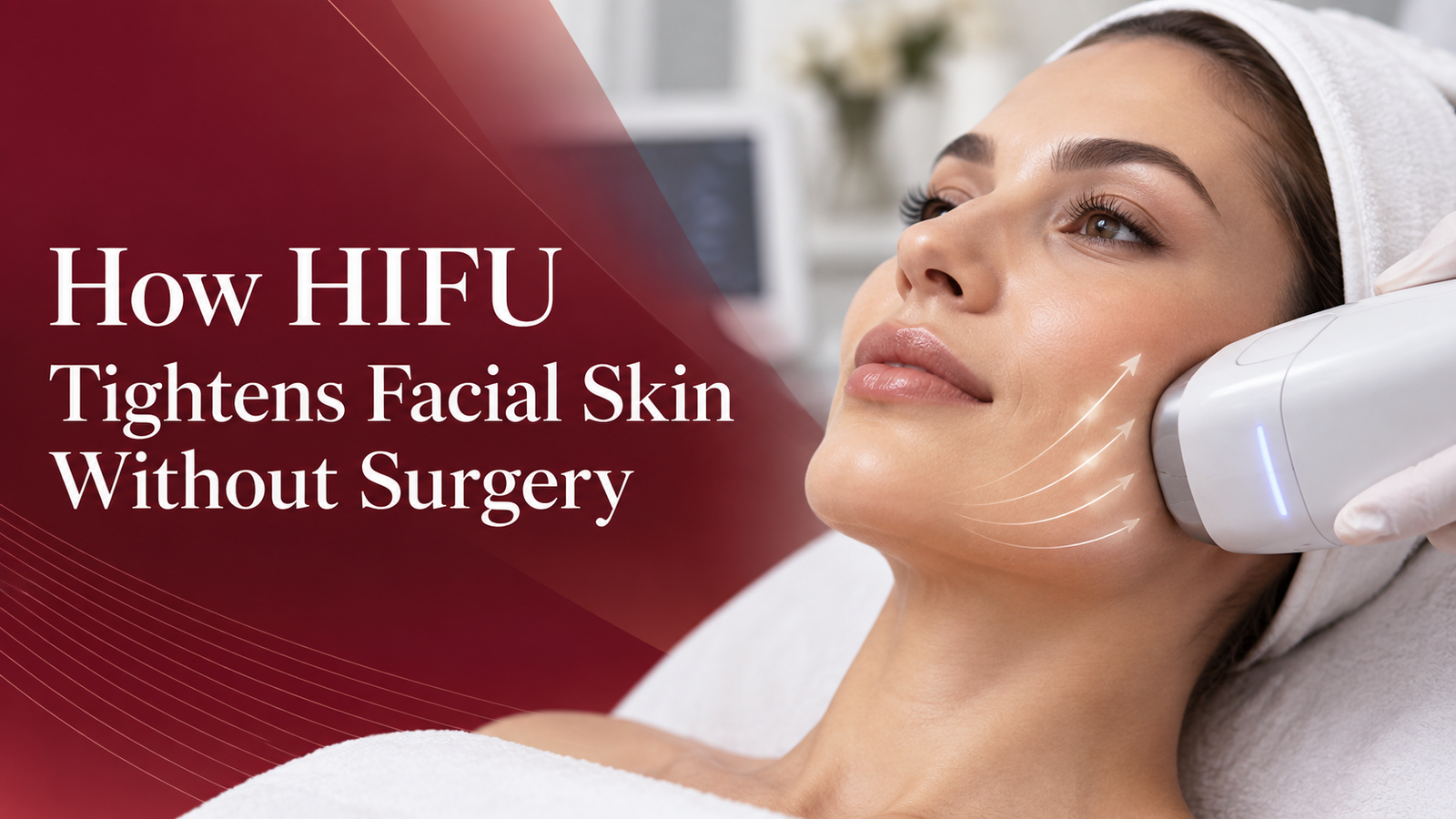
High intensity focused ultrasound, usually shortened to HIFU, tightens facial skin by heating tissue below the surface until existing collagen contracts and the body is prompted to build new collagen. The energy is aimed at precise depths inside the skin rather than spread across the surface, which is why the treatment can firm the face without any incision. Most of the HIFU devices used for the face work on this same principle: sound waves are focused to a tiny point, that point heats rapidly, and the surrounding tissue responds by remodeling itself over the following weeks.
The mechanism matters because it explains both the appeal and the limits of the treatment. HIFU does not pull skin tight the way a surgical lift removes and repositions tissue. It works from the inside by triggering a controlled repair process, so the change is gradual and moderate rather than instant and dramatic.
What actually happens beneath the skin
A HIFU transducer converts electrical energy into ultrasound waves and focuses them at a fixed depth, much as a magnifying glass concentrates sunlight to a single hot point. At that focal point the vibrating tissue generates friction, and the temperature climbs to roughly 60 to 70 degrees Celsius in a fraction of a second. This creates a small, well defined zone of thermal coagulation while the layers above and around it, including the outer skin, stay largely untouched.
Two things happen at that focal point. First, the collagen fibers already present are denatured by the heat and contract immediately, which produces a subtle initial tightening. Second, the controlled thermal injury signals the body to begin a wound healing response. Fibroblasts in the treated area ramp up production of fresh collagen and elastin, and this new tissue is what firms and lifts the skin over time.
The depth of the focal point decides which layer is treated. Higher ultrasound frequencies deposit energy closer to the surface, while lower frequencies reach deeper structures. Facial platforms typically deliver energy at more than one depth so that both the skin and the deeper support layer can be addressed in the same session.
| Focal depth | Layer reached | Main purpose |
|---|---|---|
| About 1.5 mm | Upper dermis | Improving fine surface texture and superficial firmness |
| About 3.0 mm | Deeper dermis | Stimulating collagen within the skin itself |
| About 4.5 mm | Superficial muscular aponeurotic system (SMAS) | Reaching the deep support layer that surgeons tighten in a facelift |
The SMAS is the fibromuscular layer that a surgical facelift repositions. Reaching it with focused ultrasound is the reason HIFU is described as a non-surgical lift rather than a surface treatment alone. Some systems add real-time ultrasound imaging so the operator can see the tissue layers before energy is delivered, which helps place the focal points where they are intended and avoid depositing heat in the wrong plane.
Why the results take time to show
Neocollagenesis, the formation of new collagen, is a biological process that unfolds over weeks, not minutes. The immediate contraction from a session gives a small early effect, but the more meaningful firming appears as fresh collagen matures. In practice people tend to see gradual improvement over about two to three months, and remodeling can continue for up to six months after a single treatment.
Because the effect depends on your own collagen, outcomes vary with age, skin thickness and the degree of laxity at the start. Aging does not stop after treatment, so the firmer result is not permanent. Many clinics discuss a maintenance session after a year or more to counter ongoing collagen loss, rather than presenting one treatment as a lasting fix.
What HIFU can and cannot do
HIFU is best suited to mild or moderate skin laxity, for example a softening jawline, early sagging under the chin or a slightly heavy brow. It tends to disappoint when laxity is advanced or when there is a large amount of loose skin, because it firms existing tissue rather than removing excess. In those cases a surgical procedure usually gives a more pronounced and reliable change.
It helps to weigh the trade-offs honestly before booking:
- Downtime: minimal, so most people return to normal activity the same day, unlike surgery, which needs real recovery time.
- Result scale: subtle to moderate lift, not the degree of change a facelift delivers.
- Timeline: gradual over months, rather than a visible result the moment you leave the clinic.
- Durability: temporary, because natural aging continues and touch-up sessions are common.
- Candidacy: strongest for people with good skin quality and limited laxity who want to postpone or avoid surgery.
What a session and recovery feel like
Treatment is usually done in a single visit to the face and neck, and how long it takes depends on the area. Sensation during the procedure is often described as brief heat or a prickling pulse as each line of energy is delivered, which reflects the heat being deposited at the focal points. Numbing cream or oral pain relief is sometimes used to make this more comfortable.
Afterward the skin may look flushed and feel slightly swollen or tender, and some people notice tingling for a few days. These effects are typically mild and short lived. Less commonly, temporary numbness or small areas of bruising can occur. Because the treatment places heat in specific tissue planes, results and safety depend heavily on correct settings and an experienced operator, which is a strong reason to have it performed by a qualified professional rather than chasing the lowest price.
For anyone considering the treatment, the sensible expectation is a natural looking firming that develops quietly over a season, supported by your own collagen, with the understanding that it complements good skin care and does not replace surgery when the underlying laxity is significant.