





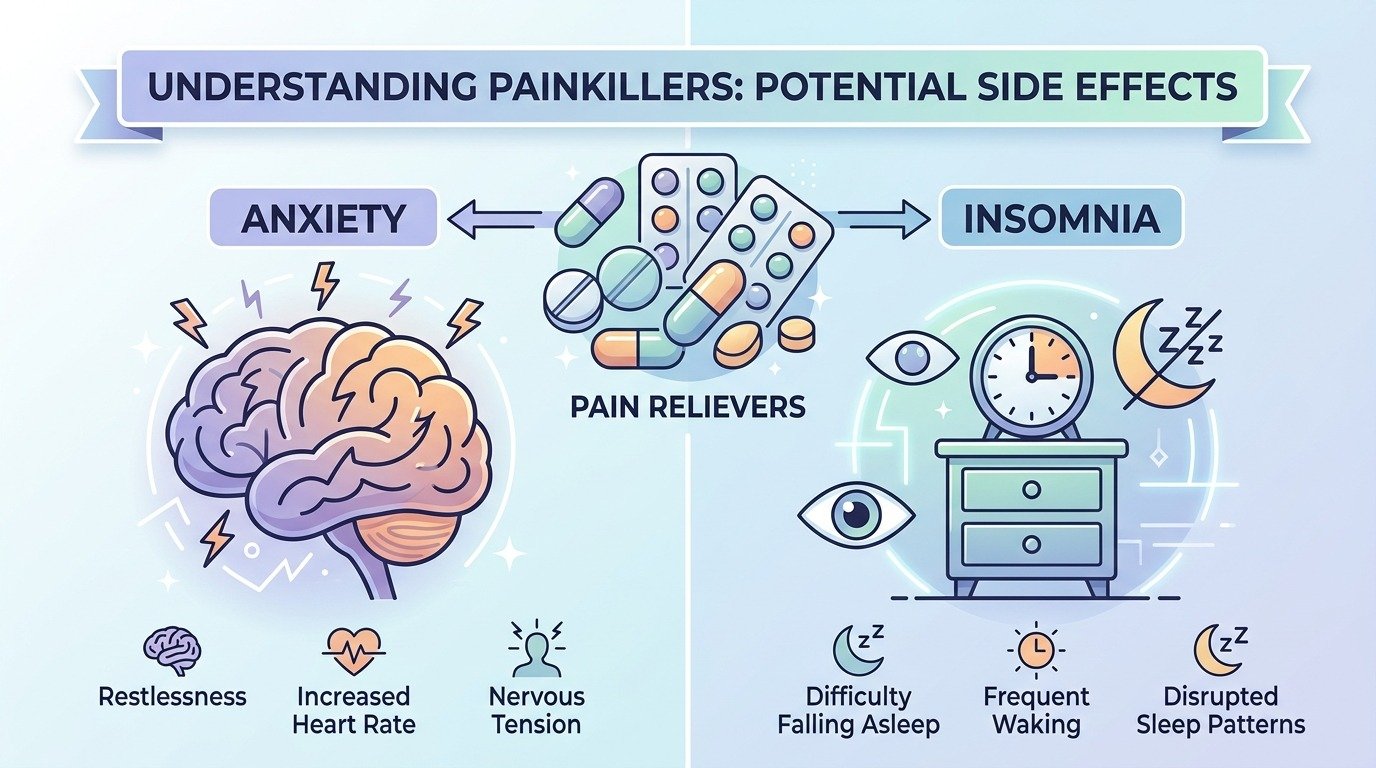
Pain relief should make life easier, but many people notice the opposite: racing thoughts at night, broken sleep, panic-like symptoms, or feeling unusually restless after taking certain pain medicines. That can feel confusing, especially when the medication was prescribed to help the body recover.
The problem becomes more stressful when pain, anxiety, and poor sleep start feeding each other. Pain can keep you awake, poor sleep can make pain feel worse, and anxiety can make both harder to control. In some cases, the painkiller itself may be part of that cycle.
So, do painkillers cause anxiety or insomnia? Yes, some can, especially opioids, caffeine-combination pain relievers, and sometimes medications that affect the nervous system. The key is knowing which medicines are more likely to cause this, why it happens, and when to speak with a doctor instead of simply taking more tablets.
Do Painkillers Cause Anxiety or Insomnia?
Painkillers do not affect everyone the same way. Some people sleep better because pain is controlled, while others develop restlessness, anxiety, vivid dreams, or difficulty staying asleep. The risk depends on the type of painkiller, dose, timing, duration of use, and whether the body has developed tolerance or withdrawal symptoms.
Opioid Painkillers and Anxiety
Opioid painkillers such as oxycodone, hydrocodone, morphine, codeine, and tramadol act on the brain and central nervous system. They reduce pain signals, but they also influence mood, alertness, breathing, and sleep regulation. That is why opioids can sometimes calm a person at first but later trigger anxiety, agitation, or emotional instability.
One major reason is withdrawal or “wearing off” between doses. When opioids suppress nervous system activity, the body adapts. As the medicine level drops, the nervous system may rebound, causing symptoms such as nervousness, sweating, palpitations, restlessness, panic feelings, and difficulty sleeping.
NHS information on oxycodone withdrawal lists agitation, anxiety, panic attacks, palpitations, and difficulty sleeping among possible symptoms. Long-term opioid use may also change how the brain handles pain and stress.
Some people develop opioid-induced hyperalgesia, where the body becomes more sensitive to pain. This can create a frustrating loop: more pain leads to more worry, more worry worsens sleep, and poor sleep increases pain sensitivity.
Key signs that opioids may be affecting anxiety include:
- Feeling anxious as the dose wears off
- Needing medication to feel emotionally “normal”
- New panic-like symptoms after regular use
- Worsening sleep despite pain relief
- Increased pain sensitivity over time
Opioid Painkillers and Insomnia
Opioids can make a person feel drowsy, but drowsiness is not the same as healthy sleep. Good sleep includes balanced cycles of light sleep, deep slow-wave sleep, and REM sleep. Opioids may disturb those cycles, leaving someone asleep for several hours but still waking tired, foggy, or unrested.
Another important issue is breathing during sleep. Opioids can slow breathing and are linked with sleep-related breathing disorders, including central sleep apnea and sleep-related low oxygen levels.
A recent FDA-approved opioid label warning states that opioids can cause sleep-related breathing disorders and that opioid use increases the risk of central sleep apnea in a dose-dependent way.
Withdrawal can also cause insomnia. Even a gradual dose reduction may bring temporary symptoms such as difficulty sleeping, anxiety, irritability, yawning, and a short-term increase in pain. NHS opioid reduction guidance explains that reducing slowly can lower the chance of withdrawal symptoms.
This is why someone may feel trapped: the painkiller helps short-term pain, but sleep quality gradually worsens. Then poor sleep increases pain sensitivity, which may make the person feel they need more medication. That cycle should be discussed with a clinician, not managed by increasing doses alone.
Non-Opioid Painkillers Can Also Affect Sleep
Not all painkillers are opioids. Over-the-counter options such as paracetamol, ibuprofen, aspirin, and naproxen are commonly used for headaches, muscle pain, period pain, dental pain, and inflammation. These are less likely than opioids to directly cause anxiety, but they may still contribute to sleep problems in some people.
A common reason is combination medication. Some headache and migraine products include caffeine because caffeine can improve pain relief for certain headaches. However, caffeine can also increase alertness, raise heart rate, worsen anxiety, and delay sleep if taken in the afternoon or evening.
NSAIDs such as ibuprofen or naproxen may also disturb sleep indirectly. They can irritate the stomach, worsen acid reflux, or cause discomfort when taken without food. If someone wakes with indigestion, stomach pain, or nausea, the medication may not be “causing insomnia” directly, but it is still contributing to broken sleep.
Timing matters. A painkiller taken late at night with caffeine, alcohol, or other sedating medicines can create unpredictable effects. Always check the ingredient list, especially with migraine, cold-and-flu, or “extra strength” combination products.
Why Pain, Anxiety, and Sleep Problems Often Happen Together
Pain, anxiety, and insomnia are closely connected because they share the same nervous system pathways. When pain lasts for days, weeks, or months, the brain becomes more alert to threat. This can make it harder to relax, fall asleep, and feel emotionally stable.
Anxiety adds another layer. A person may start worrying about whether the pain means something serious, whether they will sleep, or whether they will need stronger medication. These thoughts can trigger physical symptoms such as tight chest, fast heartbeat, restlessness, and muscle tension.
Painkillers may help break this cycle when used correctly. But if the medicine causes rebound symptoms, withdrawal effects, or poor sleep architecture, it can also strengthen the cycle. This is especially important with opioids, sedatives, and medicines that affect brain chemistry.
A safer approach usually looks at the full pattern, not just the pain score. Helpful questions include:
- Did anxiety start after the medication began?
- Does insomnia appear when a dose wears off?
- Is pain worse after poor sleep?
- Are caffeine-containing painkillers being used late in the day?
- Is the person mixing painkillers with alcohol, sleeping pills, or anxiety medication?
What to Do If Painkillers Are Affecting Your Sleep or Anxiety
If you suspect your pain medicine is causing anxiety or insomnia, do not stop prescription medication suddenly without medical advice. This is especially important with opioids, pregabalin, benzodiazepines, and sleeping tablets because abrupt stopping can cause withdrawal or rebound symptoms.
A doctor can review whether the painkiller is still appropriate, whether the dose is too high, whether tapering is needed, or whether another treatment would be safer. Mayo Clinic guidance notes that people who have taken opioids for more than 7 to 10 days may need professional advice before stopping to reduce risks and withdrawal problems.
This is also where prescription sleep medicines need caution. Zopiclone is used for short-term insomnia, and NHS information explains that it is a medicine for sleeping problems, with possible side effects including memory problems, hallucinations, falls, low mood, or depression in rare cases.
For SEO clarity and patient safety, searches such as “sleeping pills zopiclone 7.5mg next day delivery” or “buy pregabalin uk next day delivery” should be handled carefully.
Zopiclone and pregabalin are prescription medicines in the UK and should only be used under qualified medical supervision. Buying them from unverified online sources can increase the risk of incorrect dosing, counterfeit tablets, dangerous interactions, dependence, or delayed treatment for the real cause of symptoms.
Instead of self-medicating, ask a clinician about:
- Reviewing your current painkiller and dose
- Safer non-opioid pain management options
- A tapering plan if dependence or withdrawal is suspected
- Sleep hygiene or CBT-I for insomnia
- Whether anxiety is medication-related or a separate condition
- Screening for sleep apnea if opioids are used long term
FAQs
Can opioid painkillers cause panic attacks?
Yes, opioid painkillers can contribute to panic-like symptoms in some people, especially when the dose wears off or withdrawal begins. Symptoms may include fast heartbeat, sweating, agitation, shaking, restlessness, and intense fear.
This does not mean every person taking opioids will experience panic attacks, but new anxiety after starting or reducing opioids should be taken seriously.
Can ibuprofen cause insomnia?
Ibuprofen is not usually considered a direct stimulant, so it is less likely to cause insomnia than caffeine-containing painkillers or opioids. However, it can still disturb sleep indirectly in some people. Stomach irritation, reflux, nausea, or discomfort may wake someone during the night.
Also, if pain is not properly controlled, the person may blame the medicine when the pain itself is the real sleep disruptor. Taking NSAIDs correctly and with medical guidance can reduce avoidable problems.
Why do I feel anxious when my pain medicine wears off?
This can happen when the body has adapted to a medication, especially opioids. As the drug level drops, the nervous system may rebound into a more alert, uncomfortable state.
That can feel like anxiety, irritability, restlessness, or panic. It may also come with sweating, yawning, body aches, or trouble sleeping. This pattern can be a sign of physical dependence or withdrawal, even when the medicine was originally taken for legitimate pain.
Are sleeping pills safe with painkillers?
Combining sleeping pills with painkillers can be risky, especially when opioids are involved. Both can depress the central nervous system, reduce alertness, and affect breathing during sleep. This may increase the risk of dangerous sedation, falls, confusion, overdose, or sleep-related breathing problems.
Never combine opioids, zopiclone, benzodiazepines, alcohol, or other sedatives unless a doctor has specifically reviewed the combination and decided it is safe for your situation.
Should I stop taking painkillers if they affect my sleep?
Do not suddenly stop prescription painkillers, especially opioids, pregabalin, or other nervous-system medications, without medical advice. Stopping too quickly can cause withdrawal symptoms, rebound pain, anxiety, and insomnia.
Instead, track your symptoms, timing, dose, sleep quality, and any other medicines or caffeine you take. Then speak with a healthcare professional. They may suggest adjusting the dose, changing the timing, switching medication, treating the sleep issue separately, or creating a gradual tapering plan.
Pain Relief Should Not Cost Your Sleep or Peace of Mind
Painkillers can be helpful, but some can also contribute to anxiety or insomnia, especially opioids, withdrawal states, caffeine-combination products, and medicines that affect the nervous system. The safest answer is not to ignore the symptoms or increase medication on your own.
Track when anxiety or sleeplessness happens, check ingredients carefully, and speak with a doctor if symptoms continue. Better pain control should support recovery, sleep, and emotional stability, not create a new cycle of distress.