


An arepas food truck sounds like a natural fit for New York. The product is handheld, filling, easy to customize and familiar to many Latin American customers. It can also appeal to office workers, students, tourists and diners looking for something different from burgers, pizza or tacos. Those strengths create a real opportunity, but they do not make the business easy.
New York City food vending involves strict permits, limited legal operating options, expensive equipment and intense competition. A truck can generate strong daily sales while still producing modest profit after food, labor, commissary rent, fuel, insurance and repairs. The owner may also work longer hours than customers ever see.
The better question is not whether New Yorkers will buy arepas. Many already do. The real question is whether you can build a legal, repeatable and profitable operation around them. Success depends on controlling startup costs, choosing the right sales channels, designing a focused menu and understanding how many orders you must serve each day.
An arepas truck can work in New York, but the strongest version will not rely only on finding a busy curb and opening the service window. A safer model combines street sales with office lunches, private locations, festivals, catering and recurring events.
1. Why Arepas Make Sense for a New York Food Truck
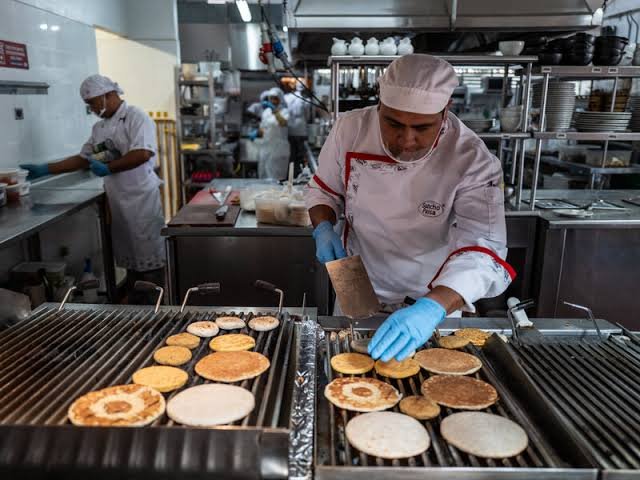
Arepas have several qualities that suit mobile food service. They can be held in one hand, prepared in advance to a certain stage and finished quickly on a griddle. Customers do not need plates, knives or a place to sit. A properly wrapped arepa can be eaten while walking back to an office, waiting for a train or standing at an outdoor event.
Arepas also support a wide range of fillings without forcing the kitchen to produce unrelated dishes. One corn shell can hold shredded beef, chicken, pork, cheese, beans, avocado, plantains or eggs. That variety allows a small truck to serve meat eaters, vegetarians and customers who avoid gluten without operating several separate menus.
The product carries a clear identity as well. New York has countless businesses selling tacos, sandwiches, pizza and halal platters. Arepas are available across the city, but the category is not as crowded or standardized as those larger street-food segments. A focused arepa concept can therefore feel specific without becoming too unfamiliar.
Cultural familiarity gives the business a starting audience. New York’s Venezuelan, Colombian and broader Latin American communities already understand the product. Customers from those communities may judge the food critically, but they also provide valuable early demand. The truck must respect the differences between Venezuelan and Colombian arepas rather than presenting every version as interchangeable.
Curious customers offer a second audience. Diners who have never tried an arepa can understand it quickly when the menu describes it as a grilled corn pocket filled with meat, cheese, beans or vegetables. Strong photographs and visible fillings make the product easier to sell than a dish that requires a long explanation.
Breakfast creates another opening. Egg, cheese, avocado, black bean and chorizo arepas can serve commuters before the lunch rush. Few food trucks operate effectively across breakfast, lunch and evening periods, but arepas can fit all three. The challenge is deciding whether the extra hours produce enough sales to justify longer staffing and preparation.
Late-night service also fits the product. A warm corn arepa filled with shredded meat, cheese and sauce works well near bars, music venues and nightlife districts. Late-night customers often want substantial food that travels well and does not require formal service.
The gluten-free angle may increase interest, although the business must describe it carefully. Traditional arepas use corn flour rather than wheat flour. However, a truck should not promise a completely gluten-free operation unless it controls cross-contact from sauces, seasonings, fried foods and supplier ingredients.
Arepas also provide portion control. The owner can standardize dough weight, protein quantity, cheese portions and sauce amounts. Standardization matters because small over-portions repeated hundreds of times can destroy a food truck’s margin. A cook who adds one unnecessary ounce of beef to 100 orders has given away more than six pounds of product in one shift.
The concept becomes weaker when the menu grows too broad. Owners sometimes believe that more choices attract more customers. On a truck, more choices usually mean more ingredients, more refrigeration, slower service and more waste. Adding tacos, burgers, rice bowls, empanadas, hot dogs and desserts may turn a clear arepa brand into a generic Latin food truck.
A better menu would start with five or six core arepas, one rotating special, two sides and a short drink selection. That range provides enough choice without overwhelming the kitchen. The truck can add products later after sales data shows what customers actually request.
Branding should explain the concept within seconds. A customer walking past the truck should immediately understand that it sells stuffed corn arepas. The menu should use clear English descriptions alongside traditional names. “Reina Pepiada” may appeal to knowledgeable customers, but “chicken, avocado and cilantro” tells everyone else what they are ordering.
The strongest market position would combine authenticity with accessibility. The food should taste rooted in a real culinary tradition, while the ordering process should remain simple for customers who cannot pronounce every menu item. Authenticity should come from preparation, flavor and product knowledge rather than confusing language or oversized menus.
2. Permits and Startup Costs Can Decide the Business Before It Opens
New York City requires both a Mobile Food Vending License for the person operating the unit and a Mobile Food Vending Unit Permit for the truck or cart. The personal license functions as the vendor’s identification, while the permit applies to the physical vending unit. Obtaining one does not automatically provide the other.
The personal vending license is currently easier to pursue than a full-term public-street permit. New York City states that there is no waiting list for the Mobile Food Vending License, but full-term unit permits remain subject to waiting lists and eligibility rules. A person must also complete the required Mobile Food Vendor Food Protection Course before applying for the license.
Permit access creates the first major business risk. A founder may find a truck for sale, pay for renovations and develop a full menu without securing a legal operating path. The finished vehicle can then sit unused while insurance, parking and financing costs continue.
A used permit arrangement should not be treated casually. Informal permit rentals and unauthorized transfers may expose the operator to enforcement, financial loss or dependence on another party. A legal review and direct confirmation with city authorities are more valuable than advice from sellers who earn money from completing the deal.
New supervisory-license rules may expand permit access over time. New York City’s Health Department states that 2,200 new supervisory licenses will be offered each year for five years beginning July 1, 2026. That change may create opportunities, but applicants should verify current procedures, application windows and eligibility before making an investment.
Restricted-area permits offer a practical alternative. These permits allow vending on qualifying private commercial property with the owner’s permission and are not subject to the same statutory limits as ordinary public-street permits. They can support service at office complexes, breweries, parking lots, private campuses or other approved sites.
Private property can provide more stability than random street vending. A written agreement may give the truck a predictable place, known operating hours and access to a defined customer group. The owner may pay rent or a percentage of sales, but that expense can be worthwhile when the location consistently produces customers.
Catering offers another entry route. Corporate lunches, weddings, birthdays, film sets and community events allow the truck to sell a guaranteed number of meals rather than wait for passing traffic. Catering also makes staffing, purchasing and preparation easier to forecast.
Pop-ups can test the menu before a truck purchase. A founder can rent commercial kitchen time, join approved markets or work with existing venues. This approach reveals whether customers like the food, which fillings sell and how quickly the team can produce orders.
The truck itself will probably become the largest startup expense. A low-priced used vehicle may appear attractive, but engine problems, worn refrigeration, unsafe wiring or an outdated fire-suppression system can erase the savings. A food truck is both a commercial kitchen and a vehicle, which means either side can shut down the business.
Published startup estimates vary widely. Some current planning guides place New York food-truck launches around $42,000 to $126,000, while others estimate totals from roughly $55,000 to more than $200,000 depending on whether the owner buys a used truck or orders a custom build. These figures are not official city costs, but they show why the business needs a detailed quote-based budget rather than one online average.
A lean startup may involve a reliable used truck, limited renovation, owner labor and a simple menu. Even this version requires refrigeration, a griddle, sinks, water tanks, ventilation, food storage, power, point-of-sale equipment and exterior signage.
A larger build may include a fryer, freezer, multiple refrigerators, advanced ventilation and a high-capacity generator. Each addition increases purchase cost, maintenance needs and power consumption. Equipment should earn its place through sales rather than simply making the kitchen look complete.
Arepas do not require the most complicated truck kitchen, which helps. A flat-top griddle, hot holding, refrigeration and organized assembly space can support the core menu. A fryer may improve side sales, but it also adds oil handling, cleaning, fire-safety requirements and ventilation demands.
The startup budget should include more than the vehicle. The owner may need business registration, professional fees, permits, insurance deposits, kitchen supplies, smallwares, uniforms, packaging, menu design, initial ingredients, commissary payments and storage arrangements.
A repair reserve is essential. Trucks lose money twice when they break down: the owner pays for the repair and loses the sales that would have occurred during service. A transmission failure or refrigeration problem can remove the business from the road for days.
Insurance should cover commercial vehicle risks, general liability, property and equipment. Event organizers and private-property owners may request specific coverage levels or certificates before allowing the truck to operate.
Commissary costs deserve close attention. Mobile food businesses may need approved facilities for storage, cleaning, water, waste disposal and food preparation. Current third-party estimates for New York commissary space often range from roughly $1,200 to $2,500 per month, although actual prices depend on services and location.
Parking adds another recurring expense. The truck needs a secure legal place when it is not operating. Street parking may expose it to tickets, theft, damage or regulations that interfere with overnight storage.
Fuel and energy costs also accumulate. The vehicle burns fuel to move between the commissary, parking and sales locations. A generator, propane system or other power source adds another daily operating cost.
Manhattan congestion charges may affect routes and timing. Vendors who regularly enter the congestion zone must account for those fees when planning locations and schedules. Recent reporting has described vendors changing their arrival times to reduce toll costs, which shows how transportation policy can affect small operating margins.
The safest startup budget includes several months of operating cash. New businesses rarely reach stable volume immediately, and New York winter weather can lower sales. A truck that spends every available dollar on construction may have no cash left for payroll, repairs or food purchases.
3. The Menu and Sales Math Determine Whether the Truck Makes Money
A profitable menu starts with shared ingredients. Shredded beef can appear in one signature arepa and one rotating special. Black beans can support a vegetarian arepa, a side and a breakfast option. Avocado sauce can accompany several products without requiring separate preparation for every order.
A strong opening menu might include shredded beef with cheese, chicken and avocado, pulled pork with pickled onions, black beans with cheese, plantain with beans and a breakfast arepa with egg. A weekly special could test new combinations without permanently expanding inventory.
Each item should have a recipe card. The recipe should state the exact dough weight, cooked protein quantity, cheese amount, sauce portion and garnish. Cooks should use scales, scoops and bottles rather than judging portions by sight.
Food cost should be calculated from usable products, not purchase weight alone. Meat loses weight during trimming and cooking. Avocados spoil. Herbs wilt. Oil degrades. A case that looks inexpensive on an invoice may produce fewer sellable portions than expected.
Proteins will probably create the greatest cost pressure. Beef, chicken and pork prices can change quickly, and slow-cooked fillings require labor before service begins. The truck should avoid building every bestselling item around the most expensive meat.
Vegetarian options can improve margin while widening demand. Beans, cheese, plantains and vegetables often cost less than large meat portions. They should still feel complete rather than like reduced versions of the main menu.
Sides can raise the average ticket. Yuca fries, plantain chips or a small corn-based side may add several dollars to an order while using manageable ingredients. A fryer can support those sales, but the owner must compare extra revenue with equipment, oil, labor and cleaning costs.
Drinks often carry useful margins. Bottled water and canned beverages require little labor, while house-made lemonade or papelón con limón can create a stronger identity. The menu should avoid stocking too many slow-selling flavors that occupy cold storage.
Combo meals can increase customer spending. An arepa priced at $13 may become a $17 or $18 order when bundled with a side and drink. The discount should feel meaningful without giving away both add-ons.
New York pricing must reflect both costs and customer expectations. A truck near an office district may support a higher lunch price than one serving students. A festival may support premium pricing, but organizers may also charge entry fees or take a percentage of revenue.
An arepa priced too low can create problems later. Customers become anchored to the original amount, while ingredients, wages and insurance continue rising. A better approach sets a sustainable opening price and uses value-focused combinations where needed.
The average ticket matters more than the price of one item. A truck selling 100 arepas at $12 produces $1,200. A truck completing 100 transactions at a $17 average ticket produces $1,700. Sides, beverages and catering packages can change the economics without requiring many more customers.
Consider three simplified sales days. A slow day might produce 55 transactions at an average ticket of $15, generating $825. A stable lunch and evening day might produce 100 transactions at $17, generating $1,700. A strong festival or private event might produce 160 transactions at $19, generating $3,040.
The slow day may not cover the full cost of operation. Food and packaging could consume about 30% of revenue, leaving roughly $578 before labor and overhead. Two employees working an eight-hour shift, plus payroll costs, could absorb a large share of the remainder.
The stable day creates more room. At $1,700 in sales and a 30% food-and-packaging cost, about $1,190 remains before wages, commissary allocation, fuel, insurance, maintenance, card fees and taxes. The business may produce an operating profit, but the number becomes much smaller after all expenses.
The strong event day can generate attractive cash flow. At $3,040 in sales, food and packaging at 30% would cost about $912. The truck would retain $2,128 before labor, event fees and overhead. A 15% event commission alone would remove $456.
Gross sales should never be confused with owner income. A truck posting $30,000 in monthly revenue may sound successful, but revenue does not pay the owner until every operating cost has been covered.
Gross profit usually means sales minus direct food costs. Operating profit goes further by deducting labor, commissary rent, fuel, insurance, marketing, card fees and routine overhead. Net profit includes additional costs such as interest, taxes and depreciation, depending on the accounting method.
Owner labor must also be counted. When the owner cooks, drives, shops, cleans and handles administration without paying a wage, the business may appear more profitable than it really is. Part of the reported profit is compensation for several jobs.
Industry estimates commonly place staffed food-truck net margins in the single digits, while owner-operated trucks may reach higher percentages because the owner replaces paid labor. One current estimate places trucks with employees around 6% to 9% and owner-operated businesses as high as 15% or more, although results vary widely.
A 7% net margin on $350,000 in annual sales produces $24,500 in profit. A 12% margin produces $42,000. Those figures show why high revenue does not automatically create a high personal income.
Debt can reduce the result further. Monthly truck financing, equipment loans or credit-card balances consume cash whether sales are strong or weak. Buying the most impressive vehicle may create pressure to operate every possible shift just to service the debt.
Break-even analysis should guide the launch. Suppose monthly fixed expenses total $12,000 before ingredients. If food, packaging and payment fees consume 33% of sales, the truck retains 67 cents from each sales dollar to cover fixed costs. The business would need about $17,910 in monthly sales to reach operating break-even.
A truck operating 22 days per month would need roughly $814 per day under that example. At a $17 average ticket, it would need about 48 transactions daily. That figure may sound achievable, but it only covers the assumed costs and may not include a proper owner salary.
A healthier target would sit well above break-even. The owner needs room for weak weather, equipment repairs, wasted food and slow events. A plan that works only when every day reaches the minimum leaves no protection.
Sales speed also affects profit. A truck that serves one order every four minutes can complete 15 orders per hour from one service line. During a two-hour lunch rush, that limit may cap revenue even when demand is strong.
Kitchen design should support fast assembly. Dough portions, cooked fillings, sauces and packaging must sit within easy reach. The workflow should move from griddle to opening, filling, wrapping and payment without employees crossing each other.
The truck should measure ticket times from the first week. Customers on a lunch break may leave when a line moves slowly. A great product served after 18 minutes may lose to an acceptable product served after five.
Packaging must protect the food without raising costs unnecessarily. Arepas should remain warm and intact, but excessive boxes, trays and branded materials can add more than a dollar to each transaction.
Catering can improve predictability. A company ordering 100 lunches provides known revenue, controlled quantities and one delivery location. The owner can prepare accurately and reduce the uncertainty that comes with waiting for street traffic.
Private events may also support higher minimum charges. The truck can quote a package based on guest count, service time and menu. Deposits reduce cancellation risk, while simplified event menus improve speed.
4. New York Offers Demand, but Daily Operations Create Serious Risks
Location quality will shape the business more than social-media popularity. A beautiful truck with strong reviews cannot profit from a legal spot that produces little foot traffic.
Midtown office areas can deliver concentrated weekday lunches. Workers value speed, online ordering and predictable schedules. The weakness is dependence on office attendance, weather and competition from nearby delis, fast-casual restaurants and established carts.
Brooklyn nightlife areas may support evening and weekend service. Customers may spend more freely, but demand arrives later and can be inconsistent. Parking, noise restrictions and neighborhood opposition may also create problems.
Queens offers access to large immigrant communities and dense residential areas. A truck may build loyal repeat business more easily there than in a tourist-heavy Manhattan location. Pricing power may differ, so the menu must match local expectations.
Universities provide steady populations but price-sensitive customers. A lower-cost arepa, student combo or breakfast special may work better than premium pricing. Academic breaks can reduce traffic sharply.
Breweries and private venues provide a useful partnership model. The venue supplies customers and space, while the truck supplies food without requiring the property owner to run a full kitchen. The truck may pay rent, share revenue or agree to minimum operating hours.
Markets and festivals can produce high-volume days. They also bring fees, long shifts, competition and uncertain attendance. The owner should study past visitor counts, vendor mix, weather history and organizer terms before paying a large entry fee.
Sporting events and concerts attract hungry crowds, but access may be restricted by venue agreements and street rules. Customers also arrive in short waves, so the truck must serve quickly enough to capture the opportunity.
Recurring locations are more valuable than constant movement. Customers should know that the truck appears outside the same office every Tuesday or at the same brewery every Friday. Predictability turns occasional buyers into regulars.
Random daily movement weakens marketing. A follower who cannot find the truck may stop trying. The business should publish accurate schedules and immediately update changes caused by weather or mechanical problems.
Weather creates one of the largest risks. Rain can destroy lunch traffic within minutes. Snow complicates driving, parking and service. Extreme summer heat can make the kitchen physically dangerous and reduce demand for heavy meals.
Seasonal planning should account for winter. The truck may shorten curbside hours and increase catering, delivery or private events during colder months. A business that depends entirely on outdoor impulse purchases will struggle when sidewalks empty.
Competition includes more than other arepa sellers. The truck competes with every quick lunch available nearby: pizza slices, halal carts, tacos, salads, deli sandwiches and convenience stores. Customers compare price, speed, portion size and familiarity.
The product must therefore earn repeat purchases. Novelty may bring a customer once, but flavor, consistency and service bring the second visit. Sauces, textures and filling quality should give the truck a recognizable signature.
Preparation will take longer than service hours suggest. Meat may require several hours of cooking. Sauces, vegetables and dough must be prepared, cooled, stored and transported safely. The team may begin work early in the morning for a lunch opening.
Cleaning adds more unpaid time. The truck must be scrubbed, waste removed, equipment checked and supplies restocked after service. A five-hour sales window may represent a 12-hour workday.
Space limitations make organization critical. Every ingredient, utensil and package competes for room. Unlike a restaurant with storage rooms and restaurant tables, a truck must fit its entire operation into a narrow moving kitchen.
Staffing presents another challenge. Employees work in heat, noise and cramped conditions. The business needs people who can cook quickly, handle customers, follow food-safety rules and remain calm during rushes.
Turnover can disrupt quality. A small truck may depend on two or three people, so one absence creates a serious problem. The owner often becomes the emergency replacement for every role.
Food waste should be tracked daily. Unsold shredded meat, cut avocado and prepared dough can reduce margins quickly. The truck should compare expected sales with actual sales by location and weather.
Item-level tracking reveals which products deserve menu space. A filling that sells only four times per week may not justify its ingredients or preparation. Removing weak items can improve profit more than adding another bestseller.
The owner should track sales by hour as well. A location that produces $1,000 over lunch but only $120 over the next three hours may not justify staying open. Closing earlier could save labor and fuel.
Customer data can improve scheduling. Online ordering, loyalty programs and email lists allow the business to announce locations and specials without depending entirely on social-media algorithms.
Delivery apps should be used cautiously. They may generate orders during slow periods, but commissions and packaging costs can reduce margin. Arepas may also lose texture when they sit too long before pickup.
The business should protect its reputation through consistency. Customers expect the same portion, spice level and appearance each time. A truck that changes quality based on who is cooking will struggle to build loyalty.
Health and safety rules must become part of daily management rather than paperwork handled only before inspections. Temperature logs, cleaning schedules, handwashing procedures and supplier records protect both customers and the business.
Vehicle inspections and preventive maintenance deserve equal attention. Oil changes, tire checks, generator servicing and refrigeration maintenance cost money, but emergency failure costs more.
5. The Best Decision Is to Test the Concept Before Buying the Truck
An arepas food truck is a reasonable New York business idea for the right operator. The product is portable, adaptable and distinct enough to build a recognizable brand. It can serve breakfast, lunch, dinner, late-night crowds and private events without changing its basic format.
The concept becomes risky when the founder treats the truck as a cheaper restaurant. Mobile vending avoids a dining room lease, but it adds permit limits, vehicle repairs, parking, weather exposure and restricted workspace.
The ideal founder understands the food and expects to work inside the business. A first-time operator who plans to hire a manager immediately may lose control of portions, service and costs before sales become stable.
Adequate capital is also necessary. The founder should be able to purchase or lease suitable equipment, fund legal operations and survive several weak months without relying on perfect daily sales.
The legal operating route should come before the vehicle. The owner should confirm whether the business will use a full-term permit, restricted-area permit, approved market, private property or catering model. Buying first and solving permissions later reverses the proper order.
A staged launch reduces the risk. The first stage should involve pop-ups, catering or market stalls prepared from an approved commercial kitchen. The goal is to test the product under real service conditions.
The test menu should contain no more than six arepas. Each item should have a calculated food cost, standard portion and measured preparation time. Sales should be recorded by item, hour and event.
The test should answer specific questions. Which filling sells most? How many orders can one cook complete per hour? What average ticket can the market support? How much food remains unsold? Do customers order sides and drinks?
Customer feedback should focus on behavior rather than compliments. Repeat purchases matter more than people saying the food tastes good. A customer willing to pay the target price twice provides stronger evidence than dozens of free-sample reactions.
The second stage should build recurring demand. The founder can approach offices, apartment buildings, breweries, schools, event planners and production companies. A weekly lunch contract may be more valuable than thousands of passive social followers.
The third stage should test mobile operations through a rental, partnership or temporary arrangement when legally available. The founder needs to learn how loading, driving, parking, power, water, service and cleanup affect the day.
The truck purchase should occur only after the founder understands demand and workflow. At that point, equipment can be selected around a proven menu rather than assumptions.
The final business model should combine several revenue streams. Street service can build visibility. Private-property stops can create consistency. Catering can provide larger guaranteed orders. Festivals can deliver occasional high-volume days.
A small retail product line may add future revenue. Bottled sauces, frozen arepas or catering trays could extend the brand beyond the truck, although these products introduce separate packaging, production and regulatory needs.
Expansion should not begin too early. A second truck multiplies management, staffing and maintenance problems. The first unit should produce stable profit without depending entirely on the owner before the company adds another.
The financial decision should use conservative assumptions. The plan should include slow days, winter months, equipment failures and food-cost increases. A forecast based only on strong events will produce a false sense of security.
A practical target would require the truck to earn enough to pay market wages, cover all operating costs, fund repairs and provide the owner with acceptable compensation. Profit that exists only because the owner works without pay is not a sustainable business return.
The strongest reason to open an arepas truck is not that food trucks are popular. It is that a disciplined arepa menu can produce fast service, controlled portions and several customer occasions from one core product.
The strongest reason not to open one is operational complexity. New York permit access, parking, weather, vehicle maintenance and labor can turn a simple food idea into a difficult daily business.
The verdict depends on preparation. An operator with legal access, proven recipes, recurring locations, catering relationships and enough cash reserves has a credible opportunity. An operator with only a truck design, a large menu and optimistic sales projections should wait.
An arepas food truck can become profitable in New York, but it should begin as a tested food business rather than an expensive vehicle purchase. Prove that customers will buy the product at the required price, confirm where it can legally be sold and calculate how many daily transactions cover every cost. Once those numbers work outside a spreadsheet, the truck becomes a calculated investment instead of a gamble.