





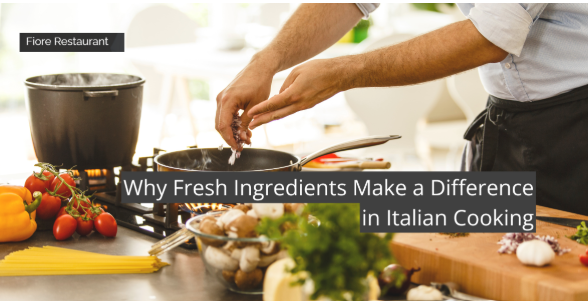
Fresh ingredients make a difference in Italian cooking because most Italian dishes use fewer than eight components, and each one carries the full weight of the flavor. There is no heavy spicing or complex technique to fall back on. What goes into the pot is exactly what ends up on the plate.
At fiorerestaurant, we cook Italian food daily and teach students the same principles across our culinary courses. And the first thing every student learns is this: ingredient quality determines the flavor you get out of a dish, every single time.
In this article, we will cover:
- What sets authentic Italian cooking apart from other cuisines
- Why olive oil grade matters more than most cooks’ reality
- How fresh ingredients change your pasta dishes and sauces
- How the Mediterranean diet and red wine connect to Italian cooking
Read on to find out how ingredient quality changes everything on the plate.
What Makes Authentic Italian Cooking Different From Everything Else
Authentic Italian cooking stands apart because it relies on a small number of high-quality ingredients rather than complexity to build flavor. If you have ever tasted a dish in Italy and wondered why it tasted completely different from the version back home, this is why.
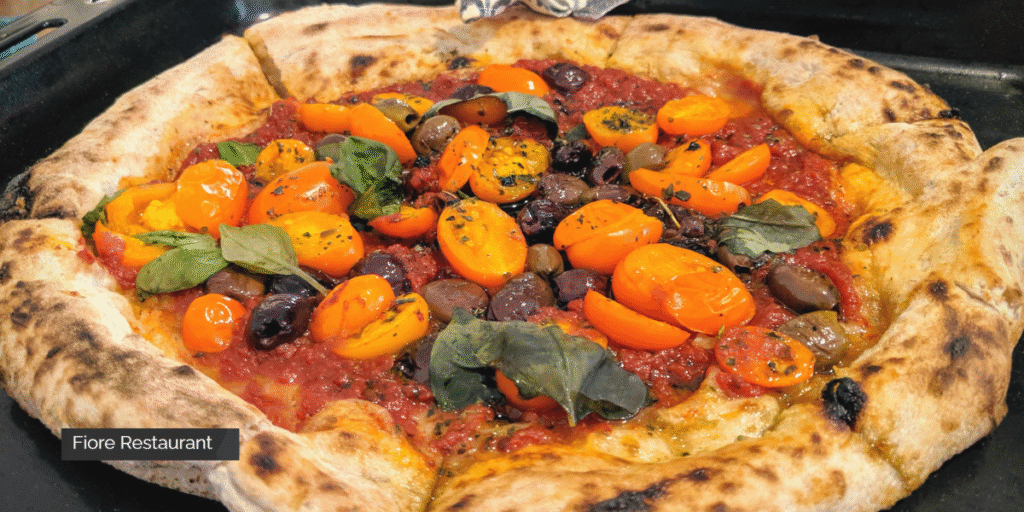
Most use only four to eight ingredients and that simplicity puts enormous pressure on every single component in the pot. A soft, flavorless tomato or a flat olive oil has nowhere to hide, so you taste it immediately.
Unlike cuisines that layer spice blends and heavy sauces to build depth, the garlic needs to smell like garlic, the fresh parsley needs to taste like fresh parsley, and the cheese needs real bite and salt.
How Italian Regions Built Their Cooking Around Local Ingredients
Now, let’s have a look at how different regions across southern Italy and the broader Mediterranean developed their dishes around whatever grew locally. For example, Tuscany built its cooking around hearty beans, bread, and bold olive oil.
On the other hand, Sicily leaned into citrus, fresh seafood, and sun-ripened tomatoes. Then, Rome gave the world cacio e pepe, a dish made from pasta, Pecorino Romano, and black pepper alone.
Those ingredients got chosen because they were the finest things available, and the recipes were built to show them off. That regional thinking carries through to everything we teach at Fiore Restaurant, and understanding what a quality ingredient tastes, smells, and feels like comes before any technique.
Why Olive Oil Grade Changes the Flavor of Every Dish You Make
Olive oil grade changes the flavor of every dish because different grades carry different levels of natural compounds, aroma, and acidity. If you use the wrong grade at the wrong moment and the dish tastes flat.
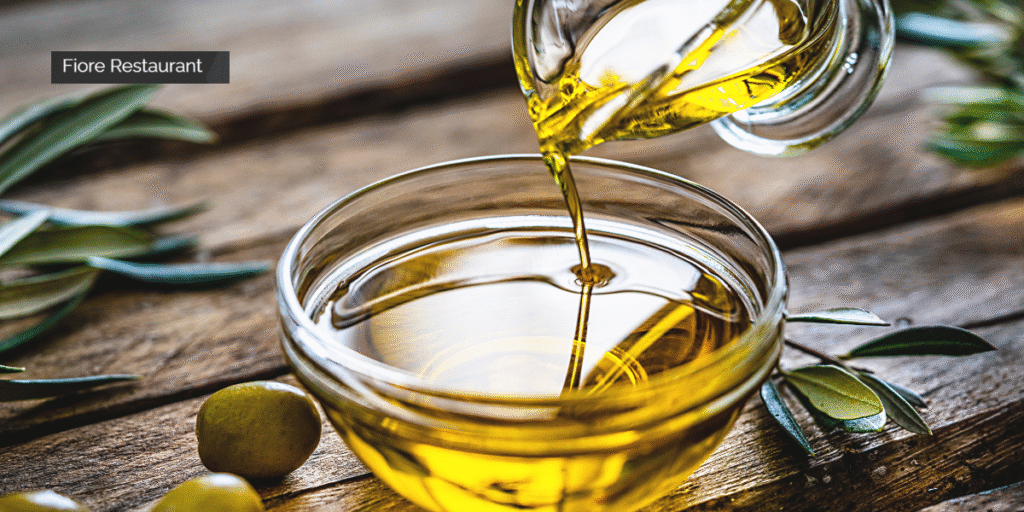
So, let’s break down what the grades mean and why those are important in the kitchen.
Extra Virgin Olive Oil
Extra virgin olive oil (EVOO) is the highest grade you can buy. Producers cold-press it directly from olives without chemicals or high-heat processing, which keeps all the natural flavor locked inside the bottle.
You can get a fruity, slightly peppery character that refined olive oil simply cannot replicate. Using EVOO daily improves a range of cardiovascular risk factors and delivers measurable health benefits in as few as three weeks, according to research published on the National Institutes of Health.
Pure Olive Oil
Pure olive oil blends refined oil with a small percentage of virgin oil, giving it a higher smoke point and a milder flavor profile. That’s why it’s a better pick for frying, searing, and any high-heat cooking where expensive EVOO flavor would burn off anyway.
Where Most Cooks Go Wrong
Most cooks use a refined everyday oil to finish a bowl of pasta or drizzle over fresh tomatoes, and then wonder why the dish tastes flat. We see this consistently in our classes.
Finishing oil and cooking oil serve two completely different purposes. Using the wrong one at the wrong moment is one of the most common reasons home-cooked Italian food falls short of restaurant quality.
Olive Oil and the Mediterranean Diet
To be more specific, olive oil holds a central place in Mediterranean cuisine for a reason beyond flavor. It’s the primary fat across Mediterranean countries and a cornerstone of the Mediterranean diet, connecting Italian cooking to centuries of both health tradition and culinary culture.
The fat content in EVOO comes mostly from oleic acid, a monounsaturated fat that carries natural antioxidants and supports heart health. That’s why the Mediterranean diet puts olive oil front and center on the plate.
Quick tip: Save your best EVOO for drizzling over finished dishes, dipping fresh bread, or dressing a simple salad. Use a pure or light olive oil when the pan is screaming hot.
How Fresh Ingredients Transform Homemade Pasta Dishes and Simple Sauces
Fresh ingredients change homemade pasta dishes and simple sauces because they carry natural flavor compounds that processed or out-of-season alternatives have already lost. You can follow a great recipe perfectly and still end up with a flat dish if the ingredients going in are not at their peak.
Let’s get into the specific ingredients that are most important.
Fresh Pasta vs Dried Pasta
Here’s how these two differ in practice. Fresh pasta is made from flour, eggs, and sometimes a little salt. The dough is soft, porous, and absorbent, which means it pulls sauce into every strand rather than just coating the outside.
Meanwhile, dried pasta has its place in Italian cooking, but for your favorite pasta recipes like fettuccine alfredo or a simple butter and parmesan sauce, fresh pasta delivers a silkier texture and a more layered flavor that dried noodles simply cannot match.
In our pasta fundamentals course at Fiore Restaurant, students work with fresh dough from day one. And the feedback we hear most often is that they had no idea pasta water alone, combined with good flour and eggs, could produce something that rich without a single extra ingredient.
Fresh Tomatoes and Sauce
Now, let’s have a look at tomatoes. Ripe, in-season tomatoes bring a natural sweetness to marinara and crushed tomato sauces that no tomato paste or off-season produce can fully replicate.
The difference comes down to sugar content and acidity. A tomato picked at peak ripeness has balanced natural sugars that caramelize gently as the sauce simmers. An out-of-season tomato tastes sharp and thin by comparison, and no amount of slow cooking fixes that.
Besides tomatoes, fresh herbs make a significant difference in your sauces, too. Fresh parsley and basil added toward the end of cooking preserve volatile aromatic oils that dried versions have already lost. In practice, dried basil and dried parsley add background noise. Fresh herbs add a bright, clean top note that you taste immediately in every spoonful.
What Cacio e Pepe Teaches You About Ingredient Quality
Sometimes the best way to understand ingredient quality is to look at a dish with nowhere to hide. Cacio e pepe is exactly that dish. This traditional Roman pasta uses just three ingredients: pasta, Pecorino Romano cheese, and freshly ground black pepper. No sauce, no cream, no olive oil is needed there.
According to The Mediterranean Dish, the starchy pasta water combines with finely grated cheese and freshly cracked pepper to create a velvety coating that clings to every strand of pasta.
And frankly, cacio e pepe is one of the most honest tests of ingredient quality in all of Italian cooking. Pre-ground pepper makes the dish taste dull and flat. Freshly ground whole peppercorns, on the other hand, release volatile oils and heat that pre-ground pepper has already lost.
The same logic applies to the cheese. Low-quality alternatives turn the sauce grainy and uneven, while a well-aged Pecorino Romano melts into a smooth, sharp, salty coating that makes the whole dish work.
That’s the lesson cacio e pepe teaches every cook who makes it seriously. Quality ingredients do not just improve the dish. They are the dish.
How the Mediterranean Diet and Red Wine Fit Into Italian Cooking
The Mediterranean diet and red wine fit into Italian cooking because they both reflect the same philosophy that drives the cuisine itself: fresh, natural ingredients used in the right amounts at the right time.
You might be wondering whether Italian food is actually healthy, given all the pasta, cheese, and butter involved. The answer, when cooked the traditional way, is yes!
Let’s get into how this works.
The Mediterranean Diet and Italian Cooking
The Mediterranean diet is built around fresh vegetables, olive oil, legumes, whole grains, and moderate red wine consumed with meals. Simply put, it’s how people across Mediterranean countries have eaten for centuries, and Italian cooking sits right at the heart of it.
According to the Harvard T.H. Chan School of Public Health, research has consistently shown that the Mediterranean diet reduces the risk of cardiovascular disease, supports healthy aging, and improves overall longevity. That’s the eating pattern behind every bowl of risotto, every plate of fresh pasta, and every simple dish of vegetables cooked in olive oil that comes out of an Italian kitchen.
Basically, the Mediterranean diet and authentic Italian cooking overlap almost completely. Fresh tomatoes, garlic, olive oil, legumes, seasonal vegetables, lean proteins like chicken and seafood, and moderate wine. Those are the basic ingredients of both.
Red Wine in Italian Cooking
Red wine added during slow cooking of braised meat or a long-simmered sauce contributes tannins and natural acidity that deepen flavor in ways water or broth alone cannot achieve. The alcohol burns off as the dish cooks, leaving behind a concentrated richness that lifts the whole pot.
What’s more, white wine works the same way in lighter dishes. A splash added to a seafood pasta or a simple pan sauce with garlic and fresh parsley brightens the flavor and adds a layer of complexity that takes the dish from good to genuinely delicious.
Quick tip: Cook with wine you would enjoy drinking. The flavor concentrates as the liquid reduces, so a poor-quality wine makes a poor-quality sauce. No need for anything expensive. Just something that tastes good in the glass first.
Start Cooking With Ingredients That Actually Deliver
Every dish at Fiore Restaurant reflects the same principle: fresh ingredients create flavor that no technique alone can manufacture. The olive oil grade you choose, the ripeness of your tomatoes, the freshness of your herbs, and the quality of your cheese all land directly on the plate.
At Fiore Restaurant, our culinary courses cover everything from the 8-week pasta fundamentals program to seafood preparation, and ingredient quality runs through every single lesson. Understanding what a good ingredient looks, smells, and tastes like is the first real step toward cooking Italian food that delivers.
Ready to learn how to cook Italian food the right way? Sign up for a class and taste the difference for yourself.