




As network technology continues to evolve toward 10G, 25G, 100G, and even higher speeds, many people assume that Gigabit Ethernet is becoming outdated. However, despite the rapid growth of high-speed networking, 1G copper networks remain widely used across businesses of all sizes. From small offices and retail stores to schools, surveillance systems, and industrial facilities, Gigabit Ethernet still serves as a reliable and cost-effective networking solution.
For many organizations, upgrading every part of the network to higher-speed infrastructure is simply unnecessary. Most daily business applications do not require extremely high bandwidth, and existing Gigabit Ethernet systems are often more than capable of handling current workloads efficiently. Combined with the affordability and simplicity of copper networking, this is one of the main reasons why businesses continue relying on 1G copper networks today.
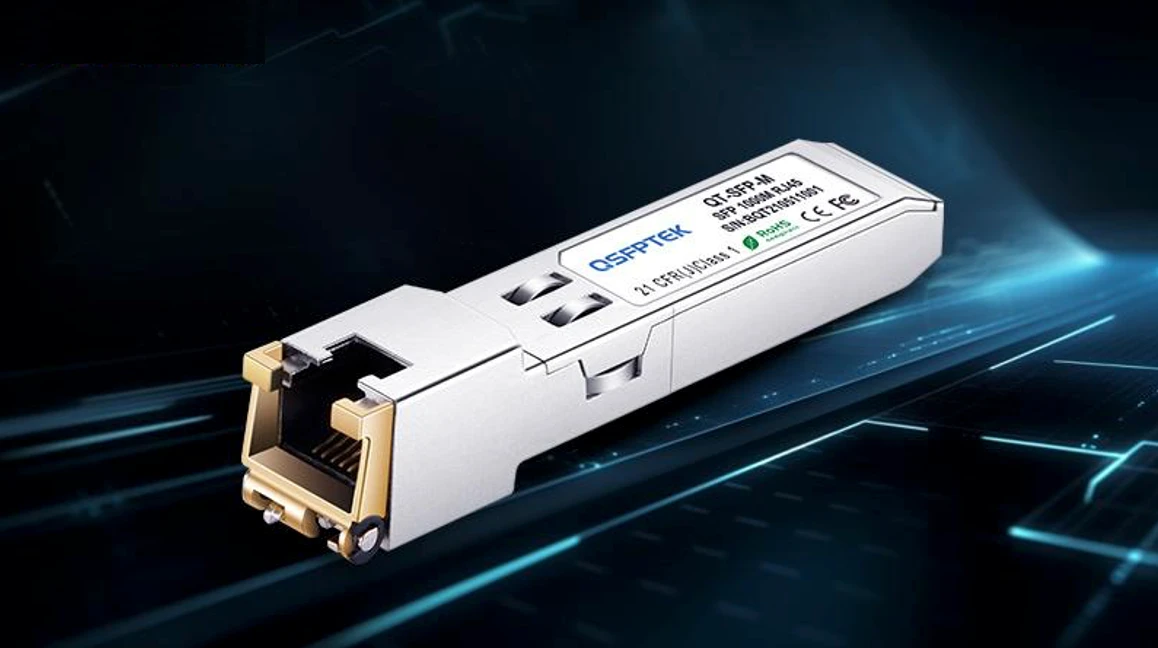
Among the most practical components supporting these networks is the 1000BASE-T SFP Copper RJ-45 Transceiver Module. Supporting Gigabit Ethernet transmission over standard RJ45 copper cabling up to 100 meters, this module allows businesses to easily connect copper-based devices to switches equipped with SFP ports without requiring major infrastructure changes.
The Practical Performance of Gigabit Ethernet
1G Speed Is Still Enough for Many Applications
Although faster networking technologies attract significant attention, the reality is that many business applications do not fully utilize Gigabit Ethernet bandwidth. Typical office activities such as email communication, cloud applications, web browsing, VoIP calls, and standard file sharing generally operate smoothly on 1G networks.
Even many small and medium-sized businesses rarely encounter network traffic levels that would justify the cost of deploying 10G or higher-speed infrastructure throughout the entire organization. For these environments, Gigabit Ethernet provides an ideal balance between performance, reliability, and affordability.
In addition, devices such as printers, IP phones, security cameras, point-of-sale systems, and IoT devices usually require relatively low bandwidth. Deploying expensive high-speed infrastructure for these devices often provides little practical benefit. As a result, many businesses continue using 1G copper networks because they meet operational requirements without unnecessary complexity.
Stable and Reliable Daily Connectivity
One of the biggest strengths of copper-based Gigabit Ethernet is its stability. Ethernet over copper cabling has been used for decades and is considered highly mature technology. Businesses value this reliability because network downtime can directly impact productivity and operations.
Copper Ethernet networks are also relatively easy to deploy and maintain. Standard RJ45 interfaces are familiar to most IT teams, reducing the learning curve associated with installation and troubleshooting. Compared with fiber optic systems, copper connections typically require less specialized equipment and expertise.
This simplicity is particularly important for smaller businesses or organizations with limited IT resources. Maintaining a reliable network with familiar copper infrastructure is often more practical than managing more advanced high-speed optical systems.
Cost Advantages of 1G Copper Networks
Lower Infrastructure Costs
One major reason businesses continue using 1G copper networks is cost efficiency. Upgrading an entire network infrastructure to higher speeds can require significant investment in switches, transceivers, cabling, and installation services. For many organizations, especially those operating within limited budgets, such upgrades may not deliver enough return on investment.
Copper-based Gigabit Ethernet infrastructure is generally far less expensive than fiber optic deployments. Existing Cat5e or Cat6 cabling can often continue being used for years without replacement. This allows businesses to avoid the high labor and material costs associated with installing new fiber infrastructure.
The 1000BASE-T SFP Copper RJ-45 Transceiver Module further supports cost-effective deployments by allowing switches with SFP ports to connect directly to standard RJ45 copper Ethernet cabling. Businesses can expand or upgrade their networks without replacing existing copper infrastructure.
Affordable Network Expansion
As businesses grow, network expansion becomes necessary. One advantage of 1G copper networking is that expanding the network is relatively simple and affordable. Additional Ethernet connections can usually be added quickly using standard copper cables and RJ45 interfaces.
This flexibility makes Gigabit Ethernet particularly attractive for branch offices, retail environments, schools, warehouses, and industrial facilities where budget-friendly scalability is important. Instead of deploying expensive fiber connections everywhere, businesses can extend their networks efficiently using widely available copper infrastructure.
Compatibility with Existing Infrastructure
Leveraging Existing Ethernet Cabling
Many buildings already contain extensive copper Ethernet cabling installed over many years. Replacing all existing cabling with fiber optic infrastructure would require substantial time, expense, and operational disruption.
Because Gigabit Ethernet works well over standard Cat5e and Cat6 cables for distances up to 100 meters, businesses can continue using their current infrastructure without major modifications. This compatibility is one of the most significant reasons why 1G copper networks remain relevant.
The 1000BASE-T SFP Copper RJ-45 Transceiver Module is especially useful in these scenarios because it enables modern switches equipped with SFP ports to integrate seamlessly with legacy copper-based environments. This allows organizations to gradually modernize portions of the network without requiring a complete infrastructure replacement.
Easy Integration with Legacy Devices
Many businesses still operate legacy devices that only support Gigabit Ethernet connectivity. Replacing all existing equipment simply to adopt higher-speed networking may not be financially practical.
Copper-based Gigabit Ethernet provides excellent backward compatibility, making it easier to integrate older devices into modern network environments. This reduces equipment replacement costs and extends the lifespan of existing hardware investments.
Ideal Applications for 1G Copper Networks
Office Networks and Small Businesses
For many office environments, Gigabit Ethernet remains more than sufficient for everyday operations. Employee workstations, printers, wireless access points, and VoIP systems generally function efficiently within a 1G network environment.
Small businesses especially benefit from the simplicity and affordability of copper Ethernet because they often prioritize stability and cost control over extremely high network speeds.
Surveillance and Industrial Networks
Security camera systems and industrial networks are also common use cases for 1G copper infrastructure. Many surveillance cameras generate moderate bandwidth requirements that fit comfortably within Gigabit Ethernet limitations.
Industrial facilities often value reliability and long-term stability over cutting-edge speed. Copper Ethernet networks provide dependable connectivity in manufacturing plants, warehouses, and automation environments where network consistency is critical.
Why 1G Copper Networks Are Still Relevant
Practicality Over Maximum Speed
While high-speed networking technologies continue advancing, not every organization requires maximum bandwidth throughout the entire network. In many situations, practicality matters more than raw speed.
Gigabit Ethernet remains a highly effective solution because it delivers reliable performance, broad compatibility, affordable deployment costs, and simple maintenance. For businesses focused on stable operations and budget efficiency, 1G copper networking continues to offer tremendous value.
The widespread availability of copper Ethernet equipment and accessories also ensures long-term support and easy deployment options for businesses worldwide.
Conclusion
Despite the growing popularity of higher-speed networking technologies, 1G copper networks continue to play an important role in modern business environments. Their affordability, reliability, compatibility, and ease of deployment make them a practical choice for many organizations that do not require ultra-high bandwidth infrastructure.
The 1000BASE-T SFP Copper RJ-45 100m Transceiver Module further enhances the flexibility of Gigabit Ethernet by enabling seamless integration between SFP-based switches and standard copper RJ45 cabling. For businesses seeking stable and cost-effective networking solutions, 1G copper networks remain a smart and highly relevant option even in today’s rapidly evolving networking landscape.