





Most people have a leaving-the-house routine without really thinking of it as one. Keys, phone, wallet. Lock the door. Maybe a quick check that the hob is off. For a day out, that’s probably fine. For a week away, it isn’t nearly enough.
An empty property is a different kind of fire risk to an occupied one. There’s no one to smell smoke early, no one to call 999, and no one to catch a small problem before it becomes a serious one. House fires that start while a property is unoccupied tend to cause significantly more damage for exactly this reason — and many of them are caused by things that a ten-minute check before leaving would have prevented.
Here’s what that check should actually cover.
The Kitchen
The kitchen is where the majority of domestic fires start, and it’s the room most worth spending time on before a longer absence.
The obvious one is the hob. Check every ring is off, not just the ones you used. It sounds basic, but it’s surprisingly easy to leave a back burner on a low setting that doesn’t register visually until you’re already on the motorway. If you have a gas hob, turn the gas off at the isolation valve under the unit as well — not just at the knob on the appliance itself.
The oven should be off and, if you’re going away for more than a few days, it’s worth leaving the door slightly ajar so there’s no moisture buildup inside.
Unplug small appliances that don’t need to be on — toasters, kettles, coffee machines. These are low-risk when in use and attended, but there’s no reason for them to stay plugged in while the house is empty. The same goes for anything with a heating element: air fryers, slow cookers, electric grills.
One that often gets missed: the fridge and freezer should stay on, but check that nothing is blocking the ventilation space at the back. Fridges generate heat, and if that heat can’t dissipate properly, it becomes a problem over time.
Electrical Appliances Throughout the House
Go room by room and unplug anything that doesn’t need to stay on. Televisions, lamps, phone chargers, gaming consoles — all of these draw a small amount of power even in standby mode, and all of them represent a potential fault point over an extended period.
The one category worth being specific about is battery chargers. Lithium-ion batteries — in laptops, e-bikes, electric scooters, and some power tools — are a growing cause of house fires, and the risk is highest when they’re left charging unattended for long periods. If any device is still on charge when you’re packing the last bag, unplug it.
Tumble dryers are another one. The lint filter should be cleaned after every use, but if yours hasn’t been recently, do it before you leave. Lint buildup is flammable and a dryer left in a poor state is a risk even when switched off if there’s a fault in the power supply.
Heating & Open Flames
If you have a log burner or open fireplace, it should be completely cold before you leave — not just apparently out, but cold to the touch. Embers can stay alive for longer than expected, and a gust through a chimney that hasn’t been fully closed down is enough to restart a fire.
Candles are obvious, but it’s worth a specific walk-through of any room where candles have been used recently. The same applies to incense. Check that nothing with a wick has been left in a state where it could re-ignite — this sounds unlikely but dried wax residue on a warm surface is more of a risk than most people realise.
If you have any kind of portable heater — oil-filled radiators, halogen heaters, fan heaters — unplug them. These should never be left running in an unoccupied room, let alone an unoccupied house.
Smoke Alarms
Before you go, test every smoke alarm in the property. Press the test button and hold it until the alarm sounds. If it doesn’t, the battery needs replacing before you leave — not when you get back.
If any alarm is more than ten years old, it should be replaced regardless of whether the test button works. The sensing chamber degrades over time and an old alarm may not respond quickly enough to be useful in an actual fire.
For longer absences, it’s also worth considering whether your alarms are interconnected — meaning that if one goes off, they all go off. In a property where no one is home, the practical value of a faster, louder alert is limited, but interconnected alarms are still the standard recommendation and worth having in place for when the property is occupied.
Extinguishers
If you have a fire extinguisher at home — and it’s worth having at least one — check it before you leave. The pressure gauge should be in the green zone. The safety pin should be intact. The body should be undamaged and free of corrosion.
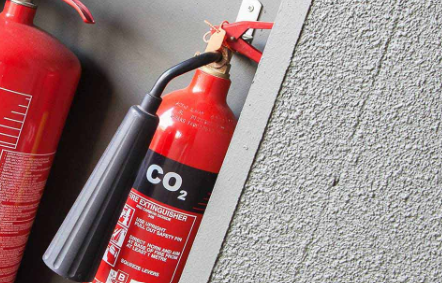
It’s also worth knowing what you have. There are several types of fire extinguisher and they’re not interchangeable — using the wrong one on the wrong type of fire can make things significantly worse rather than better. A CO2 fire extinguisher, for example, is designed specifically for electrical fires and flammable liquid fires. It works by displacing oxygen rather than soaking or smothering the fire, which makes it safe to use near live equipment where a water or foam extinguisher would create an electrocution risk. Knowing what type you have, where it is, and what it’s for means that if someone is in the property — a neighbour checking in, a pet sitter — they’re not picking up the wrong tool in a stressful situation.
For homes with more than one floor, it’s worth having extinguishers on each level. The most useful positions are in or near the kitchen, and near the main exit route. If you have any types of fire extinguisher that are past their service date, arrange to have them serviced before leaving — an extinguisher that hasn’t been maintained may not work when it needs to, which rather defeats the purpose.
Tell Someone
This one doesn’t get mentioned enough. If you’re going to be away for more than a few days, let a neighbour or someone nearby know. Not so they can water the plants — so that if they notice smoke, an unusual smell, or something that doesn’t look right, they have context to act on it rather than assuming it’s nothing.
A spare key held by someone local is also worth considering. If something does go wrong, the fire service will gain entry regardless, but having a key available can speed things up in situations where every minute counts.
Coming Back
When you return to a property that’s been empty for a while, it’s worth a quick scan before settling back in. Check that nothing looks or smells unusual. Test the smoke alarms again. If anything electrical was left on inadvertently and has been running in your absence, have it checked before continued use.
Leaving a home empty is a normal part of life. A fifteen-minute check before you go is a reasonable price for the peace of mind it buys — and for the actual reduction in risk it represents.