




American industrial facilities often manage forested land, storm debris, and clearing projects. Processing felled trees into firewood or manageable waste requires specialized equipment. A tow-behind log splitter provides mobile splitting power for remote locations. US facilities use firewood for heating workshops, employee break areas, and on-site housing. This equipment serves logistics centers with wooded property, maintenance departments handling storm cleanup, and agricultural operations processing timber.
Technical Overview and Splitting Applications: Splitter Configuration
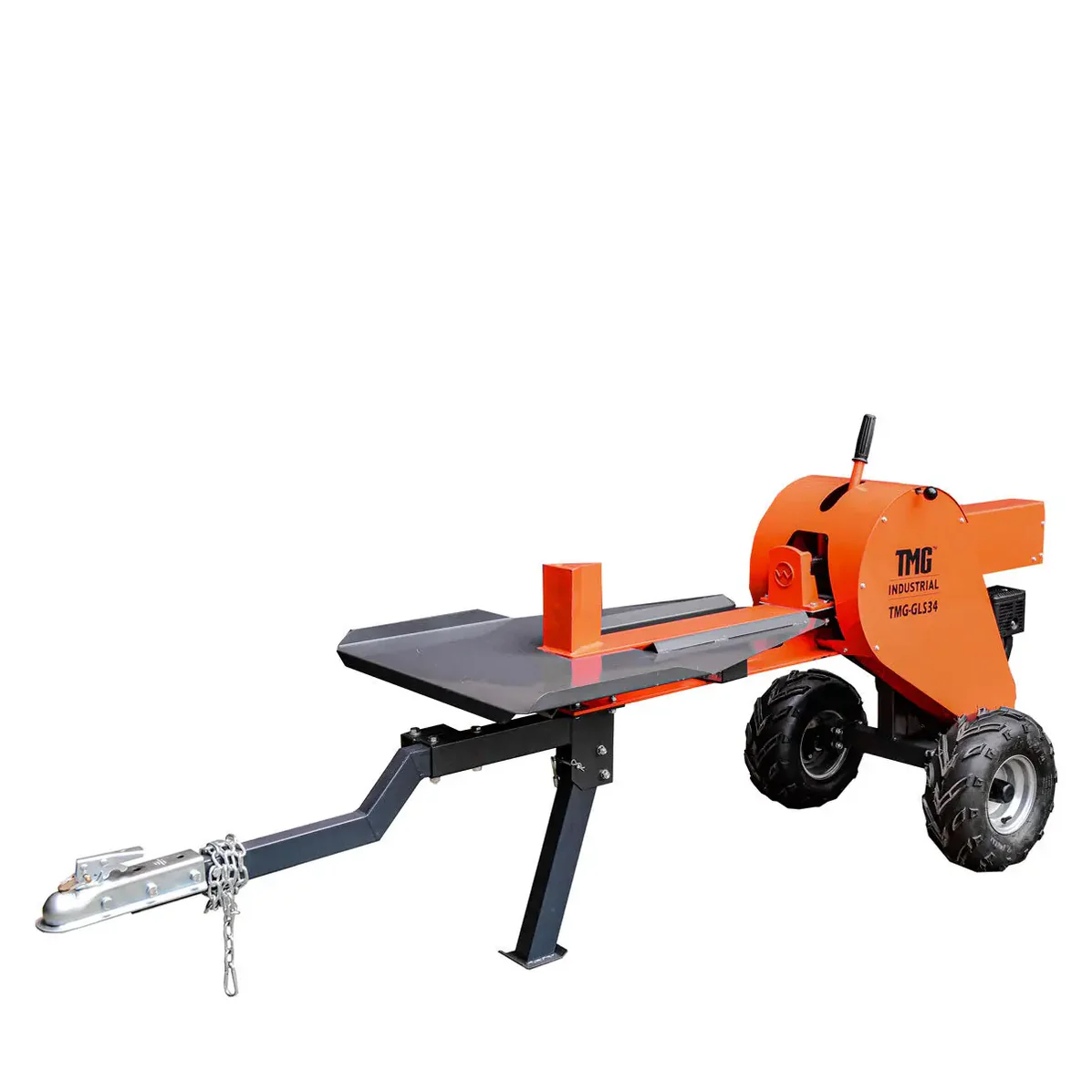
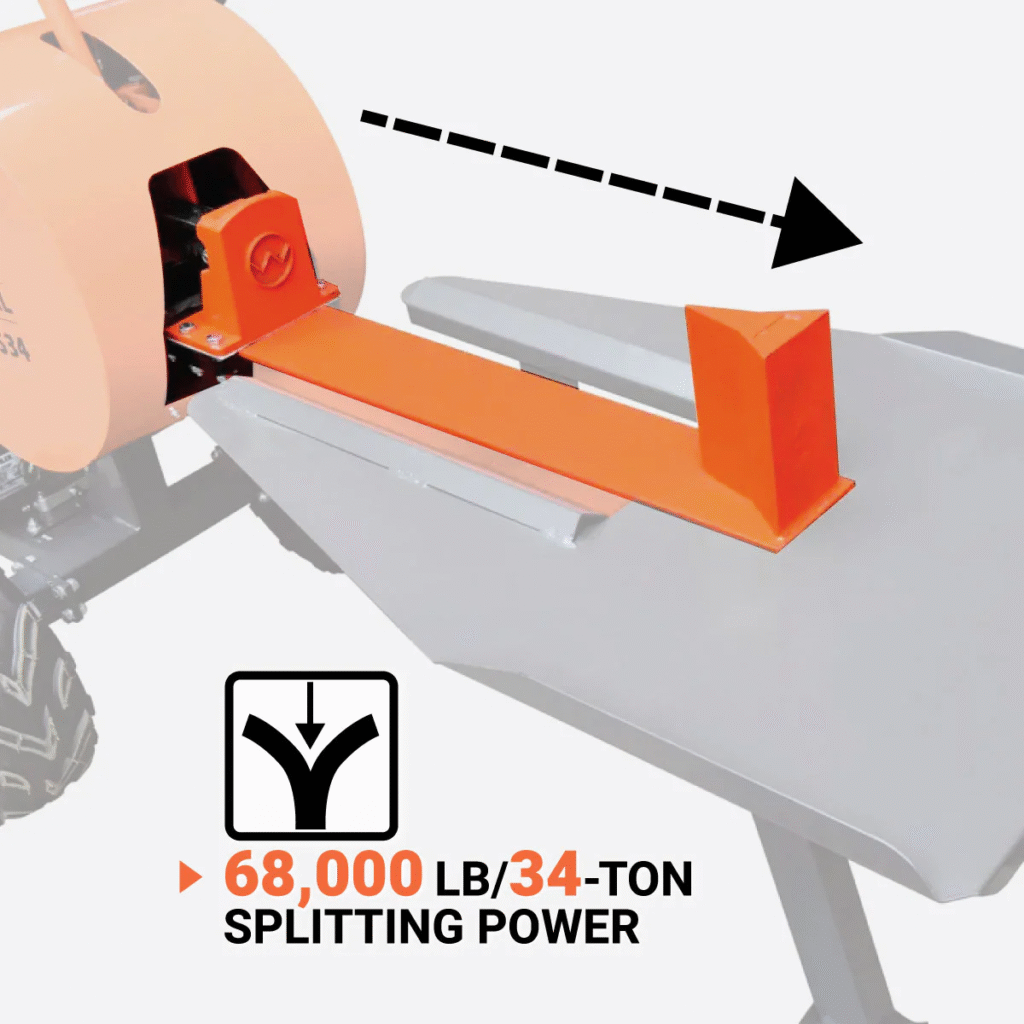
The unit delivers 34 tons of splitting force. Log diameter capacity reaches 28 inches. Log length capacity is 24 inches. Cycle time is 3 seconds per split. A 7 HP Kohler gasoline engine powers the hydraulic system. The wedge is 8 inches tall on an H-beam table. Tow-ready design includes a 2 inch ball receiver. ATV-style tires provide off-road mobility.
Industrial Site Uses
Storm debris processing after weather events. Workshop heating fuel preparation. Employee break area firewood supply. Land clearing waste reduction. Timber salvage from construction sites. Campground or remote facility heating. Mulch material production for landscaping.
Efficiency and Safety Contributions: Operational Productivity
A three-second cycle time allows over 1000 splits per hour. Thirty-four ton force splits knotty hardwoods without stalling. Twenty-eight inch diameter capacity handles large trunks. A twenty-four-inch log length produces standard firewood sizes. Tow-behind design moves between job sites without loading. Worktable height of 28 inches reduces operator bending and fatigue.
Safety Enhancements
Kohler engine includes Oil Sentry low oil shutdown. Two-hand operation keeps hands clear of splitting zone. Horizontal beam design provides a stable work surface. Cast iron cylinder liners prevent hydraulic failure. ATV-style tires maintain stability on uneven ground. Engine stops automatically when oil level drops below safe operating range.
Technical Specifications Power System
Kohler Command Pro CH270 engine delivers 7 horsepower. Displacement is 208 cc. Recoil start requires no battery. Cast iron cylinder liners extend engine life. Aluminum head and crankcase reduce weight. The engine supports future tri-fuel conversion if needed.
Splitting Hydraulics
Thirty-four ton force at maximum pressure. Cylinder cycle time is 3 seconds forward and reverse. H-beam height is 26 inches for log support. Wedge height is 8 inches for effective splitting. Hydraulic fluid type matches standard tractor oil.
Towing and Mobility
The 2 inch ball receiver fits standard trailer hitches. ATV tires measure 16 x 8.0-7 for rough terrain. Overall size is 83 inches long by 33 inches wide by 38 inches high. Weight is 530 pounds for stable towing. No electrical connection needed for lights as unit does not travel on public roads at night.
Performance Factors: Wood Species Effects
Softwoods like pine split in 2 seconds. Hardwoods like oak require full force. Knotty sections may need repositioning. Frozen wood splits cleanly but with more force. Wet or green wood produces stringy splits requiring sharper wedge.
Maintenance Requirements
Check engine oil before each use. Grease splitter beam weekly. Inspect hydraulic hoses for wear. Change hydraulic fluid every 100 hours. Clean air filter after dusty operations. Replace wedge if edge becomes rounded.
Safety Measures and Best Practices: Pre-Operation Guidelines
- Check engine oil level
- Inspect hydraulic hoses for leaks
- Verify wedge bolt tightness
- Clear area of debris
- Test cycle without log first
Operational Safety
Use two hands on the control levers. Never reach across the splitter beam. Keep bystanders 10 feet away. Split wood with the grain direction. Stop the engine before clearing jams. Do not remove partially split logs with hands.
Equipment Types and Accessories
Log splitters range from 20 to 40 tons. This 34 ton model suits commercial and heavy residential use. Accessories include log catcher tables for split wood. Hydraulic fluid for top-ups. Trailer hitch adapters for ATV or UTV. Replacement wedge for wear. Hydraulic filter for fluid changes. Spark plug for engine maintenance. Tow bar extension for long vehicles.
Advantages and Limitations
Advantages:
- 34 ton splitting force
- 28 inch log diameter
- 3 second cycle time
- 7 HP Kohler engine
- Tow-behind mobility
- 28 inch work height
- Oil Sentry protection
Limitations:
- Not for public road travel
- Requires 2 inch hitch
- Regular fluid changes needed
- Heavy for manual moving
- Engine maintenance required
- No electric start standard
Real-World US Case
A US logistics facility in Oregon managed 80 acres of forested land around its warehouse. Winter storms dropped 30 trees across access roads in one season. The maintenance team cut trunks into 24-inch sections but lacked splitting capability. Management purchased a 34-ton tow-behind log splitter. The unit towed behind an ATV to each fallen tree location. Two workers processed 18 cords of firewood over two weeks. The 34 ton force split frozen oak without staling. The 3-second cycle kept production moving steadily. Firewood heated the maintenance shop throughout winter, saving 2,500 dollars in propane costs. The splitter then cleared limbs from a new access road project. The facility now uses the unit for annual preventive clearing and employee firewood sales as a fundraiser.
Conclusion and Future Industry Trends
US industrial facilities with wooded property need mobile log splitting equipment. Tow-behind splitters combine highway towing with off-road mobility. Future designs may include electric-over-hydraulic controls for remote operation. LED lighting packages could enable night work during winter storms. Self-sharpening wedges might reduce maintenance intervals. Site managers should evaluate tow-behind splitters for any property generating more than 5 cords of wood annually. The combination of 34 ton force, 28-inch log capacity, and Kohler engine reliability makes this splitter suitable for diverse US industrial land management applications.