



Flat roofing has become a widely used roofing style in both residential and commercial construction due to its practical design, cost efficiency, and ease of maintenance. Unlike sloped roofs, flat roofs provide a nearly level surface, which makes them ideal for modern architecture, additional usable space, and simple structural design. With advancements in materials and waterproofing technology, flat roofing systems today are more durable and reliable than ever before.
Understanding Flat Roofing Systems
A flat roofing system is designed with a very slight slope that allows water to drain properly while maintaining a mostly level appearance. This small gradient is essential because it prevents water from pooling on the surface, which could otherwise lead to leaks and structural damage over time.
Flat roofs are commonly used in commercial buildings, apartments, warehouses, and even modern residential homes. Their simple design makes construction faster and more cost-effective compared to highly complex sloped roofing systems. Additionally, flat roofs offer flexibility for future modifications such as solar panel installation, rooftop gardens, or HVAC system placement.
Advantages of Flat Roofing
One of the main advantages of flat roofing is cost efficiency. Because the design is simpler and requires fewer materials, installation costs are generally lower compared to pitched roofs. This makes it an attractive option for large buildings where budget control is important.
Another major benefit is space utilization. Flat roofs provide additional usable surface area that can be used for various purposes. Many property owners use this space for storage, recreational areas, or energy systems like solar panels. This added functionality is one of the key reasons flat roofing continues to grow in popularity.
Flat roofs are also easier to access and maintain. Inspection, cleaning, and repair work can be done more safely and efficiently since the surface is level. This reduces maintenance costs and makes long-term care more manageable.
Common Materials Used in Flat Roofing
Flat roofing systems use a variety of materials, each designed to provide waterproofing, durability, and weather resistance. One of the most common materials is modified bitumen, which is known for its strength and flexibility. It performs well under changing weather conditions and provides reliable waterproof protection.
EPDM rubber roofing is another popular option due to its long lifespan and resistance to UV rays and extreme temperatures. It is lightweight, flexible, and easy to install, making it a preferred choice for many commercial buildings.
PVC roofing membranes are also widely used because they offer excellent durability and resistance to chemicals, fire, and water. They are particularly suitable for industrial environments where extra protection is required.
TPO roofing is a newer option that combines energy efficiency with durability. It reflects sunlight, helping reduce cooling costs and improving overall energy performance of buildings.
Common Problems in Flat Roofing
While flat roofing offers many benefits, it also requires proper care to avoid certain issues. One of the most common problems is water pooling. If drainage is not properly designed or maintained, water can accumulate on the surface and lead to leaks or material damage.
Another issue is membrane damage. Over time, exposure to sunlight, temperature changes, and physical wear can cause cracks or punctures in the roofing material. If not repaired quickly, these small damages can lead to serious water infiltration.
Blistering and bubbling can also occur in some flat roofing systems due to trapped moisture or air. This weakens the surface and reduces the effectiveness of the waterproof layer.
Installation Process of Flat Roofing
Proper installation is essential for ensuring the durability and performance of a flat roofing system. The process begins with preparing the roof deck, ensuring it is clean, dry, and structurally sound. Any damage or uneven areas must be repaired before installation begins.
An insulation layer is then added to improve energy efficiency and temperature control inside the building. After this, the waterproof membrane is installed carefully to ensure complete coverage and sealing.
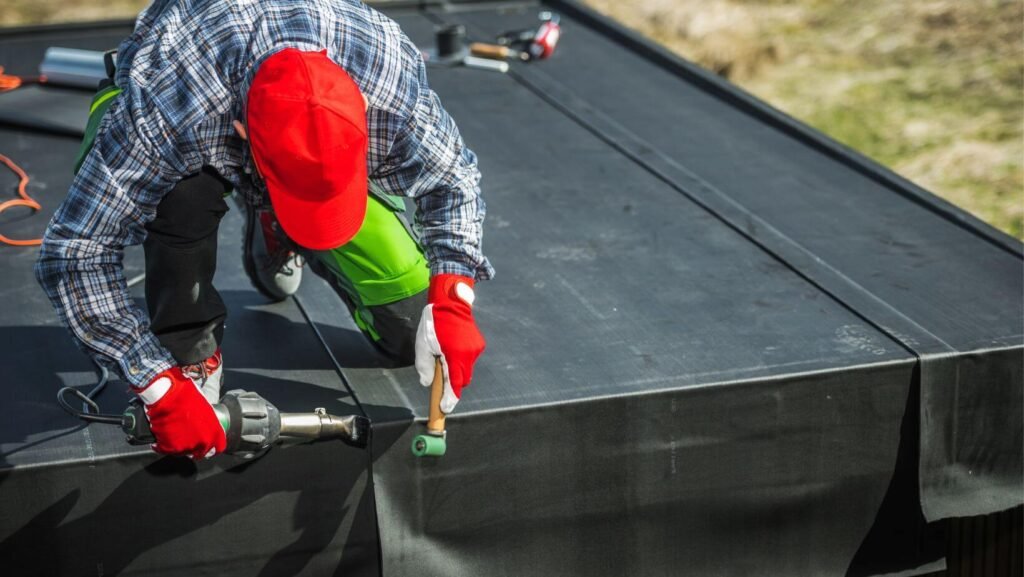
Seams and joints are properly sealed using specialized adhesives or heat welding, depending on the material used. This step is critical because even small gaps can allow water penetration.
Once installation is complete, a final inspection is carried out to ensure proper drainage, sealing, and overall structural integrity.
Maintenance Tips for Flat Roofing
Regular maintenance plays an important role in extending the lifespan of flat roofing systems. One of the most important practices is keeping the roof clean and free from debris. Leaves, dirt, and standing water can cause drainage issues if not removed regularly.
Inspecting the roof after heavy rain or storms helps identify any potential damage early. Small cracks or punctures should be repaired immediately to prevent water leakage.
Drainage systems should also be checked frequently to ensure they are not blocked. Proper water flow is essential for preventing pooling and structural damage.
Scheduling professional inspections at regular intervals ensures that hidden issues are detected and resolved before they become major problems.
Energy Efficiency Benefits of Flat Roofing
Flat roofing systems offer several energy efficiency advantages when designed correctly. Many modern flat roofs use reflective materials that reduce heat absorption from sunlight. This helps maintain cooler indoor temperatures, especially in hot climates.
The flat surface also makes it easier to install solar panels, which can significantly reduce energy costs over time. In addition, proper insulation helps improve thermal efficiency, reducing the need for heating and cooling systems.
These features make flat roofing an environmentally friendly option for modern construction projects.
Cost Considerations of Flat Roofing
The cost of flat roofing depends on several factors including material type, roof size, installation complexity, and labor charges. Generally, flat roofs are more affordable to install compared to sloped roofs due to their simple design.
However, long-term costs also depend on maintenance and repair needs. Choosing high-quality materials can reduce future repair expenses and improve durability.
While initial investment varies, flat roofing often provides good value due to its low construction cost and functional benefits.
When to Repair or Replace Flat Roofing
Flat roofing systems typically last for many years when properly maintained, but eventually repairs or replacement may be needed. Signs that repair is required include water leaks, visible cracks, or pooling water that does not drain properly.
If damage is widespread or the roof has reached the end of its lifespan, replacement may be the better option. A professional inspection helps determine the most cost-effective solution.
Early action is always recommended to prevent structural damage and higher repair costs.
Importance of Professional Roofing Services
Flat roofing requires proper installation and regular maintenance to perform effectively. Skilled professionals ensure that materials are installed correctly and that drainage systems are properly designed.
Working with a reliable roofing company ensures that high-quality materials are used and that the installation meets safety and performance standards. Professional expertise also helps in identifying potential issues early and providing long-term solutions that protect the building.
Conclusion
Flat roofing is a practical, cost-effective, and versatile roofing solution that suits modern construction needs. Its simple design, energy efficiency, and usable space make it an attractive choice for both residential and commercial buildings.
With proper installation, regular maintenance, and timely repairs, flat roofing systems can provide long-lasting protection and performance. Choosing quality materials and professional support ensures durability, safety, and long-term value for any property.