




Few invitations trigger as much wardrobe anxiety as a wedding. Unlike most events, a wedding outfit has to satisfy several things at once — it needs to respect the dress code, suit the venue and season, avoid unintentionally competing with the couple, and still feel like something you’re comfortable wearing for a full day or evening. It’s no surprise so many people end up staring at their closet, unsure where to start.
The good news is that most wedding-outfit stress comes down to a handful of recurring questions. Once those are answered, choosing an outfit becomes far more straightforward.
Start With the Dress Code, Not the Trend
The single most useful piece of information on any wedding invitation is the stated dress code, and it’s worth reading closely rather than skimming. “Black tie,” “cocktail attire,” “semi-formal,” and “casual” each carry fairly specific expectations, and dressing significantly above or below that expectation is one of the fastest ways to feel out of place once you arrive.
If no dress code is listed, the venue and time of day usually fill in the gap. An evening ceremony at a formal venue leans dressier by default, while an afternoon backyard or outdoor celebration generally signals a more relaxed interpretation, even without an explicit code stated.
The One Rule Almost Everyone Knows (and Why It Still Matters)
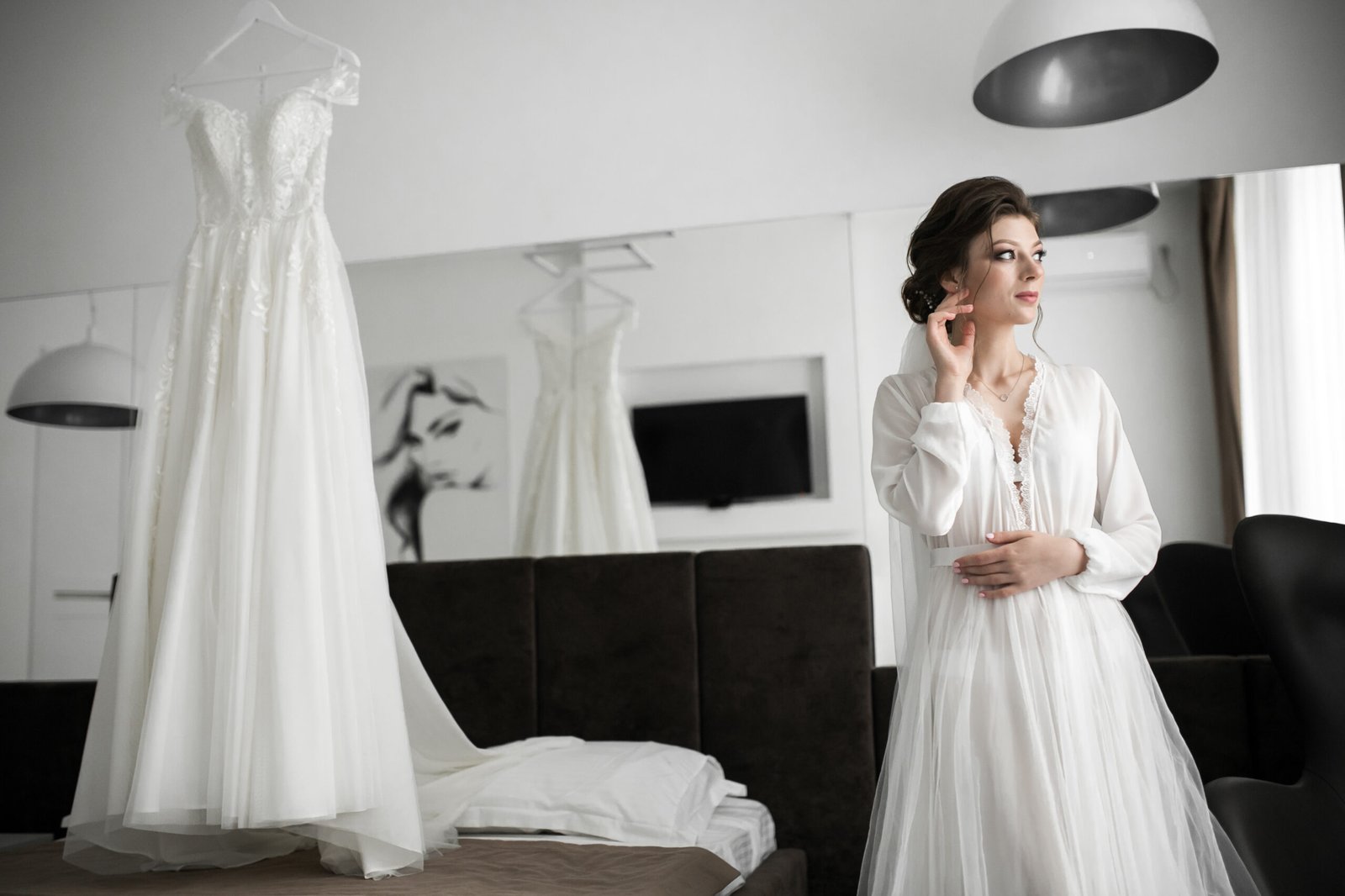
Avoiding white, ivory, or anything that could be mistaken for the bride’s dress from a distance remains one of the most consistent pieces of wedding-guest etiquette, and it’s worth taking seriously even at more casual celebrations. This isn’t about being overly cautious — it’s simply about not drawing attention away from the couple on their day.
Beyond white, it’s also worth avoiding an outfit that closely mirrors what’s known about the wedding party’s colors, if that information happens to be available. A soft, similar shade is rarely an issue, but an outfit that could be mistaken for a bridesmaid or groomsman look is generally worth reconsidering.
Dressing for the Season Without Sacrificing the Dress Code
Weddings happen year-round, and the season significantly affects what “appropriate” actually looks like in practice.
Warmer-weather weddings call for breathable fabrics — linen blends, lightweight cottons, and airy silhouettes — especially for outdoor ceremonies where guests may be standing or seated in direct sun for a stretch of time. Lighter colors and fabrics that don’t wrinkle heavily tend to hold up better through a long day of photos and celebration.
Cooler-weather weddings shift the focus toward richer fabrics and a jacket or wrap that’s actually part of the outfit rather than an afterthought grabbed on the way out. A tailored coat or a structured blazer can elevate a simpler base outfit while solving the temperature problem at the same time.
Regardless of season, it’s worth checking whether any part of the celebration happens outdoors — a ceremony on grass, cocktail hour on a lawn — since that affects shoe choice as much as it affects the outfit itself.
Shoes: The Detail That Gets Overlooked Until It’s a Problem
Wedding guest shoes deserve more thought than they usually get, mostly because weddings tend to involve more standing, walking, and dancing than most events. A beautiful heel that isn’t broken in, or one that’s poorly suited to grass or cobblestone, can turn into the most memorable part of the night for the wrong reasons.
A block heel, a wedge, or a comfortable low heel tends to be a safer choice for outdoor or long-duration weddings than a thin stiletto, without sacrificing polish. If a taller heel is non-negotiable, packing a comfortable backup pair for later in the evening is a practical compromise many guests rely on.
If you want to Read more Fashion related article visit: StyleBlooming
Considering Your Relationship to the Couple
How formal or expressive an outfit can be sometimes shifts slightly depending on your relationship to the couple. A close friend or family member in the wedding party’s orbit may feel comfortable leaning slightly more toward the formal end of the stated dress code, while a distant acquaintance or plus-one might reasonably stay closer to the more conservative interpretation, simply to avoid standing out unnecessarily.
This isn’t a hard rule, but it’s a useful tiebreaker when a dress code feels genuinely ambiguous and there’s no one obvious answer.
Building an Outfit That Works for Photos and Real Life
Weddings are heavily photographed events, which adds a layer most other occasions don’t have. An outfit that looks striking in a single photo isn’t automatically the right choice if it’s uncomfortable to wear for six or more hours of standing, dancing, and sitting through a long dinner.
A few practical considerations that hold up well across both photos and real wear:
- Fabrics that resist visible wrinkling after hours of sitting
- Silhouettes that allow full arm movement for dancing
- Undergarments and fit tested in advance, not on the day itself
- A small bag that holds essentials without needing to be set down and forgotten
Testing an outfit at home — sitting, walking, raising your arms — the way you would during the actual event is a small step that prevents a lot of mid-celebration discomfort.
Frequently Asked Questions
What should I wear if the invitation doesn’t list a dress code?
Let the venue and time of day guide you. A formal evening venue leans dressier by default, while a casual daytime or outdoor setting generally allows for a more relaxed interpretation.
Is it ever okay to wear black to a wedding?
Yes — black is widely accepted as appropriate wedding-guest attire in most modern settings, particularly for evening or formal weddings, as long as the overall look still feels celebratory rather than somber.
How strict is the “no white” rule really?
It’s worth taking seriously in most cases. Even if a specific shade isn’t identical to a bridal gown, anything that could plausibly be mistaken for it from a distance is generally best avoided.
What’s the safest shoe choice for an outdoor wedding?
A block heel, wedge, or comfortable low heel tends to hold up best on grass or uneven ground while still looking appropriately dressed up.
Should my outfit match my plus-one’s outfit?
Coordinating loosely — similar formality and a complementary color palette — tends to look more intentional than matching exactly, which can read as overly staged in photos.
Final Thought
A great wedding-guest outfit isn’t about the most elaborate look in the room — it’s about respecting the dress code, accounting for the season and venue, and choosing something you can comfortably wear for a full day of celebration. Getting those fundamentals right removes most of the guesswork long before the actual event.
For complete outfit breakdowns by season, dress code, and guest type — including options for men, plus-size guests, and destination weddings — Style Blooming’s wedding guest outfit ideas guide walks through full looks and styling notes for every kind of wedding.