





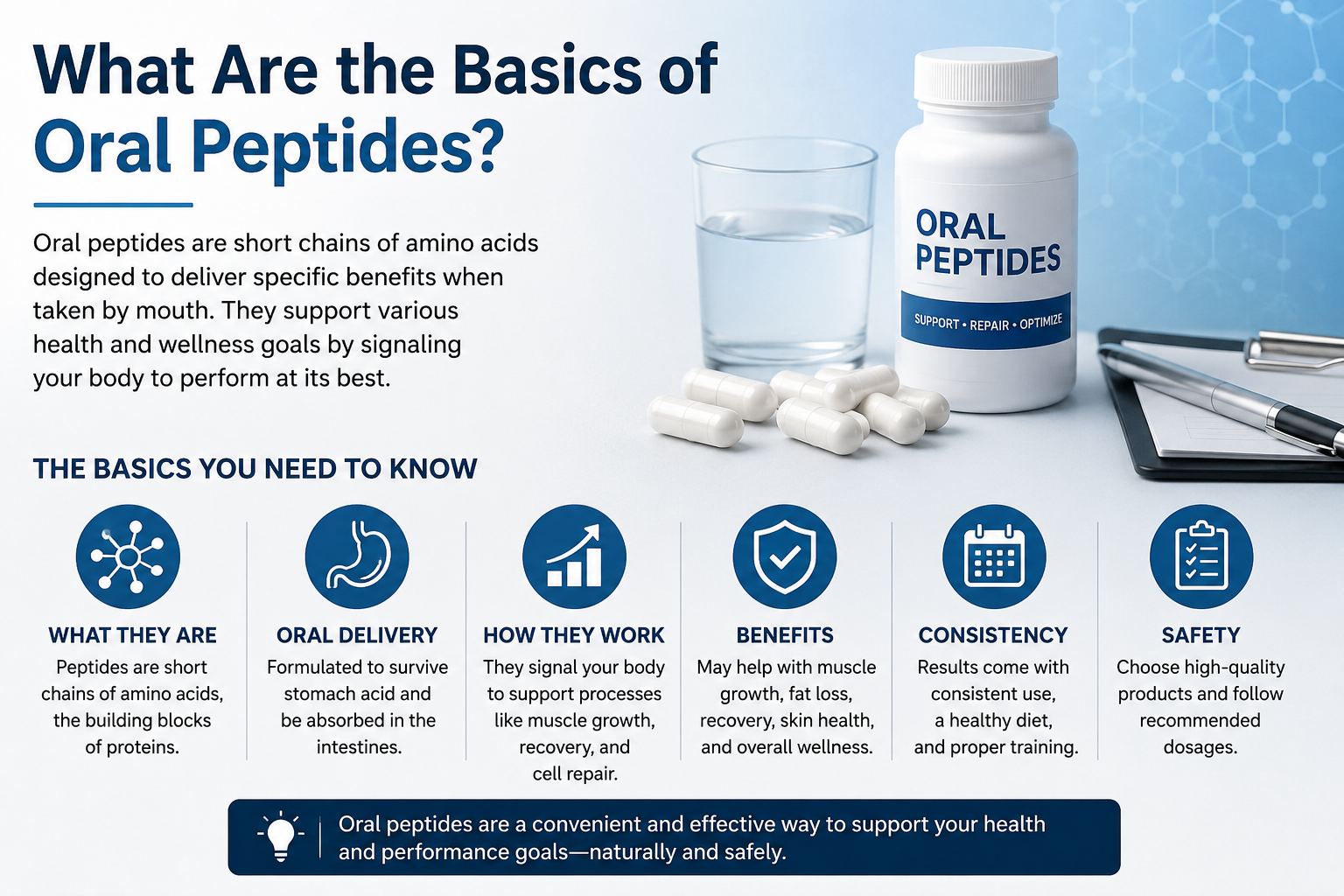
Oral peptides sit at an interesting intersection in the research world — familiar in format, but genuinely complex once you look at what’s actually happening after you swallow one. For anyone considering where to buy peptide capsules for the first time, it helps to start with the fundamentals of how oral peptide delivery works, what makes it different from other formats, and what to actually look for in a quality product.
What Makes a Peptide “Oral”
An oral peptide is simply a peptide compound formulated to be taken by mouth, typically in capsule or tablet form, rather than injected or delivered through the nasal membrane. On the surface, this looks identical to any standard oral supplement. Underneath, though, oral peptides face a challenge that most conventional supplements don’t: the digestive system is specifically built to break down proteins and peptides into their component amino acids before absorption, since that’s how the body normally processes dietary protein.
This means an oral peptide isn’t just “a peptide you swallow instead of inject” — it’s a compound that has to survive a hostile digestive environment largely designed to dismantle exactly this type of molecule.
Why Bioavailability Is the Central Issue
Bioavailability refers to how much of a compound actually reaches systemic circulation in an active, usable form. For oral peptides, this number can be substantially lower than for injectable or nasal versions of the same compound, simply because so much of the peptide can be degraded by stomach acid and digestive enzymes before absorption ever has a chance to occur.
This is the single most important concept to understand before exploring oral peptide options. A product listing the same peptide name as an injectable version does not automatically deliver a comparable effect, because the delivery route itself introduces a substantial barrier that injectable and nasal formats don’t face in the same way.
How Formulation Addresses the Bioavailability Problem
Quality oral peptide products use specific formulation strategies to improve the odds that a meaningful amount of the compound survives digestion. Enteric coatings are a common approach — a coating designed to resist breakdown in the stomach’s acidic environment and dissolve further along the digestive tract, where conditions are somewhat less destructive to peptide structure. Some formulations also incorporate absorption enhancers, compounds intended to help peptides cross the intestinal wall more effectively once they reach it.
These formulation choices are not minor details. They’re often the difference between a product that delivers a meaningful amount of active compound and one that largely passes through the digestive system without much of the peptide ever becoming bioavailable.
Why Not All Oral Peptide Products Are Equal
Because formulation plays such a large role in oral peptide performance, two products listing an identical peptide name can behave very differently depending on how much attention has gone into overcoming the digestive barrier. A supplier that invests in enteric coating technology, absorption enhancers, and rigorous testing is offering a fundamentally different product than one that simply encapsulates raw peptide powder without addressing digestion at all — even if both products are technically “the same compound” on the label.
This is why price comparisons alone are a poor way to evaluate oral peptide options. A lower-cost product that hasn’t addressed bioavailability may deliver far less active compound than a more expensive one that has, making the cheaper option a worse value overall despite the lower sticker price.
What Beginners Should Check Before Buying
A few practical questions help separate well-made oral peptide products from those cutting corners: Does the product disclose its formulation approach, including whether it uses an enteric coating or absorption enhancers? Is concentration per capsule clearly stated? Does the supplier provide third-party, batch-specific testing that verifies actual peptide content rather than just listing an ingredient name? Suppliers who answer these questions openly are signaling a level of formulation seriousness that generic product descriptions don’t provide.
How Oral Compares to Other Delivery Methods
It’s worth understanding how oral peptides fit into the broader landscape of delivery options. Injectable delivery generally offers the most predictable bioavailability but requires the most involved routine. Nasal delivery tends to offer a middle ground — better absorption than most oral formats without the full commitment of injections. Oral capsules offer the most convenience and familiarity, but typically require more sophisticated formulation to achieve comparable results, and even then, absorption efficiency is often lower than the alternatives.
None of these formats is universally superior; the right choice depends on the specific compound, its documented oral bioavailability (if any exists), and how much convenience matters relative to absorption efficiency for a given research goal.
Why Sourcing Remains the Deciding Factor
Given how much oral delivery depends on getting formulation right, sourcing quality matters just as much here as with any other format — arguably more, given the added complexity. Brands like Iron Peptides emphasize transparent, batch-specific testing precisely because oral formulations introduce additional variables that make independent verification especially important.
The Bottom Line
Oral peptides offer genuine convenience, but that convenience is only meaningful if the underlying formulation actually solves the bioavailability challenge that digestion creates. Understanding this distinction — and knowing what to look for in a well-formulated product — is the foundation for making informed decisions in this category, rather than assuming any capsule labeled with a familiar peptide name will perform the same as any other.
For anyone new to this space, the most useful mindset is to treat every oral peptide product as its own question rather than a settled equivalent of its injectable counterpart. Asking about formulation, checking for independent testing, and comparing documentation across suppliers before purchasing will do more to protect a beginner’s time and money than any single piece of marketing copy ever could.