





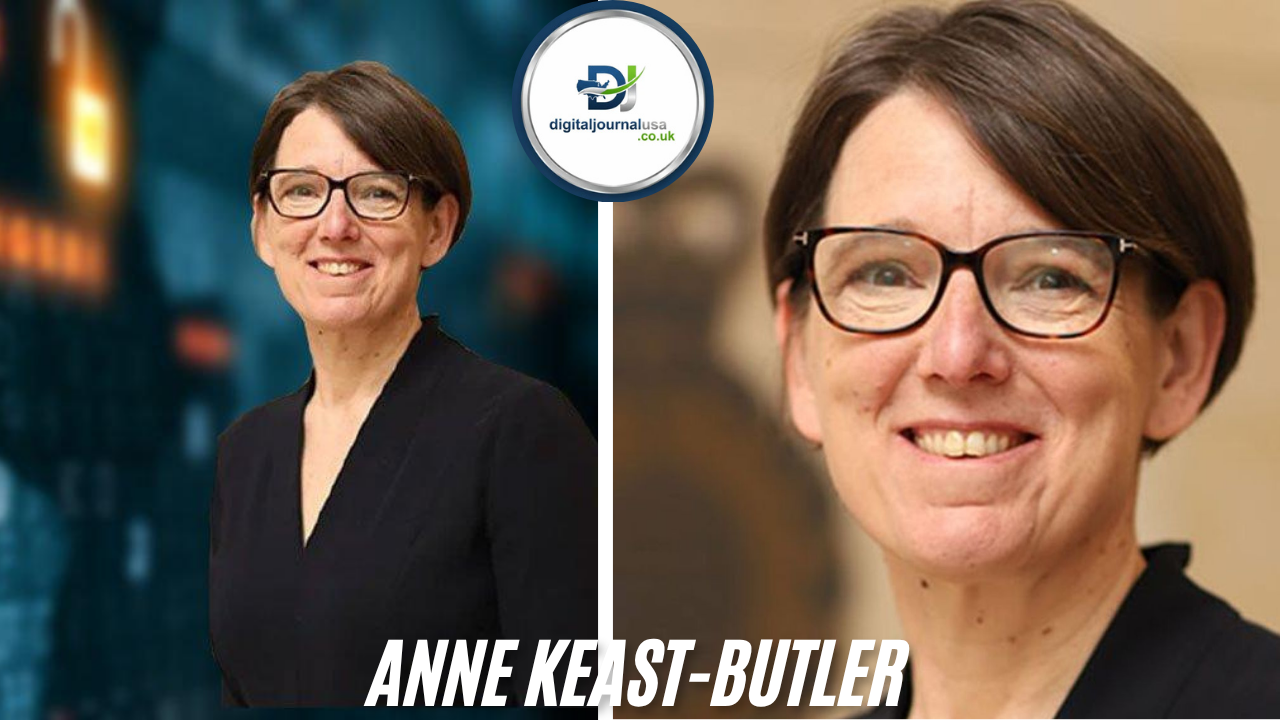
Who is Anne Keast-Butler’s?
Anne Keast-Butler, also known as Anne Louise Keast-Butler, is a prominent British intelligence official who currently serves as the Director of the Government Communications Headquarters (GCHQ). She made history by becoming the first female director of GCHQ, taking on one of the most significant roles in the United Kingdom’s intelligence and cybersecurity community. Anne Keast-Butler’s career spans decades in UK intelligence, including her pivotal work at MI5, shaping national security and counter-terrorism strategies.
Early Life and Education of Anne Keast-Butler
Anne Keast-Butler was born in 1970 in Cambridge, England. Her early life reflected a strong emphasis on education and analytical thinking. She pursued her studies in mathematics at Merton College, University of Oxford, a foundation that would later become integral to her intelligence career. Her academic background equipped her with problem-solving skills and analytical capabilities, essential for leading complex intelligence operations and cyber security initiatives at GCHQ.
Anne Keast-Butler’s Career at MI5
Before joining GCHQ, Anne Keast-Butler had an extensive career at MI5, the United Kingdom’s domestic security and intelligence service. Rising through the ranks, she became Deputy Director General, overseeing significant security operations, counter-terrorism efforts, and strategic planning. Her experience at MI5 included critical roles in cybersecurity, intelligence analysis, and national threat assessment, preparing her for the top role at GCHQ. Anne Keast-Butler’s MI5 background is often cited as one of her most significant professional assets, providing her with unmatched insight into both domestic and international intelligence operations.
Anne Keast-Butler as Director of GCHQ
In May 2023, Anne Keast-Butler assumed the role of Director of GCHQ, succeeding Sir Jeremy Fleming. Her appointment marked a historic moment as she became the first woman to lead this crucial UK intelligence agency. At GCHQ, Anne Keast-Butler is responsible for signals intelligence, cybersecurity, and providing intelligence support to government decisions. Under her leadership, GCHQ has continued to prioritize national cyber defense, countering threats from state actors like Russia and China.
Her tenure has also focused on modernizing intelligence operations, promoting diversity in the workforce, and enhancing the UK’s cyber capabilities. Anne Keast-Butler’s leadership style emphasizes collaboration, technological innovation, and strategic foresight, reflecting the analytical rigor she developed through her education and MI5 career.
Anne Keast-Butler’s Age and Personal Life
Anne Keast-Butler, born in 1970, is currently in her mid-50s. Despite her high-profile role, she maintains a relatively private personal life. She is married and has three children, and while her husband’s identity is not publicly disclosed, Anne Keast-Butler has spoken about the importance of family support in balancing her demanding career. Her ability to lead one of the world’s most sophisticated intelligence agencies while maintaining family priorities demonstrates her exceptional dedication and resilience.
Anne Keast-Butler’s Salary and Compensation
The exact salary of Anne Keast-Butler’s is not publicly disclosed, as is common for senior intelligence roles. However, as the Director of GCHQ, she is compensated at a level comparable to top civil service positions in the United Kingdom. Reports suggest that directors of UK intelligence agencies typically earn well over £160,000 annually, reflecting the responsibility, expertise, and security clearance required for the role.
Anne Keast-Butler’s LinkedIn and Professional Presence
Anne Keast-Butler’s does not maintain a personal public LinkedIn profile, which aligns with the confidential nature of intelligence work. However, her professional achievements are reflected through GCHQ’s official communications and industry announcements. She is widely recognized for her strategic vision, cybersecurity expertise, and leadership in the UK intelligence community, and she frequently appears in public forums and conferences representing GCHQ.
Anne Keast-Butler’s and Public Recognition
As the first female director of GCHQ, Anne Keast-Butler’s has received considerable attention in both national and international media. Her appointment is often highlighted as a milestone for gender diversity in intelligence leadership. News articles frequently reference her experience at MI5, her leadership style, and her focus on modern cyber threats. Under her direction, GCHQ continues to address critical national security issues while promoting innovation and workforce development.
Anne Keast-Butle’s Education and Professional Development
Anne Keast-Butler’s educational background in mathematics from Oxford University and her professional experience at MI5 have shaped her strategic approach to intelligence. She combines analytical rigor with operational experience, making her exceptionally qualified to lead GCHQ in an era of rapidly evolving cyber threats. Her career reflects a commitment to public service, intelligence excellence, and the development of future cybersecurity leaders.
Anne Keast-Butler’s Legacy
Anne Keast-Butler will be remembered as a pioneering leader who broke barriers in UK intelligence. As the Director of GCHQ, she embodies expertise, strategic insight, and resilience, influencing both policy and practice in intelligence and cybersecurity. Her legacy extends beyond her operational achievements, inspiring more women to pursue leadership roles in the intelligence community and broader security sectors.
Conclusion
Anne Keast-Butler’s stands out as one of the United Kingdom’s most influential intelligence leaders. From her early education at Merton College, Oxford, to her decades-long service at MI5, and now her historic role as Director of GCHQ, Anne Keast-Butler’s represents intelligence excellence, pioneering leadership, and the increasing role of women in national security. Her career continues to shape the future of the UK’s intelligence and cybersecurity landscape, making her a central figure in modern British intelligence history.