





Introduction to Modern Garage Flooring Solutions
Garage floors are often exposed to heavy wear and tear due to vehicle traffic, oil spills, moisture, and temperature changes. Over time, untreated concrete surfaces can become stained, cracked, and difficult to maintain. This has led many homeowners and commercial property owners to seek durable protective solutions that enhance both appearance and functionality.
One of the most effective and widely used options today is epoxy garage floor coating, a specialized surface treatment that transforms ordinary concrete into a strong, glossy, and highly resistant flooring system. It not only improves the visual appeal of a garage but also significantly extends the lifespan of the floor.
What Is Epoxy Flooring and How It Works
Epoxy flooring is a resin-based coating system that is applied over concrete surfaces. It is created by mixing epoxy resin with a hardening agent, which triggers a chemical reaction resulting in a rigid plastic-like surface.
Once cured, the coating forms a seamless, non-porous layer that bonds tightly to the concrete. This strong adhesion makes it resistant to impact, chemicals, stains, and moisture. Unlike traditional paint, epoxy does not simply sit on the surface; it becomes part of the floor itself, creating long-term durability.
Benefits of Epoxy Garage Floor Coating
One of the primary advantages of epoxy flooring is its exceptional durability. It can withstand heavy vehicle traffic, dropped tools, and constant foot movement without showing significant wear. This makes it ideal for both residential garages and commercial workshops.Another major benefit is resistance to chemicals and stains. Motor oil, gasoline, cleaning agents, and other substances that typically damage concrete are easily wiped off epoxy-coated surfaces without leaving permanent marks.
Epoxy floors are also highly resistant to moisture. This helps prevent issues such as mold growth, cracks caused by water seepage, and long-term structural damage to the underlying concrete.In addition, epoxy coatings enhance the aesthetic appeal of a garage. Available in a variety of colors, textures, and finishes, they can transform a dull space into a clean, polished, and professional-looking area.
Surface Preparation Before Application
Proper surface preparation is one of the most critical steps in achieving a successful epoxy flooring installation. Without adequate preparation, even high-quality epoxy may fail to bond properly.
The process begins with thoroughly cleaning the concrete surface to remove dirt, oil, grease, and existing coatings. Any cracks or imperfections in the floor must be repaired before application.Grinding or shot blasting is often used to create a slightly rough texture on the concrete. This improves adhesion by allowing the epoxy to penetrate and bond more effectively.Moisture testing is also essential. Excess moisture in the concrete can interfere with curing and lead to bubbling or peeling over time. Ensuring a dry and stable surface is key to long-term performance.
Application Process Explained
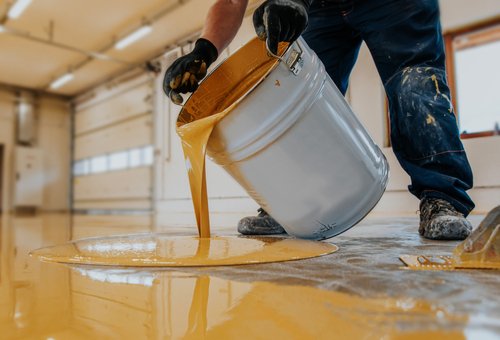
Once the surface is properly prepared, the epoxy application process begins. The resin and hardener are mixed in precise ratios to activate the chemical reaction.
The mixture is then applied evenly across the floor using rollers or specialized tools. Depending on the desired finish, multiple layers may be applied. A base coat is typically followed by decorative flakes or pigments, and finally a clear topcoat for protection.During this process, timing is crucial. The material must be applied within its working time before it begins to harden. Professional installers ensure even coverage to avoid streaks, bubbles, or uneven surfaces.High-quality epoxy garage floor coating systems are designed to cure into a smooth, glossy finish that enhances both strength and appearance.
Types of Epoxy Floor Finishes
There are several types of epoxy finishes available, each offering different levels of durability and visual appeal.
Solid epoxy coatings provide a clean, uniform appearance and are commonly used in residential garages. They offer strong protection and a smooth finish.Flake epoxy systems include decorative chips or flakes that are broadcast onto the wet epoxy layer. This creates a textured, multi-colored finish that also helps hide dirt and imperfections.Metallic epoxy coatings offer a more decorative and high-end appearance. They create unique, marble-like patterns that are popular in showrooms and luxury spaces.Quartz-filled epoxy systems combine epoxy resin with quartz granules, providing additional slip resistance and durability, making them suitable for high-traffic or industrial environments.
Durability and Long-Term Performance
One of the standout features of epoxy flooring is its long lifespan. When properly installed and maintained, epoxy floors can last for many years without significant deterioration.They are highly resistant to abrasion, making them suitable for areas where heavy equipment or vehicles are frequently used. The protective layer also helps prevent dust formation from concrete surfaces, keeping the environment cleaner.However, durability depends heavily on proper installation and maintenance. Poor surface preparation or incorrect mixing ratios can reduce the lifespan of the coating.
Epoxy floors are relatively easy to maintain compared to untreated concrete. Regular sweeping or vacuuming helps remove dust and debris.For deeper cleaning, mild detergents and water are usually sufficient. The non-porous surface prevents stains from penetrating, making cleanup quick and efficient.Harsh chemicals or abrasive cleaning tools should be avoided, as they can damage the protective layer over time.Periodic inspections help identify any minor wear or damage that may require touch-ups to maintain optimal performance.
Common Problems and How to Avoid Them
Although epoxy flooring is highly durable, certain issues can arise if installation is not done correctly.
One common problem is peeling or delamination, which occurs when the epoxy fails to bond properly with the concrete surface. This is usually caused by inadequate surface preparation.Bubbling can occur if moisture is trapped beneath the coating during application. Proper moisture testing helps prevent this issue.Fading or discoloration may happen over time due to UV exposure, especially in areas exposed to direct sunlight. UV-resistant topcoats can help mitigate this effect.Choosing experienced installers and high-quality materials significantly reduces the risk of these problems.
Cost Considerations and Value for Money
The cost of epoxy flooring depends on factors such as surface size, type of epoxy system, level of preparation required, and design complexity.Basic coatings are generally more affordable, while decorative or industrial-grade systems cost more due to additional materials and labor.
Although the initial investment may be higher than traditional flooring options, the long-term benefits often outweigh the cost. Reduced maintenance, increased durability, and improved aesthetics make epoxy flooring a cost-effective solution over time.
Applications Beyond Garages
While commonly used in garages, epoxy flooring has a wide range of applications.It is frequently used in commercial spaces such as warehouses, factories, and showrooms due to its strength and resistance to heavy traffic.In residential settings, it is also used in basements, kitchens, and utility areas where moisture resistance is important.Its versatility makes it suitable for both functional and decorative purposes.
Modern epoxy systems are designed with environmental safety in mind. Many formulations now contain low levels of volatile organic compounds (VOCs), making them safer for indoor use.Slip-resistant additives can also be incorporated into the coating to improve safety, especially in areas where water or oil spills may occur.Proper installation and curing ensure that the surface remains safe and stable for long-term use.
Future Trends in Epoxy Flooring Technology
Advancements in flooring technology continue to improve the performance and appearance of epoxy systems.
Self-leveling epoxy coatings provide perfectly smooth surfaces with minimal effort, while UV-resistant formulas enhance durability in sun-exposed areas.Innovations in decorative techniques now allow for highly customized designs, including 3D effects and metallic finishes that mimic natural stone or water textures.As demand grows, epoxy flooring is expected to become even more versatile and environmentally friendly.
Conclusion: A Smart Investment for Durable Flooring
Epoxy flooring has become one of the most reliable and attractive solutions for protecting and enhancing concrete surfaces. Its strength, chemical resistance, and visual appeal make it ideal for garages and a wide range of other applications.
With proper installation and maintenance, epoxy garage floor coating provides long-lasting performance that improves both functionality and aesthetics. It transforms ordinary concrete into a durable, easy-to-clean, and visually appealing surface.
Ultimately, choosing epoxy flooring is not just about improving appearance it is about investing in long-term protection, efficiency, and value for any property.