




Dedicated dog swimming pools were, for a long time, a metropolitan curiosity. Increasingly they are opening in market towns, on light-industrial estates and in converted farm buildings well away from any city. The reasons are more interesting than a story about people spending more on their pets.
The space problem solves itself outside the city
A dog pool needs a large, heated, well-drained building with parking and a decent water supply. In a city that combination is prohibitively expensive, and the parking alone can rule a site out. On the edge of a market town it is an ordinary industrial unit at ordinary rent, or a barn with a change-of-use application, and the floor area costs a fraction of the same space nearer a centre.
Running costs push the same way. Heating a body of water into the high twenties Celsius every day of the year is the dominant line in a small operation’s accounts, and it does not shrink for a fashionable postcode. Anything saved on rent goes into the heating. There is a quieter advantage too: an industrial estate has no neighbours to object to barking at eight on a Sunday morning.
The result is that provision has grown fastest where property is cheapest, which is the opposite of how most pet services have expanded.
Rural dogs are not automatically well exercised
Dogs in the countryside are assumed to get more exercise by default. In practice, rural owners face their own constraints: livestock fields that cannot be walked through for months, lanes with no pavement, dark winters with no lit routes, rivers unsafe or inaccessible for much of the year. Add a working household and a short January afternoon, and the daily walk becomes twenty minutes down an unlit lane with a head torch.
A controlled indoor pool answers all of that at once, and does so identically in January and July. It also answers the opposite problem: the July afternoon when the tarmac is too hot to walk on and the sensible advice is not to exercise a heavy-coated dog until evening.
Travel tolerance is higher than operators expect
Owners will drive surprisingly far for something their dog visibly enjoys, particularly when the alternative is nothing. A twenty-five minute drive that would be unthinkable for a routine errand is entirely acceptable for a weekly session, and it comes with a settled dog on the way home.
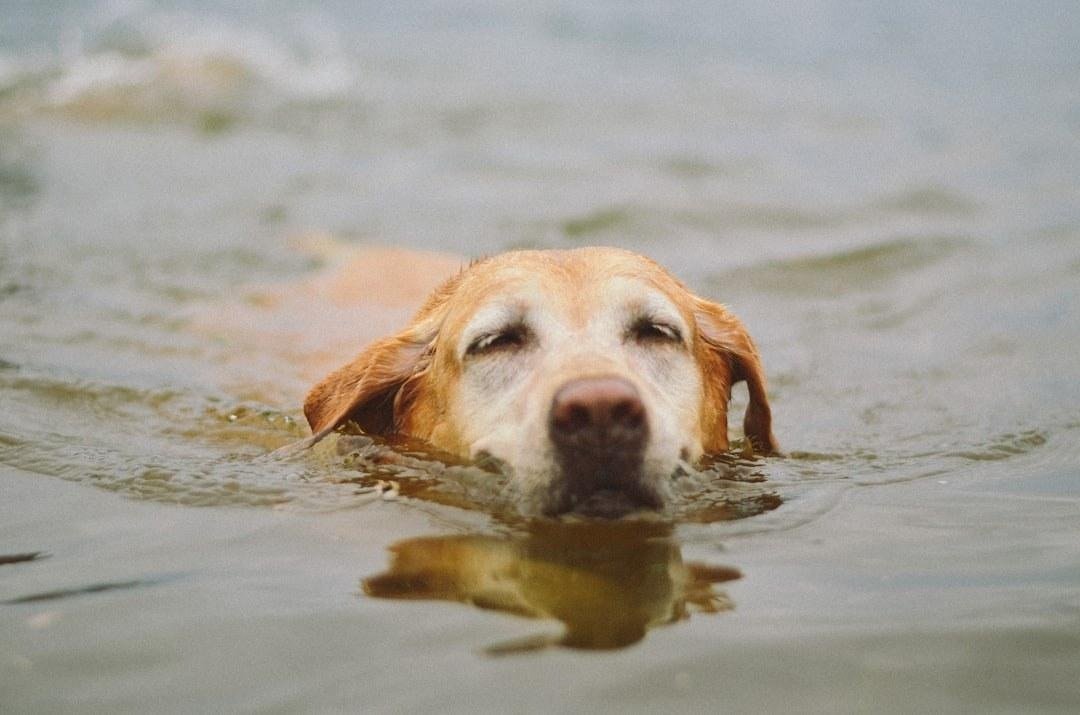
That radius is what makes a rural facility viable at all. A pool serving one town would struggle to fill a diary. A pool serving a cluster of towns within half an hour draws on four or five separate communities, a completely different proposition, and it is why facilities that describe themselves in county terms, such as dog swimming in Wiltshire, pull from a much wider area than their postcode suggests.
The recreation shift
The older generation of canine pools were overwhelmingly clinical: hydrotherapy centres treating referred dogs after surgery or for arthritis, usually with an underwater treadmill. That service still exists and remains essential for the dogs who need it.
What has grown alongside it is recreational: pools for healthy dogs, sold as exercise and enrichment rather than treatment. The distinction matters, because the two have different price points, supervision requirements and customers. Clinical work needs a qualified hydrotherapist and usually a veterinary referral, and any dog with a diagnosis or a suspected problem belongs on that side of the line, with a vet directing it. Recreational swimming needs neither, because nothing is being treated, and honest operators say which they are running.
A cohort effect nobody planned for
Part of the demand has an identifiable source. The dogs bought in enormous numbers during 2020 and 2021 are now middle-aged, and a well-documented share grew up with far less early exposure to other dogs, strangers and busy places than an ordinary puppyhood provides. Vets and behaviourists spent the following years dealing with the consequences.
For an owner whose dog cannot cope with a busy park, exercise becomes a logistical problem: early mornings, quiet lanes, a lot of turning round and walking the other way. A private pool is one of very few forms of hard exercise involving no other dogs at all, which accounts for a good share of the bookings. The same applies to elderly dogs unsure on their feet, and to rescue dogs still settling in.
Private hire as the default
The most noticeable change in newer facilities is that sessions are sold privately: one booking in the water at a time, rather than a shared session.
This is partly commercial, since private hire commands a better rate per slot. But it is mostly practical. A large share of the dogs booking are nervous, reactive, elderly or new to water, and none of those does well in a busy pool. Removing the other dogs removes most of the difficulty before the session starts, and lets the dog set the pace.
It has also changed the owner’s role. In a private pool there is no reason the owner cannot get in too, and many now do, which turns the session from something done to the dog into something done together. For an unsure dog, having its own person already in the water does more than any amount of encouragement from the side.
What it means for owners
Provision is now good enough across many rural counties that a pool within half an hour is a realistic expectation rather than a lucky accident. The questions to ask are the same everywhere. Is the water heated all year, or only in season? Is the entry steps or a ramp rather than a lift? Is somebody trained in canine first aid there for the whole session? Is the booking private or shared? And is the operator clear about whether they are offering treatment or exercise?
An operator who answers that last question plainly is usually a good sign. The ones who blur it are worth more scrutiny.