




Choosing a breast clinic in Singapore can be important when you are dealing with breast symptoms, abnormal screening results, breast lumps, breast cysts, nipple changes, breast pain, or breast cancer concerns. A breast clinic, in this context, refers to a clinic that assesses and manages medical breast conditions rather than cosmetic breast concerns.
Many breast changes are benign, but new, persistent, or unusual symptoms should still be assessed. A breast clinic can help patients understand the possible cause of their symptoms, arrange suitable tests and discuss treatment or follow-up where needed.
What Does a Breast Clinic Manage?
A breast clinic usually provides assessment, diagnosis and treatment planning for breast-related symptoms and conditions. This may include benign breast concerns as well as breast cancer-related care.
A breast clinic may assess:
- Breast lumps
- Breast cysts
- Breast pain
- Fibroadenomas
- Nipple discharge
- Nipple inversion
- Breast skin changes
- Breast infection or abscess
- Armpit lumps
- Abnormal mammogram results
- Abnormal breast ultrasound results
- Biopsy results
- Family history of breast cancer
- Breast cancer diagnosis
- Breast cancer surgery planning
- Follow-up after breast treatment
Patients may be referred by a GP, screening centre, polyclinic, gynaecologist, oncologist, or another healthcare professional. Some patients may also book directly after noticing symptoms.
When Should You Visit a Breast Clinic?
You may consider visiting a breast clinic if you notice a new or persistent breast change. You do not need to wait until a symptom becomes painful, as some breast conditions may not cause pain in the early stages.
Medical review may be needed if you notice:
- A new breast lump
- A lump that does not go away after your period
- A lump that is growing
- A lump in the armpit
- Nipple discharge, especially if bloody or one-sided
- New nipple inversion
- Skin dimpling or puckering
- Breast swelling or shape change
- Persistent localised breast pain
- Redness, warmth, or swelling that does not settle
- An abnormal mammogram or ultrasound result
- A biopsy recommendation
- A recent breast cancer diagnosis
A breast clinic can help determine whether the symptom is likely benign, needs monitoring, or requires further investigation.
1. Check the Clinic’s Medical Focus
The first factor to consider is whether the clinic focuses on breast conditions such as breast cancer, breast lumps, breast cysts and abnormal breast imaging. This is different from clinics that focus mainly on cosmetic breast procedures.
A medically focused breast clinic should be able to assess symptoms, review scans, arrange investigations and discuss treatment options where appropriate.
Patients may wish to check whether the clinic manages:
- Breast lump evaluation
- Breast cyst assessment
- Breast pain assessment
- Breast cancer screening follow-up
- Breast biopsy coordination
- Benign breast conditions
- Breast cancer surgery
- Post-surgery follow-up
This helps ensure that the clinic’s services are relevant to the patient’s concern.
2. Consider the Doctor’s Breast Surgery Experience
Breast symptoms may require clinical examination, imaging review, biopsy interpretation and, in some cases, surgery. The doctor’s training and experience in breast conditions can therefore be an important consideration.
Patients may wish to review whether the doctor is experienced in managing:
- Breast lumps
- Breast cysts
- Fibroadenomas
- Breast cancer
- Breast-conserving surgery
- Mastectomy
- Sentinel lymph node biopsy
- Breast abscesses
- Surgical biopsy or excision
- Follow-up after breast surgery
In Singapore, Maven Surgery, where Dr Chong Chee Keong practises, provides consultation and surgical care for breast conditions, including breast cancer-related concerns.
3. Look at Access to Breast Imaging
Breast symptoms often need imaging to help determine the cause. A clinical examination alone may not be enough to confirm whether a lump is a cyst, solid mass, infection, or another condition.
Depending on the patient’s age and symptoms, the doctor may recommend:
- Breast ultrasound
- Mammogram
- Diagnostic mammogram with additional views
- Breast MRI in selected cases
- Image-guided biopsy where needed
A clinic that can coordinate appropriate imaging and review results clearly may help patients move through assessment more efficiently.
4. Ask How Biopsy and Pathology Are Coordinated
If imaging shows an area that needs tissue diagnosis, a biopsy may be recommended. This can help confirm whether a finding is benign, atypical, pre-cancerous, or cancerous.
Patients may ask the clinic:
- Is biopsy available or arranged through a partner facility?
- What type of biopsy may be needed?
- How long do biopsy results take?
- Who will explain the pathology report?
- What happens if results are benign?
- What happens if results show cancer or atypical cells?
- Are pathology fees billed separately?
Clear communication around biopsy planning can reduce uncertainty during the diagnostic process.
5. Consider Whether the Clinic Provides Clear Explanations
Breast symptoms and abnormal scan results can be stressful. A suitable clinic should explain findings in a way patients can understand.
Patients should feel able to ask:
- What could be causing my symptoms?
- Is this likely benign or concerning?
- Do I need imaging?
- Do I need a biopsy?
- Can this be monitored?
- Is surgery needed?
- What are the risks of waiting?
- What symptoms should prompt earlier review?
A clear explanation helps patients understand the purpose of each test and the reason for each recommendation.
6. Review How the Clinic Handles Breast Cancer Concerns
If breast cancer is suspected or diagnosed, patients may need timely explanation and coordinated next steps. A breast clinic may help review imaging, biopsy results, cancer type and possible treatment options.
Patients may wish to ask whether the clinic can discuss:
- Breast-conserving surgery
- Mastectomy
- Sentinel lymph node biopsy
- Axillary lymph node surgery
- Reconstruction referral where suitable
- Chemotherapy, radiotherapy, hormone therapy, or targeted therapy referral where needed
- Treatment sequencing
- Recovery after surgery
- Follow-up surveillance
Breast cancer care may involve several specialists. Patients should ask how referrals are coordinated if oncology, radiology, genetics, rehabilitation, or reconstruction input is needed.
7. Check Whether Benign Breast Conditions Are Managed
Not every breast clinic visit is related to cancer. Many patients seek assessment for benign breast conditions, but these still need proper evaluation.
Common benign breast conditions include:
- Breast cysts
- Fibroadenomas
- Breast pain
- Breast infection
- Breast abscess
- Duct changes
- Hormonal breast changes
- Fat necrosis
- Benign biopsy findings that require monitoring
Patients should ask whether their condition needs observation, medication, drainage, biopsy, surgery, or repeat imaging.
8. Consider Follow-Up and Continuity of Care
Breast conditions may require follow-up even after the first consultation. For example, a breast cyst may need monitoring if symptoms recur, a fibroadenoma may need repeat imaging, or a patient with breast cancer may need post-surgery review and long-term surveillance.
Patients may ask:
- How often do I need follow-up?
- Will I see the same doctor again?
- How will test results be communicated?
- What happens if symptoms change before my next appointment?
- Can the clinic review previous scans?
- Will follow-up imaging be arranged?
Continuity of care can help patients track changes over time.
9. Consider Location and Appointment Access
Breast symptoms can cause worry, especially when a lump or abnormal scan is found. Practical access may therefore matter.
Patients may consider:
- Clinic location
- Transport convenience
- Hospital or imaging facility access
- Appointment availability
- Waiting time for imaging
- Waiting time for biopsy results
- Emergency or urgent review arrangements
- Follow-up scheduling
A conveniently located clinic can be helpful when multiple visits, tests, or follow-ups are needed.
10. Ask About Cost Transparency
Costs can vary depending on consultation fees, imaging, biopsy, medication, surgery, pathology tests and follow-up. Patients should ask for cost estimates where possible before proceeding with investigations or treatment.
Useful questions include:
- What is the consultation fee?
- Are ultrasound or mammogram fees separate?
- Is biopsy likely to be needed?
- What is the estimated biopsy cost?
- Are pathology fees separate?
- Are follow-up visits billed separately?
- What are estimated surgery costs if surgery is needed?
- Can insurance apply?
- Can MediSave be used for eligible procedures?
- Is pre-authorisation needed?
Patients should check directly with the clinic, hospital and insurer because coverage depends on the procedure, plan and policy terms.
11. Check What to Bring to the First Appointment
A breast clinic consultation is more useful when patients bring relevant records.
Bring the following if available:
- Previous mammogram reports
- Previous ultrasound reports
- Breast MRI reports
- Biopsy reports
- Images on CD or digital access
- Medication list
- Allergy history
- Family cancer history
- Menstrual and pregnancy history, where relevant
- Details of symptoms and when they started
- Insurance information, if relevant
If there is a breast lump, it may help to note whether it changes with the menstrual cycle, whether it is painful and whether it has grown.
What to Expect During a Breast Clinic Consultation
A breast clinic consultation usually begins with a discussion of symptoms, medical history, family history and previous breast imaging.
The doctor may then perform a clinical breast examination and armpit examination. Depending on findings, imaging may be recommended.
The consultation may include:
- Symptom review
- Clinical breast examination
- Armpit examination
- Review of previous reports
- Discussion of imaging needs
- Referral for ultrasound or mammogram
- Biopsy recommendation where needed
- Diagnosis explanation
- Treatment or monitoring plan
- Follow-up instructions
Patients should ask when they will receive results and what the next step will be.
Warning Signs That Need Prompt Review
Some breast changes should be assessed promptly rather than monitored at home.
Arrange medical review if there is:
- A new breast lump
- A lump that grows quickly
- A persistent armpit lump
- Bloody nipple discharge
- New nipple inversion
- Skin dimpling or puckering
- Orange-peel-like breast skin
- Breast redness with swelling and fever
- A lump after menopause
- An abnormal mammogram or ultrasound result
These symptoms do not always mean cancer, but they should be checked.
Questions to Ask Before Choosing a Breast Clinic
Patients may wish to ask:
- Does the clinic manage my specific breast concern?
- Does the doctor assess both benign and cancer-related breast conditions?
- Can the clinic coordinate ultrasound, mammogram, or biopsy?
- How will results be explained?
- What happens if the finding is benign?
- What happens if cancer is suspected?
- Are surgery and follow-up available if needed?
- How are oncology referrals handled?
- What are the consultation and test costs?
- Can insurance or MediSave apply?
- What should I bring to the appointment?
These questions can help patients choose a clinic that suits their medical and practical needs.
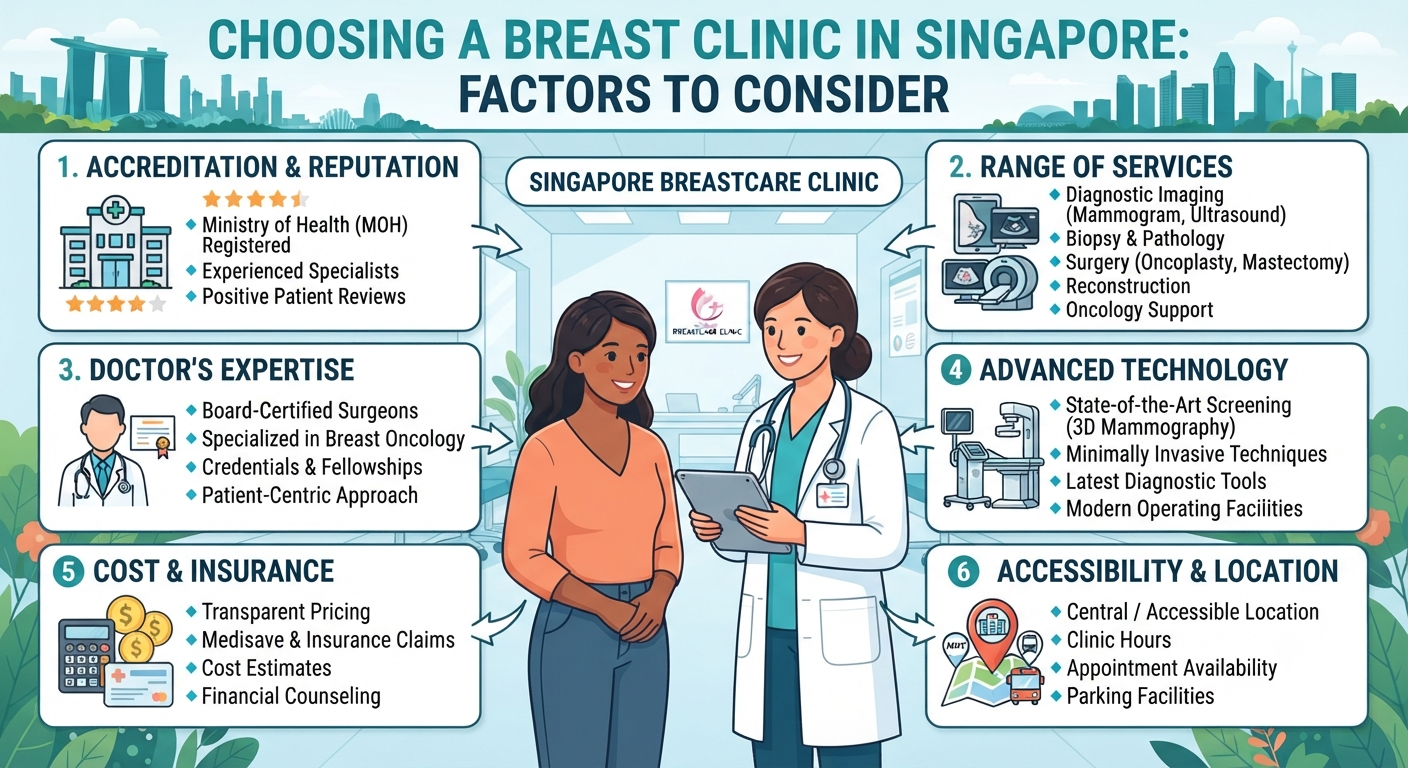
Choosing a breast clinic in Singapore should involve more than location alone. Patients should consider the clinic’s focus on medical breast conditions, the doctor’s experience with breast lumps, cysts and breast cancer, access to imaging and biopsy, clarity of explanations, follow-up support, cost transparency and coordination with other specialists where needed.
A breast clinic can help assess symptoms such as breast lumps, nipple discharge, skin changes, breast pain, armpit lumps and abnormal screening results. Many breast conditions are benign, but new or unusual changes should still be reviewed so that the cause can be identified.
Patients should seek timely medical advice for persistent or concerning breast symptoms, especially if they are new, one-sided, worsening, associated with skin or nipple changes, or found after menopause.
This article is for general information only and should not replace medical advice from a qualified healthcare professional.
FAQ
What does a breast clinic in Singapore manage?
A breast clinic may assess and manage breast lumps, breast cysts, breast pain, nipple discharge, skin changes, abnormal mammograms, abnormal ultrasounds, biopsy results and breast cancer-related concerns.
Should I go to a breast clinic for a breast lump?
Yes, a new or persistent breast lump should be assessed. Many lumps are benign, but examination and imaging may be needed to identify the cause.
What tests may a breast clinic recommend?
A breast clinic may recommend breast ultrasound, mammogram, diagnostic mammogram, breast MRI in selected cases, or biopsy depending on symptoms, age and examination findings.
How do I choose a breast clinic?
Consider whether the clinic manages medical breast conditions, whether imaging and biopsy can be coordinated, whether the doctor explains results clearly, whether follow-up is available and whether costs are transparent.
Can a breast clinic treat breast cysts?
Yes, breast clinics commonly assess breast cysts. Some cysts may only need monitoring, while others may need drainage or further review depending on symptoms and imaging features.
When should breast symptoms be checked urgently?
Seek prompt review for a new breast lump, rapidly growing lump, bloody nipple discharge, new nipple inversion, skin dimpling, breast swelling, armpit lump, fever with breast redness, or abnormal breast imaging result.