





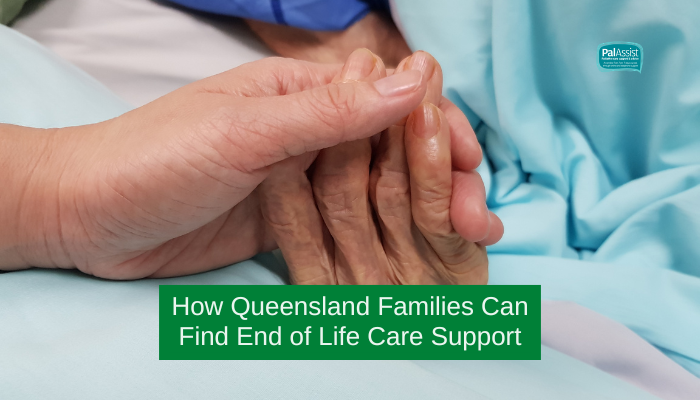
When someone you love is approaching the end of their life, it can be difficult to know where to turn first. Between medical appointments, family responsibilities, and emotional stress, even figuring out the next step can feel overwhelming.
The team behind PalAssist works closely with families going through these situations and understands how confusing the process can be. That’s why we’ve put together this guide. It covers your care options, how to access support, and what’s available across Queensland.
Let’s start with what end-of-life care actually means and who it covers.
What Is End-of-Life Care, and Who Does It Cover?
End-of-life care is about making sure your loved one is as comfortable, supported, and in control as possible during the final stage of an illness. It focuses on managing symptoms and providing emotional support for both the person and their family.

This type of care applies to anyone with a life-limiting condition (not just older adults). Young people and children can also receive it across a wide range of serious illnesses, including cancer, dementia, and other progressive conditions.
Unlike a service that steps in at the very end, end-of-life care typically begins when a person is expected to die within the next 12 months. This earlier start gives families enough time to connect with the right palliative care services and make decisions without feeling rushed.
How to Access End-of-Life Care Support in Queensland
To access end-of-life care support in Queensland, the first step is usually speaking with a local doctor. They can assess your loved one’s needs and connect you with the right palliative care services for their situation.

From here, most families move into a few common entry points:
- Queensland Health Services: Families can access end-of-life care through Queensland Health Services, usually via a GP referral or hospital palliative care team. For more complex needs, specialist palliative care services are also available across the state.
- Community Palliative Care Providers: Community-based palliative care providers offer support at home, in aged care facilities, and in regional areas. They work closely with health professionals across medical, emotional, and practical needs.
- Phone and Online Support Services: These services provide information, guidance, and practical support for families trying to understand their care options or find the right place to start. They’re especially useful when you’re unsure which services to contact or what steps to take next. PalAssist is one example available to Queensland families, with free nurse-led support and advice available seven days a week.
The most important thing is to seek support early. The sooner families connect with the right services, the more time there is to plan care arrangements and make decisions without pressure.
Choosing Between Home Care and a Hospice Facility
Most families assume one setting is clearly better than the other. In reality, the right choice depends on the patient’s needs, preferences, and the level of support available from family and caregivers.
We cover both in detail below.
When Home-Based Care Works Well
For many people, home is where they most want to be. Familiar surroundings, established routines, and the people they love nearby can provide a sense of comfort that no facility can fully replicate.
Professional support is still an important part of that care. Community palliative care teams can visit to review symptoms and adjust treatment as needed. They also help families with practical aspects of care. This is especially relevant for families in regional Queensland, where visiting palliative care teams are often the primary source of specialist support available locally.
When an Inpatient Facility May Be a Better Fit
Sometimes, however, a person’s care needs reach a point where home is no longer the easiest or safest place to provide support. Care needs can increase quickly, and the support available through home visits is not always enough to keep up.
When that happens, needing to move into an inpatient hospice or palliative care facility doesn’t mean you’ve fallen short or that home care has failed. It simply means your loved one needs a different level of support. With specialist staff available around the clock, these facilities are equipped to manage complex symptoms and respond quickly as needs change.
For many families, the transition also brings reassurance. Instead of carrying the full responsibility of care themselves, they can focus on being present with their loved one.
If you’re still not sure, ask yourself one question: Can the people at home realistically meet the care needs in advance? If the answer is no, an inpatient facility gives your loved one the clinical support they need, while you focus on being there with them emotionally.
Advance Care Planning: Giving Your Family a Clear Path Forward
Advance care planning is the process of documenting a person’s medical wishes before they can no longer communicate them. It covers treatment preferences, personal values, and beliefs about care. That way, health professionals know exactly what the person wants when decisions need to be made.
And in most cases, it’s the clinical team who takes the lead on those decisions, in consultation with the family. That takes an enormous amount of pressure off people who are already facing one of the hardest periods of their lives.
Support for You as the Family Carer
Caring for someone at the end of their life takes a lot. The exhaustion is physical, the grief starts before any loss, and most carers are running on empty long before they admit it.
That doesn’t mean you have to keep going alone. The Carer Gateway is a free Australian Government programme that connects carers with emotional support, respite care, and practical resources based on their individual situation.
We’ve seen carers who wait until they’re completely exhausted find it much harder to recover and continue. That’s why reaching out early, even before things feel overwhelming, is always the better call.
Taking the First Step Is an Act of Love
End-of-life care in Queensland doesn’t have to be faced alone. The first step is simply connecting with the right service. Queensland families typically access palliative care and support through the following pathways:
- GP referral to the community palliative care team is the most direct route into funded services
- 13 HEALTH (13 43 25 84) if you need a starting point and aren’t sure what to ask for
- Speak with a hospital social worker if your loved one is already admitted
- Palliative Care Queensland’s service directory to find local palliative care providers by region
- Advance care planning to get your loved one’s wishes documented before decisions become urgent
PalAssist is also here. Call us on 1800 772 273, seven days a week from 7 am to 7 pm. We can help you make sense of your options and figure out what to ask for next.