




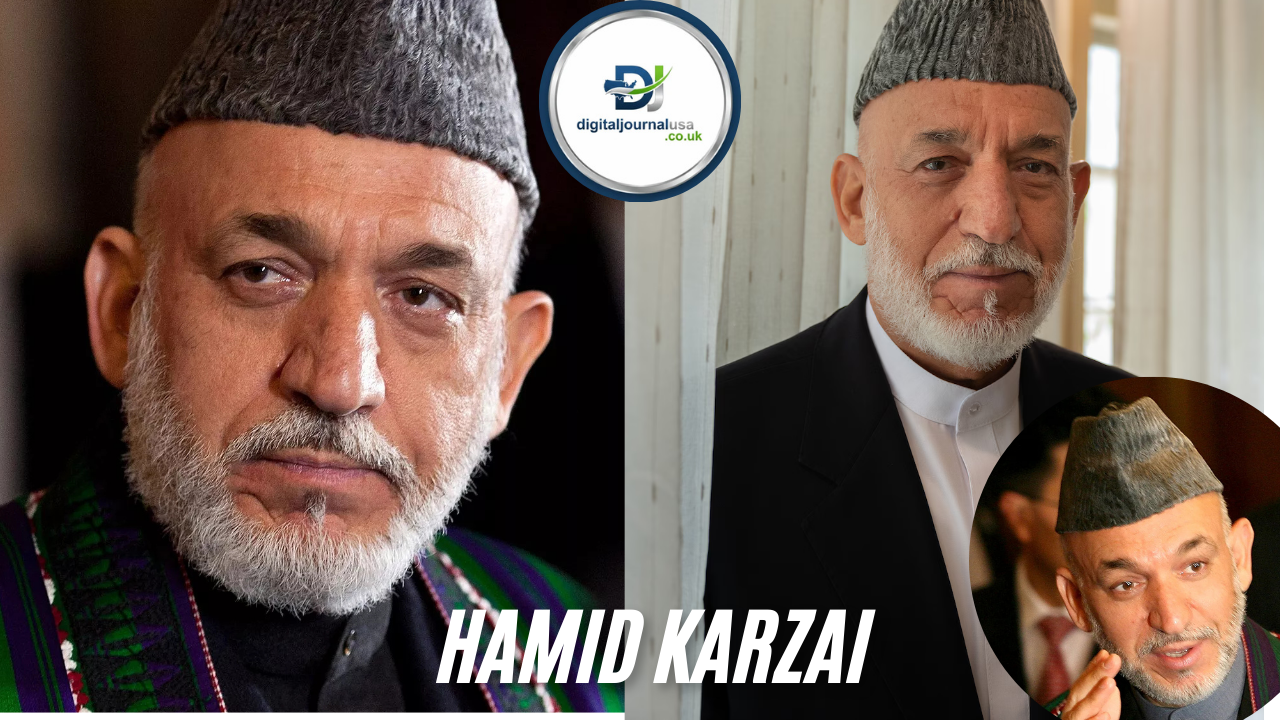
Hamid Karzai served as the President of Afghanistan from 2001 to 2014, playing a pivotal role in shaping the country’s post-Taliban era. His leadership and influence, both domestically and internationally, have made him one of Afghanistan’s most prominent political figures. Born into a prominent Pashtun family, Karzai rose to the heights of Afghan politics through his efforts to stabilize the country after decades of war and political upheaval.
Early Life and Education
Hamid Karzai was born on December 24, 1957, in Karz, a village near the southern Afghan city of Kandahar. His family had a long history of political influence, and his father, Abdul Ahad Karzai, was a prominent tribal leader. The Karzai family played an important role in the political landscape of Afghanistan, and Hamid Karzai grew up in a setting where politics and governance were major themes.
Karzai attended Habibia High School in Kabul and later moved to India to further his education. He obtained a master’s degree in political science from Himachal Pradesh University in the 1980s, which set the stage for his eventual political career. His experiences during the Afghan-Soviet War and his family’s connection to Afghan tribal politics were key to his rise to power in the following decades.
Political Rise
In the 1990s, Hamid Karzai played an active role in Afghanistan’s resistance to Soviet occupation, working alongside the mujahideen in Pakistan. After the Soviet withdrawal and the subsequent collapse of the communist government, Karzai continued his involvement in Afghan politics. However, it was not until after the fall of the Taliban in 2001 that he became a central figure in Afghanistan’s post-war reconstruction.
During the 2001 U.S.-led invasion of Afghanistan, Karzai was chosen as the leader of the Afghan Interim Government. He was seen as a moderate figure who could unite Afghanistan’s deeply divided ethnic and political groups. His leadership was crucial in the formation of a new Afghan government and in steering the country through its first years of reconstruction.
Presidency of Afghanistan (2001–2014)
Hamid Karzai was elected as Afghanistan’s first democratically chosen president in 2004. He was re-elected in 2009, and his tenure lasted until 2014. During his presidency, Karzai faced enormous challenges, including ongoing conflict with the Taliban, rebuilding a war-torn economy, and navigating complex relationships with foreign powers, particularly the United States.
Under Karzai’s leadership, Afghanistan made strides in rebuilding its infrastructure, education system, and governance. However, his presidency was also marred by allegations of corruption and the influence of foreign powers, particularly the United States. Many critics accused his government of being overly dependent on international aid and military presence, and his administration was plagued by corruption scandals involving high-ranking officials.
Challenges During His Presidency
One of the most significant challenges Karzai faced was the resurgence of the Taliban. Despite the presence of international forces, the Taliban continued to wage a violent insurgency, particularly in rural areas. This ongoing conflict created a climate of instability and insecurity in Afghanistan, making it difficult for Karzai’s government to maintain control.
Additionally, Karzai’s relationship with the United States was complicated. While the U.S. was a key ally in his efforts to rebuild Afghanistan, Karzai often clashed with U.S. officials over issues such as civilian casualties caused by airstrikes and the presence of foreign military forces. Despite these tensions, Karzai remained a staunch advocate for Afghanistan’s sovereignty and independence.
The Legacy of Hamid Karzai
Karzai’s presidency left a mixed legacy. On one hand, he helped bring stability to a country ravaged by decades of war, and he played a crucial role in rebuilding Afghanistan’s institutions after the fall of the Taliban. On the other hand, his government faced widespread criticism for corruption, inefficiency, and its inability to effectively combat the Taliban insurgency.
Perhaps one of Karzai’s most enduring legacies is his role in shaping Afghanistan’s political landscape. Under his leadership, the country held its first democratic elections and adopted a new constitution. However, the nation’s progress has been marred by the continuing insurgency, political divisions, and challenges in governance.
Hamid Karzai International Airport
The Hamid Karzai International Airport, located in Kabul, Afghanistan, became an important symbol of Karzai’s time in power. The airport, which was previously known as Kabul International Airport, was renamed in his honor in 2014, shortly after he stepped down from the presidency.
The airport played a key role during the 2021 evacuation when the U.S. and its allies pulled out of Afghanistan. The chaotic scenes at the airport, as thousands of people attempted to flee the country amid the Taliban’s rapid advance, were broadcast worldwide. The airport’s name, once a symbol of Karzai’s leadership, became associated with the end of the U.S. military presence in Afghanistan.
Where Is Hamid Karzai Now?
After his presidency, Hamid Karzai largely retreated from the political spotlight. However, he continued to be a vocal critic of the Taliban’s return to power and remained an advocate for women’s rights and education in Afghanistan. He has spoken out against the Taliban’s policies and their treatment of women, calling for the reopening of girls’ schools and the protection of Afghan women’s rights.
As of 2026, Karzai is believed to be living in Afghanistan, though he has occasionally traveled abroad for medical reasons. Despite the Taliban’s return, Karzai’s influence and role in Afghan politics remain significant, with many looking to him for guidance during these uncertain times.
Conclusion
Hamid Karzai’s presidency and his time in Afghan politics have left a complex and multifaceted legacy. While his efforts to rebuild Afghanistan after decades of war were significant, his presidency was also plagued by corruption, instability, and ongoing conflict. Despite these challenges, Karzai remains an important figure in Afghanistan’s modern history, and his influence continues to shape the country’s political landscape. Whether viewed as a hero or a controversial figure, Karzai’s legacy will undoubtedly continue to be a topic of debate for years to come.