



A cracked smartphone creates a strange psychological effect: the moment the glass breaks, many owners mentally reduce the device’s value to zero. The resale market is less dramatic. A broken phone can still contain a working processor, cameras, storage, battery, chassis parts and valuable materials – all of which can make it worth real money to the right buyer.
A smashed iPhone can still have a price
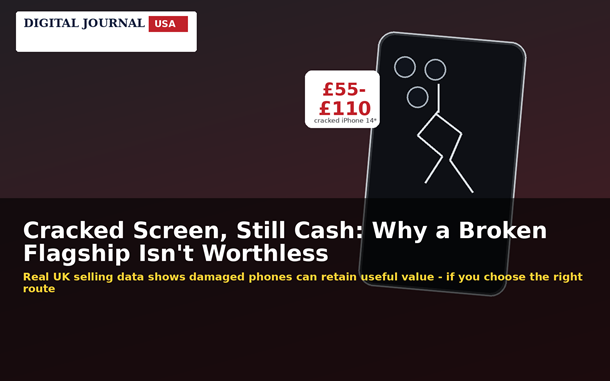
SellMyPhone analysed several routes for damaged handsets earlier this year. In its broken-phone selling comparison, a cracked iPhone 14 128GB was estimated at roughly £55-£110 through online recyclers, while an eBay sale could potentially return more but involved greater uncertainty, time and buyer risk.
Those figures are examples rather than fixed quotes, but they challenge the assumption that visible damage automatically kills resale value. Specialist recyclers are often buying for refurbishment, repair or parts, so they value a damaged phone differently from a private buyer looking for something pristine.
Why damaged-phone prices vary so widely
· A cracked screen with a fully working motherboard is very different from a phone that will not power on.
· Face ID, cameras, charging ports and buttons can each affect grading.
· High-storage versions may retain more value even when damaged.
· Different recyclers have different repair pipelines, so one buyer may pay materially more than another for exactly the same fault.
Repair first or sell broken?
Repairing before sale sounds logical, but it only works if the increase in resale value is greater than the repair bill. A £200 screen repair that lifts the selling price by £120 leaves the owner worse off. Before authorising work, compare a broken-condition quote with a working-condition quote and calculate the difference.
This is where comparison matters more than usual. The spread between recyclers can be wider on faulty devices because each business places a different value on repairable stock. Owners can simply sell my phone as broken or damaged in the comparison tool and see which buyer is pricing that fault most aggressively.
Do not forget the data because the screen is broken
Physical damage does not make personal information disappear. If the handset still works, back it up, remove accounts and factory-reset it before it leaves your possession. The NCSC’s second-hand device guidance recommends erasing personal data before selling, donating or trading in a device.
The landfill option pays exactly £0
The financial case for checking a broken phone’s value is straightforward: the worst realistic outcome is discovering that offers are low. The alternative – leaving it in a drawer for years or throwing it away – guarantees that any remaining value is lost.
A cracked flagship is not the same product as a mint flagship, and it should not be priced as one. But ‘damaged’ and ‘worthless’ are not synonyms. Before paying for a repair or writing the phone off, get the broken-condition price first. That one comparison often tells you which route makes the most sense.