



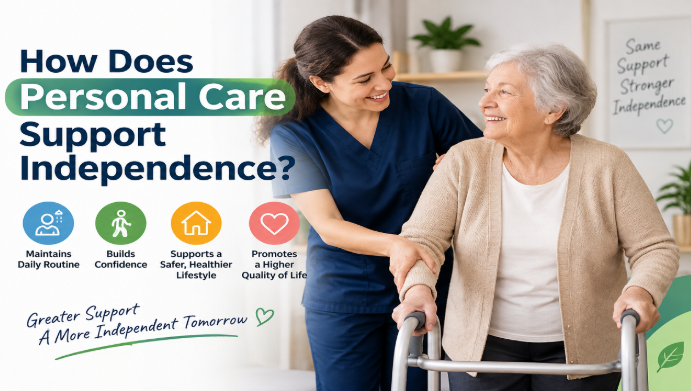
Personal care and independence sound like opposites. One means accepting help. The other means doing things on your own. Most families see them that way and hesitate to bring in support, worried it’ll strip away the very thing they’re trying to protect.
The truth runs the other direction. Done right, personal care is what keeps an older adult independent. It fills the few gaps that have gotten unsafe and leaves everything else in the person’s hands. The result is more freedom, not less.
That distinction matters because the wrong approach does real damage. A caregiver who takes over too much erodes confidence fast. A caregiver who fills only the right gaps keeps a person standing on their own longer.
This breaks down how personal care actually supports independence. It explains what the relationship looks like, how it protects choice and dignity, and when to add help without smothering the person you’re trying to keep free. Read it, and you’ll know what good support looks like.
What Independence Really Means With Personal Care
Independence isn’t about doing everything alone. It’s about staying in control of your own life, even when some tasks need a hand.
Control Over the Day, Not Total Self-Sufficiency
A person can need help bathing and still run their own life. They decide when to get up, what to wear, how to spend the afternoon. The help with one task doesn’t touch the rest.
That’s the shift families miss. Independence isn’t all-or-nothing. It’s a sliding scale, and good personal care keeps a person as far toward the independent end as their safety allows.
Filling Gaps, Not Replacing the Person
The goal is narrow and specific. Find the few tasks that have become unsafe, and support those. Leave everything else alone.
A caregiver who understands this works like a backstop. They’re there for the hard parts and invisible for the rest. The person keeps doing what they still can, which is most of what they did before.
How Assistance Protects Choice and Dignity
Choice is the heart of independence. A person who still makes their own decisions feels like themselves, even with help arriving daily.
Letting the Person Lead
A skilled caregiver follows the person’s lead instead of setting the agenda. They ask how the person likes things done and respect the answer, even when it’s slower or less efficient.
That patience matters. The faster way isn’t always the right way. Letting someone do a task their own way, at their own pace, keeps the decision in their hands where it belongs.
Privacy as a Form of Respect
Personal care touches private parts of a person’s routine—bathing, dressing, toileting. How a caregiver handles those moments decides whether the person feels respected or exposed.
Small habits build trust. Knocking first. Covering what can be covered. Explaining what’s about to happen. Those choices preserve dignity, and dignity is part of what independence protects.
ADLs and the Push for Self-Direction
Activities of Daily Living, or ADLs, are the standard tasks personal care covers. The way a caregiver handles them either builds independence or quietly chips it away.
Supporting Without Doing It All
Take bathing. A caregiver can wash a person’s back and steady them in the tub, then hand over the washcloth for the parts they can still manage. That split keeps the person active in their own care.
The same applies across tasks. Help with the buttons; let them pick the shirt. Steady the walk, let them set the route. Every task has a piece the person can still own.
Building Skills Back Where Possible
Some abilities come back with the right support. After an illness or a fall, a person might regain strength they thought was gone for good.
A good caregiver watches for that and adjusts. They pull back as the person recovers, handing tasks back instead of holding onto them. Support that shrinks over time is support done right.
The Caregiver Approach That Makes the Difference
The tasks matter less than the mindset behind them. Two caregivers can do the same work and produce opposite results for a person’s independence.
Help Versus Takeover
The line is simple to name, harder to hold. Helping means filling a gap. Taking over means doing things the person could still manage on their own.
Taking over feels efficient and kind in the moment. It isn’t. Every task a caregiver does unnecessarily is a skill the person loses a little faster. The right approach resists that pull.
Patience Over Speed
A rushed caregiver does everything themselves because it’s quicker. A patient one waits while the person does what they can, even when it takes three times as long.
That patience is the whole game. Speed serves the caregiver. Patience serves the person and their independence. The slower path keeps someone capable longer.
Mobility, Confidence, and Staying Active
Movement is where independence lives or dies. A person who can’t move safely stops moving, and that decline speeds everything else up.
Safe Movement Keeps People Going
A caregiver steadies someone on stairs, supports walking, and handles transfers from bed to chair. That hands-on help prevents the fall that would end mobility for good.
The point isn’t to carry the person. It’s to make movement safe enough that they keep doing it. A person who keeps walking keeps their strength, and strength is independence.
Confidence Feeds Independence
Fear of falling shrinks a person’s world fast. They stop walking to the mailbox, stop using the stairs, stop leaving the house.
A caregiver who’s there for the risky moments removes that fear. The person moves with confidence again because they know support is close if they need it. That confidence reopens the world that fear had closed.
The Mental and Emotional Payoff
Independence isn’t just practical. It shapes how a person feels about themselves, and that feeling drives their health in ways families underrate.
Self-Worth Stays Intact
A person who still does things for themselves keeps their sense of purpose. They’re a participant in their own life, not a passenger.
Strip that away and mood follows. Someone who feels useless and dependent slides toward depression. Personal care that protects independence protects the person’s sense of worth right along with it.
Lower Anxiety, Steadier Mood
Loss of control breeds anxiety. Not knowing if you can manage the day, or fearing the next fall, wears a person down.
Steady, respectful support lowers that. The person knows the gaps are covered and the rest is theirs. That balance calms the mind and keeps the mood far steadier than dependence ever could.
When and How to Scale Support
Independence isn’t static. Needs change, and the support has to change with them, in both directions.
Reading the Signs to Adjust
Watch for shifts that signal a need for more help:
- New unsteadiness or a recent fall around the house.
- Tasks getting skipped that the person used to manage.
- Frustration or exhaustion from fighting through daily routines alone.
Two or three of those mean it’s time to add hours or tasks, before a crisis forces it.
Scaling Down When It’s Right
Adjustment runs both ways. After recovery, a person might need less help than before, and good support reflects that.
Reassess often. Hand tasks back as ability returns. The plan should track the person’s real capacity, not lock in at the highest level of help they ever needed.
Final Verdict
Personal care supports independence when it fills only the gaps that have become unsafe and leaves the rest in the person’s hands. The tasks matter less than the approach. Help, don’t take over. Lead with patience, not speed. Protect choice, privacy, and dignity at every step.
Start by naming the specific tasks that have gotten risky, and support those alone. Watch for changes, and adjust the help up or down as the person’s ability shifts. Done this way, personal care doesn’t shrink a person’s independence. It’s what keeps that independence alive.