




A fashion photograph, a handheld movement clip, a location image, and a voice recording can all express the same creative idea. Yet placing them inside one generation does not automatically create a believable scene.
Each file brings its own lighting, perspective, timing, texture, and atmosphere. The portrait may have been photographed in a studio. The movement reference comes from a phone camera. The intended location is outdoors, while the voice recording contains the echo of a small room.
The challenge is not accepting mixed media. It is resolving the contradictions among those materials.
MiniMax H3 approaches this task by interpreting text, images, videos, and audio as a shared context. The creator can specify what each source contributes, what should be discarded, and how the selected information should be reconstructed inside one audiovisual world.
A collection of references is not yet a scene
Consider a short advertisement for a pair of running shoes. The production begins with five unrelated assets:
- A studio photograph of the shoes
- A portrait of the athlete
- A phone video showing the desired running movement
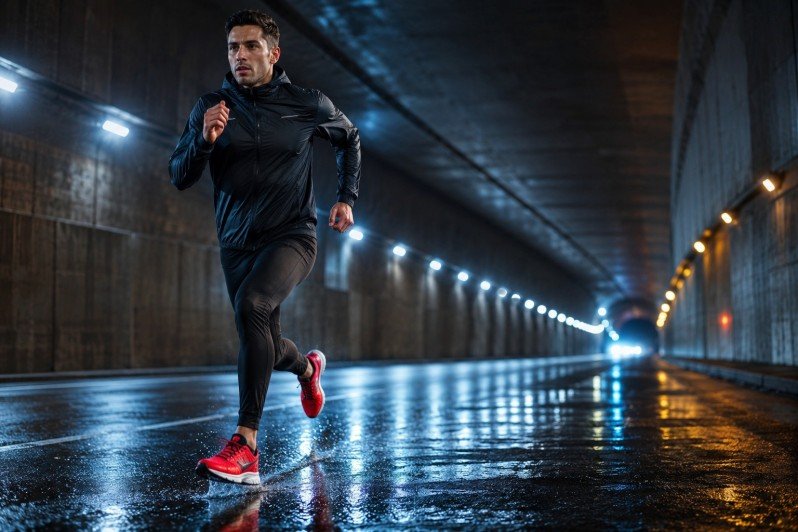
- A photograph of a tunnel at night
- A music track with a strong rhythmic drop
The materials provide nearly everything needed for the concept, but none was created under the same conditions.
The shoe photograph has clean commercial lighting. The athlete portrait shows only the upper body. The motion clip was recorded outside during the day. The tunnel is dark and wet. The music follows its own timing.
If H3 borrowed every visible property equally, the result would feel like a collage. Coherence requires the model to preserve selected information while rebuilding everything else around the target scene.
The shoes must keep their design but adopt the tunnel’s lighting. The athlete must retain the portrait’s identity while acquiring a complete moving body. The running performance must survive without bringing the daylight location into the result. The final action must align with the music.
One scene emerges only after these conflicts are settled.
Identity must survive environmental change
A subject rarely enters the target scene under the same conditions as the source image.
The running shoes may be photographed against a white background. Inside the tunnel, their surfaces should receive blue overhead light, warm reflections from wall fixtures, and highlights from the wet floor.
Preservation does not mean freezing the original appearance. It means keeping the object recognizable while allowing its illumination to change naturally.
For a product, the protected characteristics might include:
- Overall silhouette
- Material construction
- Sole thickness
- Lace arrangement
- Color blocking
- Logo placement
For a person, they may include facial structure, hairstyle, clothing, proportions, and accessories.
The direction could state:
Preserve the exact shoe design from Image 1, including the red upper, white sole, black laces, and side logo. Relight the product naturally for the dark tunnel rather than copying the studio illumination.
That final sentence matters. It separates product identity from the conditions under which the reference was photographed.
Movement must obey the new world
Motion references contain physical assumptions.
A runner moving across dry pavement behaves differently on a wet floor. A hand lifting a phone does not move like a hand lifting a heavy speaker. Loose clothing reacts differently in still air and strong wind.
Copying motion without adapting it to the target environment can make the subject feel detached from the scene.
For the tunnel advertisement, the movement instruction might be:
Follow the acceleration and stride rhythm from Video 1. Adapt the foot contact to the wet tunnel floor, adding subtle reflections and small splashes without changing the original running tempo.
The model receives two requirements: preserve the recognizable performance and make it physically belong to the new location.
This balance is more useful than literal replication. The reference supplies the movement’s structure; the generated environment determines its consequences.
One camera should govern the entire shot
Mixed inputs frequently contain incompatible cinematography. The portrait uses a long lens, the motion clip is wide and handheld, and the location photograph is symmetrical and static.
If the target camera is not defined, the generated shot may shift between these visual languages.
A coherent scene needs one point of observation.
For example:
Use a stabilized low-angle tracking shot at knee height. Begin beside the athlete’s shoes, move parallel to the runner, and finish with a slow push toward the product as the athlete stops.
This camera direction gives the sequence continuity independent of the source files.
Lens behavior can also be specified:
- Wide and energetic
- Compressed and intimate
- Shallow depth of field
- Deep environmental focus
- Smooth commercial stabilization
- Restrained documentary movement
Camera consistency is often what makes separate references feel as though they were captured during one production.
Sound has to occupy the same location
Visual coherence can be convincing while the soundtrack still exposes the construction.
A voice recorded indoors may retain close room reflections. A music reference may be much louder than the visible environment. Footsteps can arrive too early or sound as if they were recorded on another surface.
H3’s native stereo generation allows the audio to be rebuilt alongside the picture. The prompt should separate useful vocal or musical qualities from unwanted recording conditions.
For narration:
Reference the calm, low vocal character of Audio 1, but remove its original room echo and background noise. Keep the narration clean and centered.
For environmental sound:
Place the runner’s footsteps inside the tunnel acoustic, with short metallic reflections and subtle splashes on the wet floor.
For music:
Keep Audio 2 as the background track. Match the athlete’s final stop to the main rhythmic impact at six seconds.
The result should not sound like narration, effects, and music pasted onto a finished visual. Every layer should appear to share the same timeline and space.
A worked mixed-media direction
The separate decisions can now be combined into one production brief:
Create an eight-second cinematic running-shoe advertisement inside the tunnel shown in Image 3.
The athlete’s identity comes from Image 2. Preserve the same face, hairstyle, skin tone, and black running jacket. The shoes come from Image 1 and must retain their red upper, white sole, black laces, proportions, and side logo.
Use the acceleration and stride pattern from Video 1, but do not copy its outdoor background, daylight, clothing, or handheld camera. Adapt the athlete’s movement to the wet tunnel floor with physically restrained splashes.
Use a stabilized low tracking shot that begins beside the shoes and moves parallel to the athlete. Blue ceiling lights create moving reflections across the shoes and floor. At six seconds, the athlete stops inside a narrow beam of warm light, and the camera moves into a close product view.
Reference the vocal character from Audio 1 for the line, “Built for the next step,” without copying its room sound. Keep Audio 2 as background music. Synchronize the final stop with its strongest beat. Add stereo footsteps, breathing, fabric movement, tunnel ambience, and a controlled bass impact.
The brief is not long because it contains decorative adjectives. Its length comes from resolving conflicts among the references.
Why extra references can reduce coherence
The ability to upload many files creates a temptation to include every piece of inspiration.
That can make the target less clear.
Three portraits may disagree about hairstyle. Two product images may show different packaging. Several motion clips can imply incompatible timing. A visual-style image may unintentionally influence clothing or identity.
Every additional source introduces another set of properties that must either enter the result or be rejected.
Before adding a file, ask:
- Does it answer a question that remains unresolved?
- Is it more authoritative than the existing reference?
- Does it introduce conflicting visual information?
- Can its intended role be explained in one sentence?
- Would text communicate the same instruction more simply?
A smaller, deliberate reference set often produces a more unified video than the maximum number of available inputs.
Four continuity checks
A mixed-media generation should be reviewed for continuity rather than general attractiveness.
Identity continuity
Does the athlete remain the same person? Do the shoes retain their construction and branding as the camera moves?
Physical continuity
Do footsteps meet the ground correctly? Does clothing respond to movement? Do reflections and splashes match the action?
Cinematic continuity
Does the camera follow one path and lens style? Are lighting direction and depth consistent throughout the scene?
Acoustic continuity
Do the voice, footsteps, music, and tunnel ambience sound as though they belong to the same place and moment?
A clip can pass three checks and fail the fourth. Reviewing each category separately shows where the next revision should focus.
Where the illusion tends to break
Mixed-media coherence becomes more fragile under extreme conditions.
Identity may drift during fast rotation or partial obstruction. Product geometry can change when the object becomes small. A movement reference may not transfer naturally to a subject with different proportions. Voice synchronization can weaken when dialogue is rapid or the face turns away.
Complicated reference combinations also compete for influence. The model may follow the requested camera but weaken the product resemblance, or preserve the person while simplifying the motion.
These failures are easier to manage when the shot has a hierarchy. Decide which two or three details are non-negotiable and allow flexibility in secondary areas.
One origin for many sources
A coherent mixed-media video should hide its assembly.
The viewer should not see a studio product photograph, an outdoor movement clip, a tunnel image, and two pieces of audio. The viewer should see an athlete running through one location while wearing one product, observed by one camera and surrounded by one soundscape.
That result depends on selective transformation. Some information is preserved exactly. Some is adapted to new physical conditions. The rest is deliberately left behind.
MiniMax H3’s mixed-media capability is most effective when the creator directs those boundaries clearly. The files can come from different places; the finished scene should feel as though they were always part of the same moment.