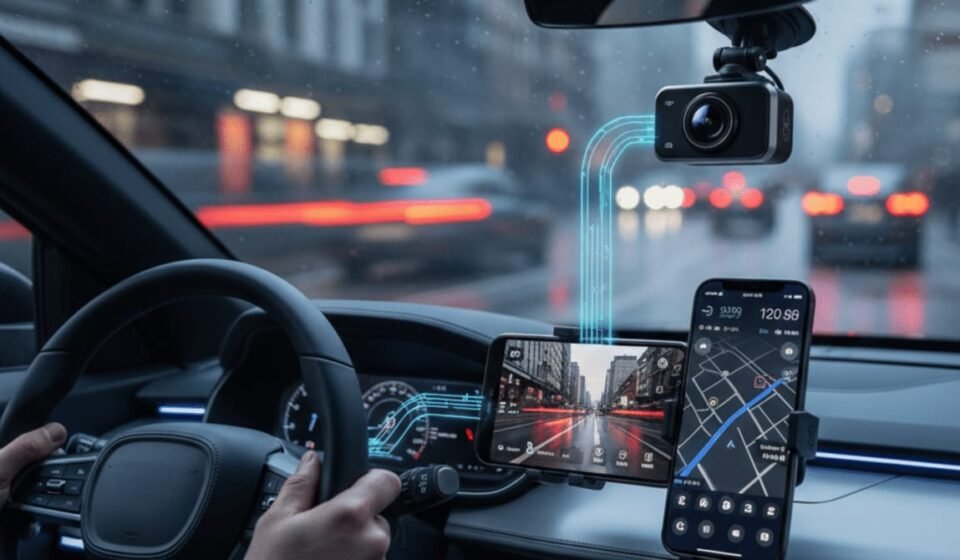

You know that feeling when you pull onto a busy road and your senses sharpen—hands steady on the wheel, eyes scanning mirrors, heart slightly faster? Driving has always been part freedom, part risk. And over the last two decades, one small device has quietly changed how you experience that risk: the dash cam. Not as a gimmick. Not as a toy. As a witness that never blinks.
What makes this evolution so compelling is that it mirrors what you want from modern automotive tech: more clarity, more protection, more confidence—without demanding more from you. Let’s walk through how these devices grew from clunky add-ons into integrated safety companions, and how they’re shaping the future of driving in ways you can feel in your gut.
From Novelty Gadget to Everyday Co-Pilot: The dash cam’s early days
In the beginning, in-car recording felt almost… experimental. Early models were bulky, low-resolution, and fussy. You had to mount them just right, manage tangled cords, and hope the storage didn’t fail at the worst possible time. Still, even those primitive setups offered something powerful: proof.
And proof changes everything.
Here’s where a quick memory comes in—about the word immerse. Think of a rainy night drive, headlights smeared across wet pavement. You’re immersed in the road’s rhythm: wipers, taillights, and that steady hum of tires. Years ago, a driver described being so immersed in traffic that they barely registered the car drifting into their lane—until the near-miss snapped them back. Later, when the other driver insisted it never happened, the video told the truth. That’s the moment many people realized recording wasn’t about paranoia. It was about reality.
This is where the earliest dash cams earned their place: not by being perfect, but by being present.
Better Sensors, Smarter Footage: How the dash camera leveled up
As smartphones pushed camera technology forward, automotive recording devices benefited too. Higher resolution became normal. Low-light performance improved. Wide-angle lenses captured more of what mattered—signals, plate numbers, the full sweep of intersections. The dash camera stopped being a grainy “maybe” and became a crisp “there it is.”
But the real transformation wasn’t just about prettier footage. It was about intelligence and reliability:
– Loop recording ensured you didn’t have to babysit storage.
– G-sensors automatically locked files during sudden impacts.
– Time and date stamping made clips more usable for reports and claims.
– Parking modes started protecting you even when you weren’t in the car.
And suddenly, you weren’t just driving with a camera. You were driving with a system—one that quietly worked in the background while you focused on the road.
Now, a short anecdote about category—because it matters more than it sounds. Someone once walked into an electronics store and asked, “Where are your car cameras?” The clerk paused and said, “Which category? Safety? Accessories? Security?” That moment stuck because it showed the shift happening in real time. These devices didn’t fit neatly into one box anymore. They weren’t just gadgets; they became part of the safety conversation, the insurance conversation, the accountability conversation. And when something belongs to multiple categories, it’s usually because it’s becoming essential.
Integration with Automotive Tech: When the dash cam became part of the car
Once vehicles started adopting advanced driver-assistance systems—lane keeping, collision alerts, adaptive cruise—it became natural for recording to evolve alongside them. Drivers began wanting the same seamless experience from their camera that they got from the rest of their cockpit: clean design, stable performance, minimal distraction.
This era brought major shifts:
1. Discreet builds and OEM-style placement
No more bulky rectangles stealing windshield space. Many models became slim, tucked behind mirrors, or paired with hidden wiring kits for a cleaner interior.
2. Cloud connectivity and app ecosystems
You could review clips on your phone, share incidents quickly, and store evidence off-device. That’s not just convenience—it’s continuity.
3. Dual-channel and cabin recording
Front and rear coverage became common, especially for rideshare drivers and families. Some systems added interior cameras for full documentation.
4. AI-assisted incident detection
The device began recognizing harsh braking, sudden swerves, or impacts more consistently—reducing the odds that the one clip you need gets overwritten.
It’s also where the emotional part gets real. Because when something happens on the road—something unfair, unexpected, frightening—you don’t just want to remember it. You want to *prove* it. You want to protect your side of the story. And you want to do it without having to argue your way through doubt.
Trust, Security, and the Not-So-Obvious Details of Modern Recording
There’s another small story to weave in—about the word hollow. Someone described the aftermath of a minor crash as hollow: that strange emptiness when adrenaline fades and you’re left staring at damage, hearing conflicting accounts, feeling your own certainty wobble. In that hollow space, it’s easy to second-guess yourself. Did the light change? Were you too close? Did they signal?
Video doesn’t remove stress—but it can remove the uncertainty that feeds it.
Still, modern recording raises important considerations, and you deserve a guide that tells you what to watch for:
– Privacy and local laws: In some places, audio recording is regulated. You’ll want to know what’s allowed where you drive.
– Data security: Cloud features are convenient, but you should choose brands that treat footage responsibly and offer strong account protection.
– Heat tolerance: Vehicles get brutally hot. Look for capacitors rather than cheap batteries when possible.
– Memory card quality: The card matters as much as the camera. High-endurance cards reduce corruption and failures.
This is where the dash cam becomes more than “set it and forget it.” It becomes a tool you maintain—just like tires, brakes, and lights. Not complicated. Just intentional.
Choosing What Fits You: A quick guide to features that matter
If you’re considering your next upgrade—or your first—focus on what matches how you drive:
– Commuters: Prioritize reliability, clear plates, and easy file access.
– City drivers: Parking mode and wide dynamic range help with tight spaces and harsh lighting.
– Road trippers: Dual-channel coverage and GPS logging can be invaluable.
– Rideshare and family drivers: Cabin recording and emergency event protection may offer peace of mind.
The most important question isn’t “What’s the fanciest model?” It’s “What would you want recorded if the unexpected happened today?”
Because if you’re honest, you don’t buy peace of mind when everything goes right. You buy it for the one day it doesn’t.