





Something unusual has been happening in ophthalmology waiting rooms over the past eighteen months. Patients, many of them relatively young, otherwise healthy, and newly prescribed GLP-1 medications like semaglutide have been arriving with a problem they did not anticipate. Their vision has shifted. Their glasses prescription, which had been stable for years, no longer works.
The link between GLP-1 drugs and ocular changes is now well-documented in clinical literature. For patients in the Midlands who are navigating this, lens replacement in Birmingham has become an increasingly relevant conversation.
How Weight-Loss Drugs Can Affect the Eyes
GLP-1 receptor agonists work partly by rapidly altering blood sugar levels. When blood glucose changes quickly, it affects the shape of the crystalline lens inside the eye, the natural lens that helps focus light onto the retina. This is not a new phenomenon; it has long been observed in patients newly diagnosed with diabetes who start insulin. What is new is the scale. With millions of people now on semaglutide-based medications across the UK, the number of patients experiencing vision fluctuation has grown significantly.
A 2025 study published in JAMA Ophthalmology also identified a small but meaningful increased risk of non-arteritic anterior ischaemic optic neuropathy (NAION) in patients taking semaglutide a condition involving sudden, painless vision loss in one eye caused by reduced blood flow to the optic nerve. While the absolute risk remains low, the sheer volume of people now on these drugs means clinicians are seeing more cases.
When the Natural Lens Becomes the Problem
For many patients in this situation, the issue is not the medication itself but what it reveals: a natural lens that was already beginning to change. The crystalline lens becomes less flexible with age, and in some patients, early opacity or reduced accommodation had been quietly developing for years. The rapid metabolic shift triggered by GLP-1 drugs can accelerate or expose these changes.
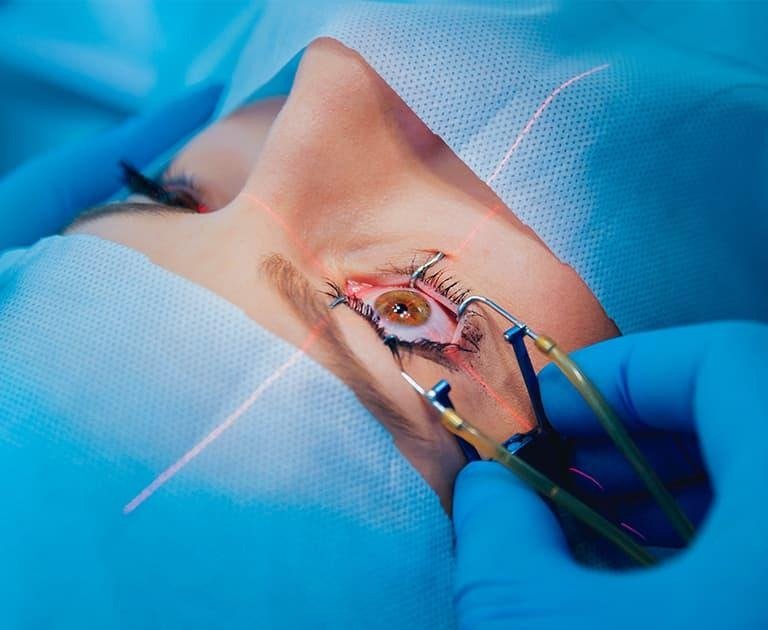
This is where lens replacement in Birmingham comes into the picture. Refractive lens exchange the same surgical procedure used for cataract removal, but performed before vision-threatening opacity develops involves removing the natural lens and replacing it with a precision intraocular implant. It is permanent, it eliminates the dependency on glasses or contact lenses, and it cannot develop cataracts afterwards.
Who Is a Candidate?
Lens replacement in Birmingham is no longer limited to patients in their sixties and seventies. Increasingly, patients in their mid-forties and fifties are being assessed particularly those whose prescriptions have become unstable, who have lost near vision through presbyopia, or who have been told they are not suitable for laser surgery due to corneal thickness or prescription strength.
The conversation with a specialist usually covers several factors: current prescription stability, corneal health, the condition of the natural lens, and what type of intraocular implant would best suit the patient’s lifestyle. Premium multifocal or extended depth-of-focus lenses can provide clear vision at multiple distances, which is something no laser procedure on the cornea can achieve.
The Importance of Timing
One of the key messages coming from ophthalmologists who are seeing this new wave of GLP-1 patients is this: do not wait for vision to deteriorate significantly before seeking assessment. If your prescription has changed meaningfully in the past twelve months particularly if you are over forty and have recently started weight-loss medication a private consultation is worth having sooner rather than later.
The reason timing matters is straightforward. Refractive lens exchange is most effective, and the outcome most predictable, when performed on a lens that has not yet developed significant opacity. Waiting until a cataract is fully formed narrows the options for premium lens implantation.
What Patients Are Asking in Clinic
The questions being raised in lens replacement in Birmingham assessments right now reflect genuine uncertainty. People want to know whether their vision changes are temporary (sometimes yes, as blood sugar stabilises) or permanent. They want to know whether stopping the medication would reverse the shift. They want to understand whether surgery is appropriate now or whether monitoring is the right approach.
These are not questions with universal answers. They require a proper assessment by an ophthalmologist who understands both the ocular anatomy and the metabolic context. A clinic with experience in refractive lens procedures one such example being Optimal Vision is well placed to navigate both parts of that conversation.
Final Thoughts
The GLP-1 revolution has transformed how millions of people manage their weight and metabolic health. What it has also done, less expectedly, is send a new cohort of patients to eye specialists asking questions that did not exist five years ago. If you are on a semaglutide-based medication and have noticed changes in your vision, a lens replacement in Birmingham is a practical and sensible next step not because surgery is inevitable, but because understanding what is happening is always the right starting point.