



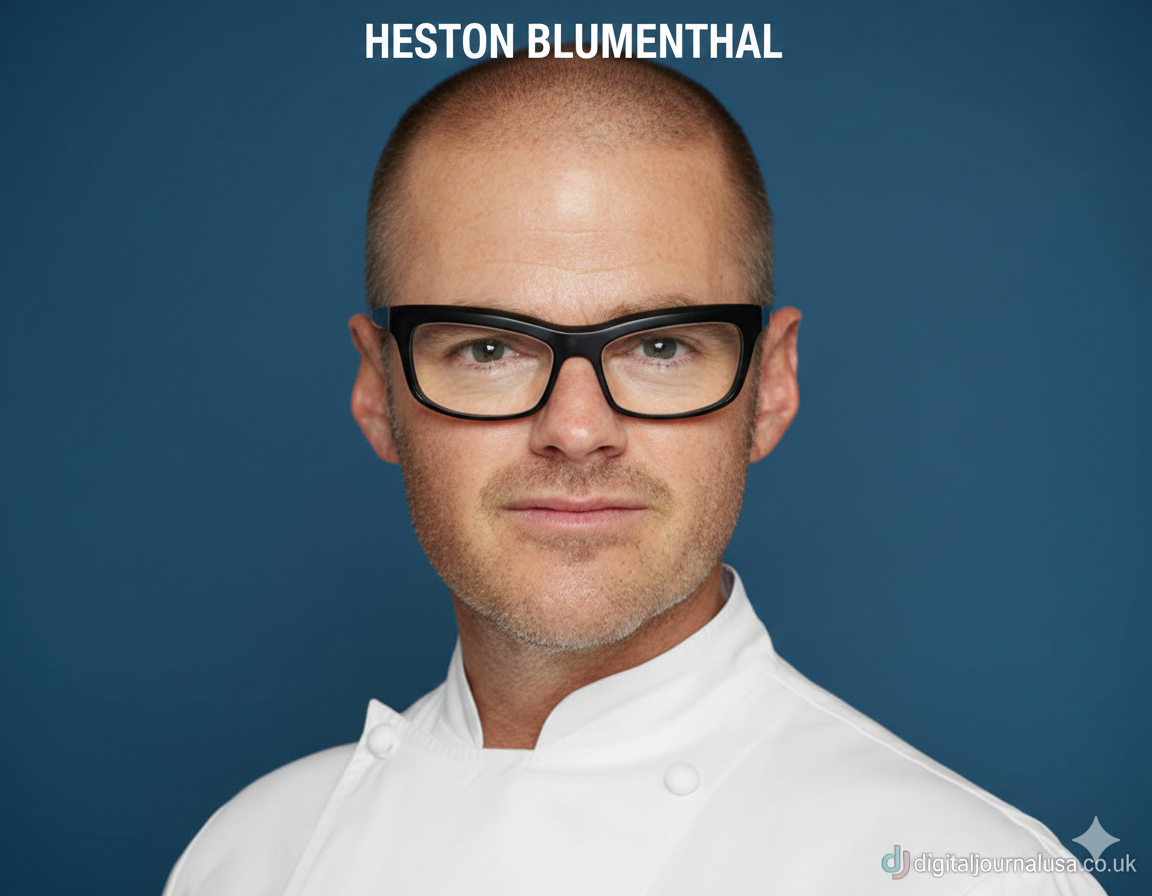
Heston Blumenthal is a name synonymous with innovation, experimentation, and boundary-pushing in the culinary world. As a world-renowned chef, restaurateur, and television personality, Blumenthal has garnered international acclaim for his revolutionary approach to cooking, blending science with traditional cooking methods. His work has redefined the way we think about food, and his restaurants, including the famous The Fat Duck and Dinner by Heston Blumenthal, have earned him a reputation as one of the most influential chefs in modern gastronomy.
Early Life and Career
Born on May 27, 1966, in London, Heston Blumenthal grew up in a family where food was a central part of life. However, he did not initially follow a traditional path to becoming a chef. After studying history of art at the University of Westminster, Blumenthal’s passion for food led him to explore cooking techniques on his own. Despite not attending a formal culinary school, he dedicated himself to mastering the craft, often experimenting with unusual ingredients and techniques at home.
In the early 1990s, Blumenthal opened The Fat Duck, a small restaurant in Bray, Berkshire. The restaurant, originally a modest pub, quickly gained attention for its avant-garde approach to British cuisine. Blumenthal’s commitment to pushing culinary boundaries with scientific methods helped distinguish The Fat Duck as a world-class destination for food lovers. His focus on multi-sensory dining experiences and complex flavors led to the restaurant receiving three Michelin stars, making it one of the best-known eateries in the world.
The Fat Duck: A Culinary Revolution
Blumenthal’s flagship restaurant, The Fat Duck, became a symbol of his commitment to innovation. Located in Bray, England, the restaurant has earned numerous accolades, including three Michelin stars, and was named the best restaurant in the world by Restaurant Magazine in 2005. The Fat Duck’s menu is a testament to Blumenthal’s scientific approach to cooking, featuring dishes like snail porridge, bacon and egg ice cream, and triple-cooked chips.
What sets The Fat Duck apart from other fine-dining establishments is its incorporation of science into cooking. Blumenthal uses techniques from molecular gastronomy, such as liquid nitrogen, emulsifiers, and foams, to create unexpected textures and flavors. The restaurant’s menu is designed to engage all the senses, with many dishes incorporating an element of surprise or theatrical presentation.
In addition to its culinary achievements, The Fat Duck has become a pilgrimage site for food enthusiasts from around the world. Guests who dine there are not just tasting food but experiencing an immersive journey into the science of flavor and texture. The restaurant’s success has cemented Blumenthal’s reputation as one of the most innovative chefs of his generation.
Dinner by Heston Blumenthal: Reviving British Culinary Heritage
While The Fat Duck remains Blumenthal’s most famous restaurant, his other ventures have been equally groundbreaking. One such venture is Dinner by Heston Blumenthal, a restaurant located at the Mandarin Oriental Hotel in London. This restaurant showcases Blumenthal’s unique take on British cuisine, blending historical recipes with modern culinary techniques. The menu at Dinner by Heston Blumenthal is inspired by traditional British dishes from the medieval, Tudor, and Stuart periods, reinterpreted with Blumenthal’s signature twist.
The restaurant features iconic dishes such as Meat Fruit, a chicken liver parfait shaped like a mandarin orange, and Tipsy Cake, a modern take on the traditional British dessert. These dishes reflect Blumenthal’s deep respect for food history while incorporating his modern sensibilities and culinary creativity. The restaurant received a Michelin star shortly after opening and earned a second star in 2014, solidifying its place as one of London’s premier dining destinations.
In addition to its London location, Dinner by Heston Blumenthal has expanded internationally, with branches in Dubai and Melbourne. Each location embraces the same philosophy of combining historical British recipes with contemporary techniques, creating a global brand that continues to captivate food lovers across the world.
Heston Blumenthal TV Career and Influence
Beyond his success in the kitchen, Blumenthal has also made a name for himself as a television personality. His TV shows, such as Heston’s Feasts, Heston Blumenthal: In Search of Perfection, and Heston’s Great British Food, have brought his culinary expertise to a wider audience, combining entertainment with education.
In Heston’s Feasts, Blumenthal explores the history of food and recreates elaborate banquets for special occasions, such as medieval feasts and royal dinners. In Heston Blumenthal: In Search of Perfection, Blumenthal delves into the science of cooking, seeking to perfect classic dishes through innovative techniques. These programs have been widely praised for their educational value, as well as for showcasing Blumenthal’s unique approach to cooking.
Blumenthal’s media presence has played a significant role in popularizing molecular gastronomy and scientific cooking. His ability to break down complex techniques and explain the science behind food has made him a household name and inspired a new generation of chefs to experiment with ingredients and cooking methods in innovative ways.
Books by Heston Blumenthal
In addition to his television shows, Blumenthal has authored several cookbooks that reflect his approach to cooking. His books, such as Heston Blumenthal: In Search of Perfection, The Fat Duck Cookbook, and Heston Blumenthal at Home, provide readers with a behind-the-scenes look at his creative process, as well as detailed recipes that showcase his signature techniques.
These books have become essential references for aspiring chefs and home cooks alike. They offer a deep dive into the science of food, exploring topics such as flavor pairing, temperature manipulation, and the use of specialized equipment. Blumenthal’s ability to combine practical advice with scientific insights has made his books highly regarded in the culinary world.
Heston Blumenthal Culinary Innovations
Heston Blumenthal is known for his inventive approach to cooking, which combines science, history, and a sense of wonder. Some of his most famous dishes include:
- Snail Porridge: A dish made from snails, oats, and herbs, which challenges traditional notions of what constitutes a “delicacy.”
- Bacon and Egg Ice Cream: A playful take on the classic British breakfast, combining the flavors of bacon and eggs with the creamy texture of ice cream.
- Triple-Cooked Chips: A technique that involves cooking potatoes three times to achieve the perfect crispy texture.
- Meat Fruit: A chicken liver parfait shaped like a mandarin orange, which has become one of Blumenthal’s signature dishes.
These dishes demonstrate Blumenthal’s ability to combine unexpected ingredients and techniques, creating flavors and textures that surprise and delight the senses.
Health and Personal Life
Despite his success in the kitchen, Blumenthal has faced personal challenges, including a diagnosis of ADHD (Attention Deficit Hyperactivity Disorder). He has spoken openly about how his condition has affected his work and personal life, as well as how he has learned to manage it through medication and therapy.
Blumenthal has also faced health challenges related to stress and mental health. In recent years, he has been open about his struggles with depression and anxiety, and he advocates for greater awareness of mental health issues within the culinary industry. His candidness about his personal struggles has endeared him to many and has helped reduce the stigma surrounding mental health in the professional kitchen.
Heston Blumenthal Legacy
Heston Blumenthal’s impact on the culinary world is immeasurable. He has transformed the way we approach cooking, challenging traditional ideas and encouraging chefs to think outside the box. Through his restaurants, television shows, and books, Blumenthal has inspired countless individuals to experiment with food, pushing the boundaries of what is possible in the kitchen.
His legacy is not just about the Michelin stars or the accolades — it is about how he has reshaped the food industry, turning cooking into a science and art form that engages all the senses. Blumenthal’s influence will continue to be felt for years to come, as new generations of chefs and food lovers explore the limitless possibilities of culinary innovation.
Conclusion
Heston Blumenthal’s journey from self-taught chef to global culinary icon is a testament to the power of creativity, innovation, and dedication. Whether through his groundbreaking restaurant The Fat Duck, his historical reinterpretations at Dinner by Heston Blumenthal, or his popular TV shows, Blumenthal has revolutionized the way we experience food. His work will continue to inspire and challenge chefs around the world, cementing his place as one of the most influential figures in the history of modern cuisine.