





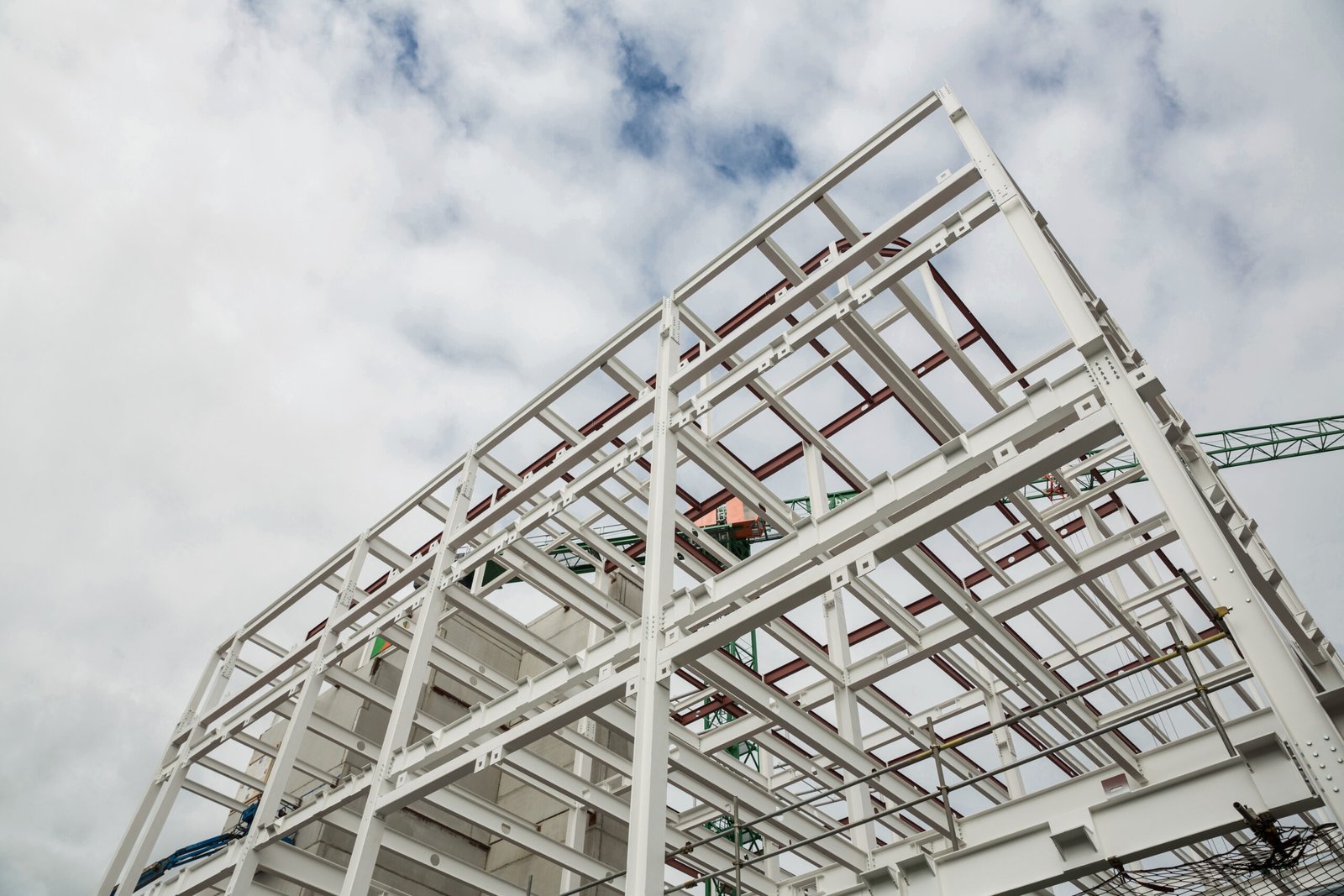
Steel framing has become the preferred structural solution for modern industrial buildings like warehouses and manufacturing plants, replacing traditional materials due to its superior performance, efficiency, and long-term value.
Why Steel Framing Is Taking Over Industrial Construction
Industrial construction has always demanded materials that can handle heavy loads, wide spans, and demanding environments. Timber and concrete served these needs for decades, but neither offers the same combination of strength, flexibility, and speed that steel provides.
Modern steel framing systems are engineered for precision. Components are manufactured to exact specifications, which reduces on-site labor time and minimizes costly errors. For large-scale industrial projects where timelines are tight and budgets even tighter, that level of accuracy makes a real difference.
Beyond speed, there’s the matter of adaptability. Industrial buildings often need to evolve—adding mezzanine levels, expanding footprints, or reconfiguring layouts as operations change. Steel frames accommodate these modifications far more easily than poured concrete or load-bearing timber structures.
The Core Benefits of Steel Framing
Durability That Goes the Distance
Steel frames are built to last. Unlike wood, steel doesn’t warp, rot, or become susceptible to termite damage. Unlike concrete, it doesn’t crack under seismic stress in the same way. With proper protective coatings, a steel-framed industrial building can withstand decades of heavy use, harsh weather, and industrial wear.
This longevity isn’t just a convenience—it’s a financial advantage. Lower maintenance requirements and fewer structural repairs over the building’s lifespan translate directly into reduced operating costs.
Sustainability Credentials
Steel is one of the most recycled materials on the planet. Structural steel contains a significant percentage of recycled content, and at the end of a building’s life, that steel can be reclaimed and reused rather than sent to landfill. For organizations with sustainability targets or green building certifications in mind, steel framing supports those goals in a meaningful way.
Additionally, precision manufacturing reduces material waste on-site—an often-overlooked environmental benefit.
Cost-Effectiveness Over the Long Term
The upfront cost of steel framing can be higher than timber, but when you factor in construction speed, reduced labor, lower maintenance, and longer building lifespan, the economics shift considerably. Faster builds mean earlier occupancy, which accelerates return on investment—particularly for commercial and industrial clients with tight operational timelines.
Technical Considerations for Industrial-Scale Implementation
Scaling steel framing to industrial proportions introduces a set of engineering and logistical challenges that require careful planning from the outset.
Structural load calculations are foundational. Industrial buildings routinely accommodate heavy machinery, racking systems, overhead cranes, and high-traffic floor loads. Engineers must account for static and dynamic loads, wind uplift, and seismic requirements specific to the site location.
Connection design is another critical factor. Bolted and welded connections between columns, beams, and bracing elements must be engineered to handle both the immediate construction loads and the long-term operational stresses the building will experience.
Steel cutting is a precision-driven step in the fabrication process. When components are cut to exact dimensions in a controlled factory environment, fit-up on-site becomes more efficient and the structural integrity of each connection is easier to maintain.
Thermal and acoustic performance also deserve attention at the design stage. Steel conducts heat readily, which means insulation systems need to be designed carefully to meet energy performance standards and prevent thermal bridging in climate-controlled facilities.
Integrating Building Systems and Utilities
One of the underappreciated advantages of steel framing in industrial settings is how cleanly it integrates with building systems. HVAC, electrical conduit, plumbing, fire suppression systems, and data infrastructure all need pathways through the structure—and steel frames accommodate them effectively.
Pre-punched holes in steel studs and beams allow utilities to run cleanly through the frame without compromising structural integrity. In large industrial facilities where mechanical and electrical systems are extensive, this streamlines both installation and future maintenance.
Steel frames also simplify crane rail installation for facilities that require overhead lifting equipment, with structural steel columns providing direct, reliable support for these heavy-duty systems.
Steel vs. Timber vs. Concrete: A Practical Comparison
Each structural material has its place in construction, but for industrial applications, the comparison tends to favor steel across most key criteria.
Timber is cost-competitive for smaller builds and has improved sustainability credentials in engineered form. However, it struggles to meet the span requirements of large industrial spaces without substantial supplementary support, and its susceptibility to moisture and fire limits its appeal in many industrial contexts.
Concrete offers excellent compressive strength and thermal mass, making it well-suited for certain industrial floors and foundations. As a framing system, though, tilt-up and precast concrete construction is slower to erect, heavier to transport, and harder to modify once in place. Expansion and reconfiguration—common needs in industrial facilities—become significantly more complex.
Steel framing delivers the best balance of structural performance, construction speed, design flexibility, and long-term adaptability. For large-span industrial buildings in particular, it’s the material that most reliably meets the demands of the brief.
The Future: Pre-Fabricated Steel for Large-Scale Facilities
Prefabrication is where industrial steel construction is heading—and the pace of change is accelerating. Off-site fabrication of structural components means that building frames can be assembled in weeks rather than months, with dramatically less on-site waste and disruption.
Modular steel systems take this further, allowing entire building sections to be constructed, inspected, and transported to site as complete units. For distribution centers, logistics hubs, and large storage facilities where repeatability is an asset, modular prefabrication offers compelling speed-to-occupancy advantages.
Digital technology is also transforming how steel buildings are designed and built. Building Information Modeling (BIM) allows structural engineers, architects, and contractors to collaborate in a shared 3D environment, identifying clashes and resolving design issues before a single piece of steel reaches the site. Combined with CNC fabrication technology, BIM workflows are making prefabricated steel solutions more precise and reliable than ever.
Looking further ahead, advances in high-strength steel alloys are allowing engineers to achieve greater spans with lighter sections—reducing material use without compromising structural performance. These developments will continue to improve the cost and sustainability profile of industrial steel construction.
Starting Your Steel Framing Project: Expert Recommendations
If you’re considering steel framing for an industrial project, a few strategic steps will set the right foundation.
Engage a structural engineer early. Steel framing decisions made at the concept stage are far less expensive to adjust than those made during detailed design or construction. Early engineering input ensures your building’s structural system aligns with its operational requirements from the start.
Define your flexibility requirements upfront. If you anticipate changes to your facility’s layout or use over time, communicate this clearly during design. Steel frames can be engineered for future expansion, but only if that’s part of the brief.
Vet your fabricator thoroughly. The quality of your steel frame depends heavily on the fabricator’s precision and quality control processes. Review their certifications, visit their facility if possible, and ask about their fabrication tolerances and inspection procedures.
Consider total cost of ownership, not just upfront cost. Steel framing’s long-term durability and adaptability often make it the most economical choice over a building’s full lifespan—but this case is strongest when it’s made with accurate lifecycle cost data.
Industrial buildings are long-term assets. Getting the structural system right from the beginning pays dividends for decades to come.
Conclusion
Now that you have a better understanding of steel framing for industrial buildings, you can see why it is such a popular choice. Its strength, speed of construction, versatility, and cost-effectiveness make it the ideal material for industrial building projects.