




Early Life and Education
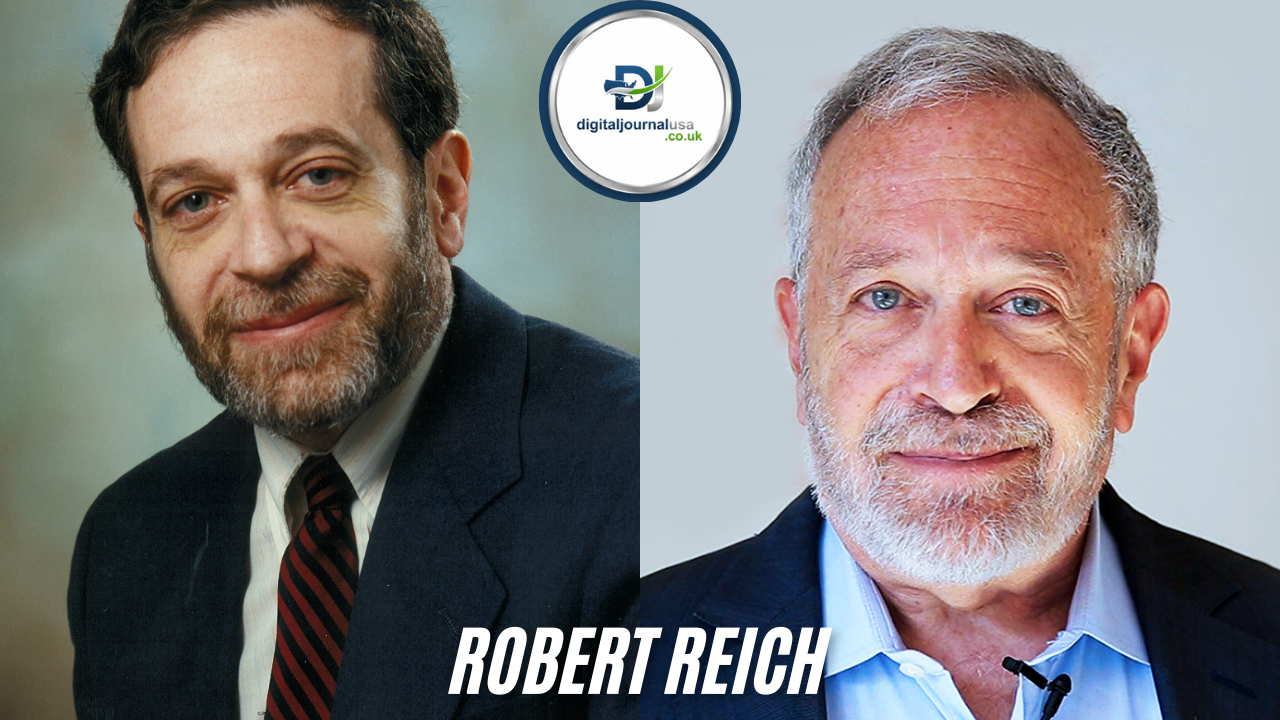
Robert Bernard Reich, born on June 24, 1946, in Scranton, Pennsylvania, is a prominent American economist, professor, and political commentator. He has become a significant figure in the debate on economic inequality and social justice. Reich graduated from Dartmouth College in 1968, followed by a Rhodes Scholarship at University College, Oxford. He earned his Master’s degree there before completing his Juris Doctor at Yale Law School in 1973. These early academic experiences set the foundation for his future career as an influential public intellectual and policymaker.
Early Career and Government Service
Reich’s career in public service began in the early 1970s when he served as an assistant to the Solicitor General during the Ford administration. He also worked in the Federal Trade Commission during the Carter administration, gaining experience in policy planning. This experience laid the groundwork for his appointment as the 22nd Secretary of Labor under President Bill Clinton in 1993.
As Secretary of Labor, Reich played a pivotal role in shaping U.S. labor policy. He was instrumental in pushing through the Family and Medical Leave Act, which provided workers with job-protected unpaid leave for family and medical reasons. He also advocated for the increase in the national minimum wage and focused on strengthening worker protections, including those concerning workplace safety and discrimination. His tenure in the Clinton administration helped position him as a leader in progressive economic policy.
Teaching and Academia
After leaving his government role in 1997, Robert Reich transitioned to academia, where he continued to influence the next generation of policymakers. Reich became a professor of public policy at Brandeis University, and later, he joined the University of California, Berkeley as a professor at the Goldman School of Public Policy. During his time at Berkeley, Reich gained recognition for his clear and accessible teaching on complex topics such as inequality, globalization, and labor economics. He has also held various academic positions at Harvard University and Brandeis University.
Reich’s work as an educator has inspired many students to become engaged in social policy and activism. His academic legacy is not only defined by his teachings but also by his continued contributions to public discourse through books, lectures, and media appearances.
Books and Writings
Robert Reich has authored over fifteen books, many of which focus on the intersection of economics, capitalism, and inequality. His most famous work, The Work of Nations (1991), outlined his views on the changing landscape of global capitalism. Reich argued that technological advancements and the rise of global markets were reshaping economies and leaving many workers behind. This book established Reich as a leading voice on economic policy and worker rights.
His subsequent books, including Supercapitalism (2007) and Saving Capitalism: For the Many, Not the Few (2015), further developed his critique of corporate capitalism. In these books, Reich argues that capitalism has become increasingly rigged in favor of wealthy elites, and he explores the growing disparities between the rich and the rest of society. He continues to use his platform to advocate for policies that address these inequalities, such as raising the minimum wage and implementing stronger regulations on corporations.
Reich’s 2010 book, Aftershock, focused on the aftermath of the 2008 financial crisis. He analyzed the causes of the economic meltdown and proposed solutions for rebuilding a more equitable and sustainable economy. In his later works, such as The Common Good (2018) and The System (2020), Reich reflects on how the system of capitalism has evolved and how it continues to shape society in ways that benefit a select few at the expense of the majority.
Documentaries and Media
Robert Reich has extended his influence beyond the written word through his work in documentary filmmaking. His 2013 film, Inequality for All, received widespread acclaim for its exploration of income inequality in America. The film featured Reich as the central figure, using his expertise to explain how the wealth gap has widened and what steps can be taken to address it. The documentary helped bring his message of economic justice to a broader audience.
In 2017, Reich followed up with Saving Capitalism, a documentary based on his book of the same name. The film, which premiered on Netflix, takes a deep dive into the ways capitalism has evolved in the United States and the impact this has had on working-class Americans. Reich’s clear and compelling explanations in these films further solidified his role as one of the foremost critics of inequality and unregulated capitalism.
Reich also co-founded Inequality Media, a production company dedicated to creating media that highlights the issues of economic inequality. Through videos, podcasts, and social media, Reich and his team aim to educate the public about the dangers of concentrated wealth and power, while also offering solutions to these pressing issues.
Robert Reich Economic Philosophy and Political Views
Reich’s economic philosophy revolves around the belief that the system of capitalism has become increasingly concentrated in the hands of a few powerful elites. He argues that this concentration of wealth has led to a shrinking middle class and growing economic disparities. Reich is critical of the way financial markets and corporate interests dominate the political system, leading to a system that benefits the rich while neglecting the needs of the poor and middle class.
One of Reich’s central arguments is that economic policies have disproportionately favored large corporations and wealthy individuals, while leaving workers to struggle. In his books and speeches, Reich calls for a comprehensive overhaul of the economic system to ensure that it works for everyone, not just the wealthy. His policy prescriptions often include measures such as increasing the minimum wage, expanding healthcare access, and investing in education and job training.
Reich is also a staunch advocate for campaign finance reform and stronger regulation of corporations. He has argued that money in politics has corrupted the democratic process, allowing the wealthy to dictate policy outcomes that serve their interests rather than the needs of the public.
Robert Reich Legacy and Impact
Robert Reich’s legacy is multifaceted. As a public servant, he helped shape labor policy and worker protections in the United States, particularly during his time as Secretary of Labor. As an academic, he has influenced countless students and scholars with his clear explanations of complex economic issues. His books and documentaries have made him one of the most visible public intellectuals in America today, using his platform to advocate for greater economic fairness.
Through his work, Reich has become a leading voice in the fight against economic inequality. He continues to push for systemic change, advocating for policies that will reduce wealth disparity and give workers more power in the economy. Reich’s legacy as an educator, writer, and activist is built on his unwavering commitment to making the world a more just and equitable place for all.
Robert Reich Personal Life and Public Image
Robert Reich is married to Perian Flaherty, and the couple has two children, Sam and Adam Reich. Reich is a well-known figure in public discourse, and his media presence has made him a familiar face to many Americans. He has been a frequent guest on talk shows, news programs, and podcasts, where he shares his insights on the economy and politics.
Despite his public prominence, Reich has faced criticism from some conservative commentators who argue that his views are too left-leaning and that his critiques of capitalism are overly simplistic. Nevertheless, Reich remains steadfast in his beliefs and continues to advocate for systemic changes that prioritize fairness and equality.
Conclusion
Robert Reich is a key figure in the ongoing debate over economic inequality and the future of capitalism. His work as a policymaker, educator, and author has left an indelible mark on the discourse surrounding economics and social justice. Whether through his work in government, his academic teachings, or his media projects, Reich has consistently used his platform to challenge the status quo and fight for a fairer, more equitable society.
Reich’s contributions to public policy, his critiques of the economic system, and his efforts to make complex economic issues accessible to the public have cemented his place as one of the most influential figures in American political thought. His work will continue to resonate as long as the issues of inequality and social justice remain at the forefront of public discourse.