





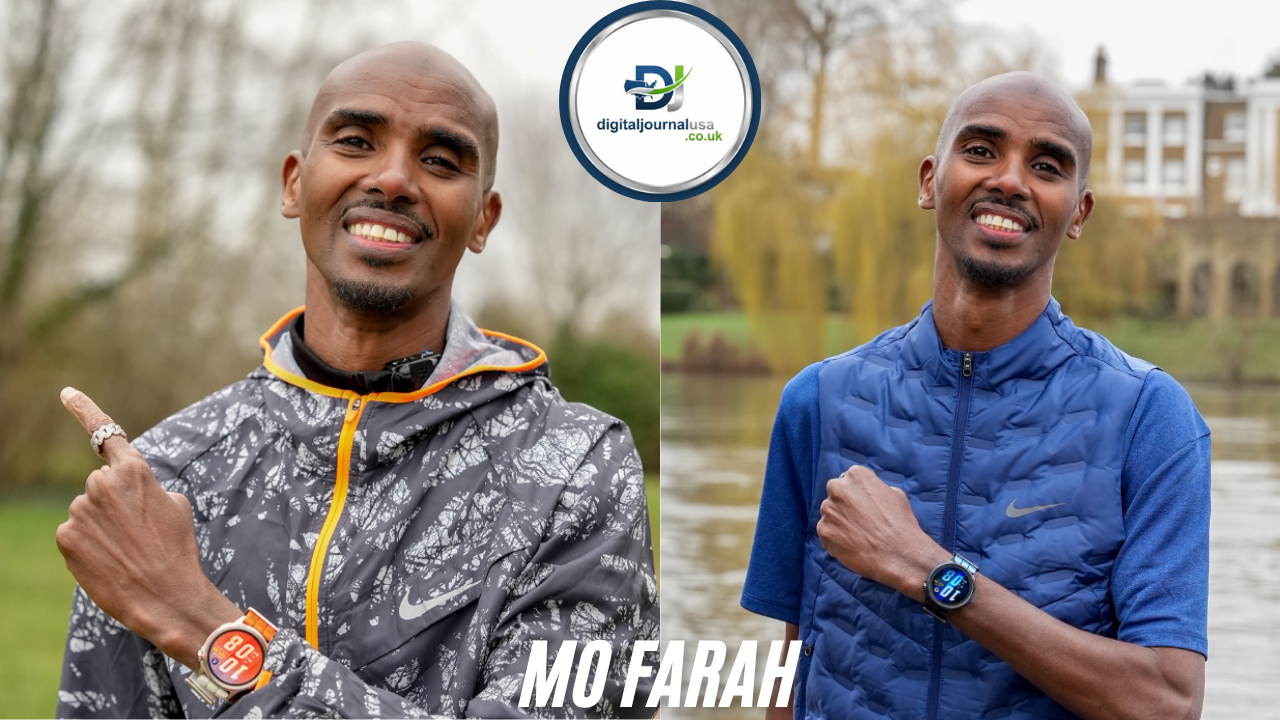
Mo Farah is a name that resonates with success, perseverance, and determination in the world of athletics. Widely regarded as one of the greatest long-distance runners in history, his career is a testament to overcoming adversity, relentless dedication, and an unyielding passion for the sport. From his humble beginnings in war-torn Somalia to becoming a British legend, Mo Farah’s journey to the top of athletics is as inspiring as it is extraordinary.
Early Life and Journey to Britain
Born on March 23, 1983, in Mogadishu, Somalia, Mo Farah’s early years were shaped by the turbulent political climate in the region. His father was tragically killed when he was just a young child, and at the age of nine, he was sent to the United Kingdom under difficult circumstances. It was here that Mo was given the opportunity to rebuild his life, eventually being fostered by a Somali family and later adopting the name Mo Farah.
Farah’s natural talent in running was first spotted while he was attending school in London. With the encouragement of his teachers and coaches, Farah started to train seriously in athletics. This would mark the beginning of what would become one of the most decorated careers in British sport.
Rise to Prominence in Athletics
Mo Farah’s journey from a young immigrant to an Olympic gold medalist is nothing short of remarkable. His talent for long-distance running quickly became apparent, and by the early 2000s, he was competing in international competitions. He rose through the ranks of British athletics, securing wins at the European Championships and World Indoor Championships.
However, it was at the London 2012 Olympics that Mo Farah truly made his mark on the world stage. He won two gold medals in the 5000m and 10,000m races, a feat that had not been achieved by a British athlete for decades. These victories, in front of a home crowd, made him a household name in the UK and earned him the status of a national hero.
Olympic Success: London 2012 and Rio 2016
Farah’s success at the London 2012 Olympics was just the beginning. At the Rio 2016 Olympics, he cemented his place in history by successfully defending his Olympic titles in both the 5000m and 10,000m races. This “double-double” was a rare accomplishment, placing him in the same league as the greatest athletes of all time.
With four Olympic gold medals to his name, Mo Farah became the most successful British Olympian in long-distance running, a position he still holds today. His dominance on the track earned him recognition not just in Britain but across the globe.
World Championships and European Championships
Beyond the Olympics, Farah’s success continued at the World Championships and European Championships, where he amassed a total of six World Championship gold medals and multiple European titles. His consistency at the highest level of competition made him one of the most feared competitors in distance running.
In addition to his success in individual events, Mo Farah also set several national and European records. He became a symbol of excellence in British athletics, inspiring a new generation of runners.
Transition to Marathon Running
After dominating track running for over a decade, Mo Farah made the decision to shift his focus to road racing and marathons. This transition was not without its challenges, but Farah proved that his skills were transferable to the longer distances required in marathon running. In 2018, he made his marathon debut at the Chicago Marathon, finishing in a respectable time of 2:05:11, which set a European record for the event.
Although Farah had initially been considered a track specialist, his success in the marathon further solidified his legacy as one of the most versatile long-distance runners in history.
Mo Farah Personal Life and Family
Mo Farah’s personal life has been relatively private, but it is clear that family plays a central role in his life. He married Tania Nell in 2010, and together they have three children. Farah has often spoken about the importance of his family, particularly his wife and children, who have been a constant source of support throughout his career.
Farah is also a devout Muslim, and his faith has been an important part of his identity. He has frequently spoken about how his religion has influenced his approach to life and sport.
Mo Farah Doping Allegations and Controversies
Throughout his career, Mo Farah has been a subject of speculation and scrutiny, particularly with regard to doping. In 2017, Farah’s former coach, Alberto Salazar, was banned for violations of anti-doping rules, which led some to question Farah’s training methods and his relationship with Salazar. However, Mo Farah has consistently denied any involvement in doping, and there has been no official ruling or ban against him.
Despite these controversies, Farah’s achievements remain intact, and he continues to be viewed as a role model for athletes around the world.
Mo Farah Net Worth and Endorsements
Mo Farah’s financial success is as impressive as his athletic achievements. With a career spanning over two decades, Farah has earned substantial sums through prize money, sponsorships, and public appearances. His deals with major brands such as Nike, Lucozade, and Quorn have contributed to a reported net worth of around £4 million to £5 million.
Farah’s profile in the media and his involvement in charity work have also boosted his public standing. He remains one of the most marketable athletes in the UK.
Mo Farah Retirement and Legacy
Mo Farah officially retired from track racing in 2017 after the World Championships, marking the end of an era for British athletics. While he briefly flirted with returning to competitive running, particularly in the marathon, Farah has made it clear that his focus is now on his family, his charitable endeavors, and his role as a mentor to young athletes.
Farah’s legacy in British sport is secure. He is not only a four-time Olympic gold medalist but also a symbol of resilience and determination. His career has inspired millions, and his name will forever be synonymous with excellence in long-distance running.
Conclusion
Mo Farah’s story is one of triumph over adversity. From his early life in Somalia to his Olympic victories and his subsequent career in marathon running, Farah has proven himself to be one of the finest athletes in the history of the sport. His achievements have made him a national hero in the UK and a global figure in athletics. With his legacy firmly in place, Mo Farah remains one of the most admired and respected figures in British sport.