





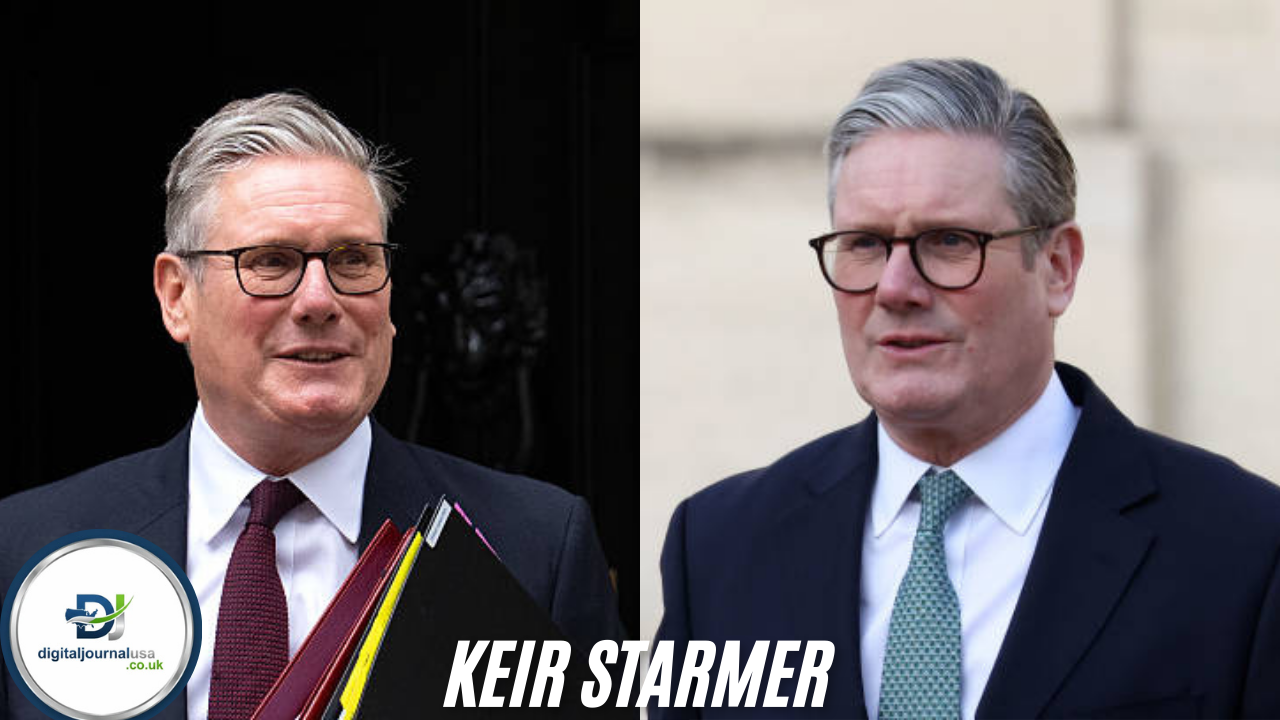
Keir Starmer is the current Prime Minister of the United Kingdom, having assumed office on July 5, 2024, following a historic victory in the general election. His rise in British politics has been marked by a shift toward the centre-left, positioning him as a leader who seeks to balance pragmatism with traditional Labour values.
Early Life and Education
Born on September 2, 1962, in London, Keir Starmer comes from a working-class background. His father was a toolmaker, and his mother was a nurse. Raised in a household that valued education, Starmer attended Reigate Grammar School, where he excelled academically. He later went on to study law at the University of Leeds, earning a law degree, before completing his postgraduate studies at the University of Oxford, where he obtained a Bachelor of Civil Law (BCL).
Starmer’s legal career began after he was called to the Bar in 1987. He quickly made a name for himself as a barrister specializing in human rights law, ultimately earning the rank of Queen’s Counsel (QC) in 2002. His legal career reached its peak when he served as the Director of Public Prosecutions (DPP) and head of the Crown Prosecution Service from 2008 to 2013.
Political Career and Leadership
Keir Starmer entered the world of politics in 2015 when he was elected as the Member of Parliament for Holborn and St Pancras. His background in law and his reputation for fairness and integrity quickly made him a prominent figure in the Labour Party. In 2020, after the resignation of Jeremy Corbyn, Starmer was elected as the Leader of the Labour Party. His leadership marked a shift towards the political centre, where he emphasized economic stability, social justice, and public service reform.
Starmer’s political journey culminated in the 2024 general election, where the Labour Party achieved a landslide victory. The victory was seen as a turning point in British politics, as the Labour Party won back key constituencies that had been traditionally Conservative strongholds. This victory enabled Starmer to become the Prime Minister, a position that he took on with a commitment to restoring trust in government and addressing the country’s most pressing challenges.
Keir Starmer Leadership Style and Policies
As Prime Minister, Starmer has faced numerous challenges, both domestically and internationally. His government has focused on key areas such as healthcare, the economy, and education. Domestically, Starmer’s administration has worked to implement a series of reforms aimed at modernizing public services while ensuring that the most vulnerable members of society are protected. His government has also prioritized investment in infrastructure, particularly in green energy, as part of its commitment to tackling climate change.
One of the most notable aspects of Starmer’s premiership is his approach to international affairs, particularly in relation to the ongoing conflict in Ukraine. Starmer has been a staunch supporter of Ukraine, advocating for continued military and financial aid to the country as it defends itself against Russian aggression. He has also emphasized the importance of working closely with international partners, including the United States and European Union, to ensure that Ukraine receives the support it needs to prevail.
In addition to his foreign policy initiatives, Starmer has been vocal about the need for domestic reform. His government has worked to address issues such as housing, public sector pay, and inequality. Despite some criticism from both the left and right, Starmer’s leadership has been marked by a steady focus on pragmatism and the desire to implement policies that can bring tangible benefits to the British people.
Keir Starmer Personal Life
Keir Starmer is married and has two children. His family life is generally kept private, with Starmer maintaining a relatively low profile in terms of his personal affairs. This approach contrasts with the more public lives of some other political figures, and Starmer has often emphasized the importance of focusing on his work as Prime Minister rather than engaging in media spectacle.
Starmer’s wife, Victoria Starmer, is a solicitor, and the couple’s relationship has remained strong despite the intense public scrutiny that comes with being in the political spotlight. The Starmer family is known to enjoy a private and somewhat traditional family life, away from the cameras and public attention.
Starmer’s Approach to Politics
Keir Starmer’s political ideology is often described as centre-left, with a focus on social justice, economic fairness, and national unity. However, his leadership style has sparked debates within the Labour Party, particularly around his more moderate stance compared to the more left-wing approach of his predecessor, Jeremy Corbyn. Some members of the party feel that Starmer has compromised too much on Labour’s traditional values in order to appeal to centrist voters, while others argue that his approach is necessary to regain power and address the challenges facing the UK.
In his speeches and public appearances, Starmer has emphasized the importance of unity within the Labour Party and the need to put aside divisions in order to focus on governing effectively. His message has resonated with many voters who were disillusioned with the political instability of the previous decade, particularly in the aftermath of Brexit.
Keir Starmer Challenges and Controversies
Despite his political success, Keir Starmer has faced his share of challenges and controversies. One of the main criticisms of his leadership is that he has not done enough to differentiate himself from the Conservative Party, particularly on issues such as Brexit and national security. Some critics argue that Starmer’s leadership has been marked by caution rather than bold action, which has led to frustration among some members of the Labour Party.
Furthermore, Starmer’s government has faced criticism over issues such as the handling of the COVID-19 pandemic, the rising cost of living, and the ongoing debate over immigration. While his administration has made strides in addressing some of these issues, it remains to be seen whether Starmer will be able to maintain public support in the face of these challenges.
Keir Starmer International Relations and Ukraine Support
On the international stage, Starmer has been a firm supporter of Ukraine. He has advocated for continued military and humanitarian aid to Ukraine, emphasizing the importance of standing with the Ukrainian people as they face Russian aggression. Starmer’s government has worked closely with NATO allies to coordinate efforts in support of Ukraine, including providing military equipment and financial assistance.
Starmer’s approach to foreign policy has been characterized by a focus on diplomacy, multilateralism, and the strengthening of international alliances. His administration has sought to position the UK as a leading player in global efforts to address issues such as climate change, human rights, and international security.
Approval Ratings and Public Perception
Starmer’s approval ratings have fluctuated throughout his time in office, reflecting the challenges and successes of his government. While his leadership has been praised for its stability and focus on pragmatic solutions, Starmer has also faced criticism for his perceived lack of boldness on key issues. In particular, his handling of the economy and public sector reforms has been a point of contention, with some critics arguing that his government has not done enough to address inequality and public service underfunding.
Despite these challenges, Starmer remains a popular figure among many voters, particularly those who feel that he offers a steady and competent alternative to the more divisive politics of recent years. His ability to balance pragmatism with progressive ideals will likely continue to shape his leadership as he seeks to navigate the complex political landscape of the United Kingdom.
Conclusion
Keir Starmer’s journey from barrister to Prime Minister has been marked by determination, pragmatism, and a commitment to public service. As the leader of the Labour Party and the United Kingdom’s head of government, Starmer has faced numerous challenges, both domestically and internationally. His leadership has been defined by his efforts to restore stability to a country that has been rocked by political upheaval in recent years.
As Prime Minister, Starmer has sought to steer the country toward a more balanced, fair, and inclusive future. While his leadership has faced criticism from various quarters, his focus on unity, reform, and international diplomacy has earned him a place at the helm of the UK government. Whether or not his tenure will be remembered as one of lasting success will depend on his ability to tackle the ongoing challenges facing the country and maintain public support throughout his time in office.