





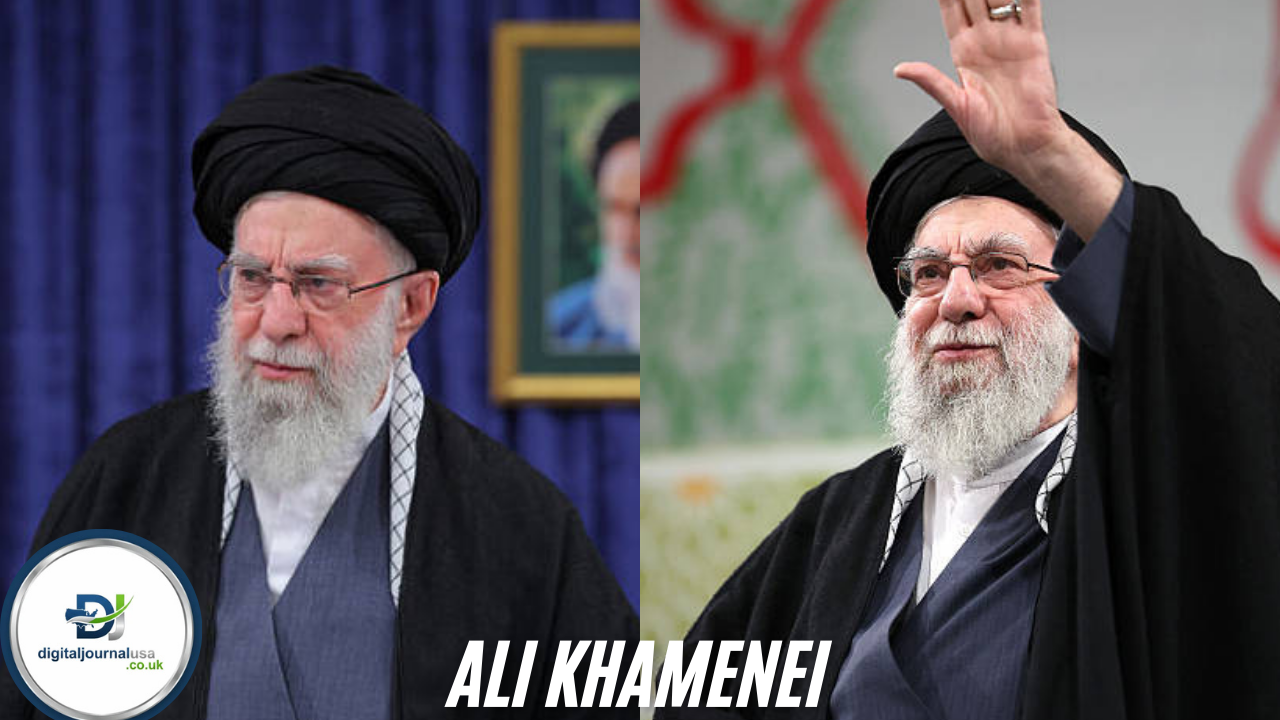
Ali Khamenei, born on July 17, 1939, in Mashhad, Iran, is one of the most influential figures in modern Iranian history. He rose to prominence as the Supreme Leader of Iran and has held this position since 1989, following the death of Ayatollah Ruhollah Khomeini, the leader of the Iranian Revolution. Over the decades, Khamenei has been a central figure in shaping Iran’s political, social, and economic landscape, and his legacy is as contentious as it is impactful.
Early Life and Education
Khamenei was born into a religious family, and from an early age, he was immersed in Islamic teachings. His early education in Mashhad and later in Qom, the heart of Shiite Islamic scholarship, laid the foundation for his future political and religious career. He became deeply involved in the religious opposition to the regime of Shah Mohammad Reza Pahlavi and was arrested and imprisoned multiple times for his activism. His involvement in the Iranian Revolution was pivotal, as he worked alongside other revolutionary leaders to overthrow the Shah’s regime, a movement that eventually led to the creation of the Islamic Republic of Iran.
Political Rise and Presidency
After the success of the 1979 Iranian Revolution, Khamenei quickly emerged as one of the key figures in the new Islamic government. He was appointed to several important roles, including the Deputy Minister of Defense, before being elected as the President of Iran in 1981. During his time as President, Khamenei dealt with many of the challenges facing the newly established Islamic Republic, including the aftermath of the revolution, the Iran–Iraq War, and the consolidation of power within the religious elite. Khamenei’s presidency lasted until 1989, and during this time, he earned a reputation for being a steadfast defender of Islamic principles and an opponent of any form of compromise with the West.
Becoming Supreme Leader
In 1989, following the death of Ayatollah Khomeini, Khamenei was elected as the Supreme Leader of Iran, despite not meeting the traditional criteria of seniority among Islamic scholars. This decision was largely influenced by the power structure established by Khomeini, which allowed for a leader to wield both religious and political authority. As Supreme Leader, Khamenei holds ultimate control over all aspects of governance in Iran, including the military, the judiciary, and key state institutions. His role is more powerful than that of the President, who is responsible for executive functions but is subordinate to the Supreme Leader.
Leadership and Governance
Under Khamenei’s leadership, Iran has undergone significant changes. His tenure has been marked by a hardline stance against Western influence, especially from the United States and Israel. One of his main priorities has been to ensure that Iran remains a sovereign, independent Islamic state, and he has consistently rejected Western efforts to shape Iran’s policies. Khamenei’s policies are often defined by Islamic principles and resistance to foreign pressure, making him a figurehead for the anti-Western narrative in the Middle East.
Internally, Khamenei has presided over a tightening of political control, with little tolerance for dissent. Over the years, there have been numerous crackdowns on pro-democracy movements and political opposition, including the 2009 Green Movement, which called for reform after disputed presidential elections. Despite facing internal protests, Khamenei has maintained his grip on power, relying on the Islamic Revolutionary Guard Corps (IRGC) and the Basij militia to suppress opposition.
Ali Khamenei Foreign Policy and Regional Influence
Khamenei’s foreign policy has been heavily shaped by his belief in resistance and Islamic solidarity. He has positioned Iran as a leader of the resistance axis, supporting groups and movements across the Middle East that oppose Western interests. This includes strong support for Hezbollah in Lebanon, Hamas in Palestine, and the Houthi rebels in Yemen. His support for these groups has made Iran a central player in regional conflicts, often putting the country at odds with Saudi Arabia, Israel, and the United States.
One of the most significant aspects of Khamenei’s foreign policy has been Iran’s pursuit of nuclear technology. Under his leadership, Iran has developed nuclear capabilities, which has led to ongoing tensions with the international community. The nuclear issue has been a central point of negotiation and conflict, with Khamenei adamantly defending Iran’s right to pursue peaceful nuclear energy while rejecting Western demands for concessions.
Ali Khamenei Personal Life and Family
Khamenei has been a somewhat private figure when it comes to his family and personal life. He married Badri Khamenei, and the couple has several children. His son, Mojtaba Khamenei, has been an influential figure in Iranian politics, with some speculating that he could be a potential successor to his father as Supreme Leader. While little is known about Khamenei’s personal wealth, estimates suggest that he controls a significant economic empire through various foundations and state-affiliated entities, such as Setad, a conglomerate with vast holdings in industries ranging from banking to real estate.
Ali Khamenei Controversies and Criticism
Throughout his leadership, Khamenei has faced considerable criticism both domestically and internationally. He has been accused of human rights abuses, including political repression, censorship, and the execution of dissidents. His government’s response to political protests has been particularly controversial, with reports of violence and human rights violations.
On the international stage, Khamenei’s policies have often put Iran in direct opposition to Western powers. His rejection of the Iran nuclear deal and his aggressive rhetoric towards Israel have made him a divisive figure. While some in the Islamic world view him as a champion of Islamic resistance, others criticize him for fostering an atmosphere of intolerance and military confrontation.
Ali Khamenei Recent Developments and Succession
As of 2026, reports indicate that Khamenei, at the age of 86, may have passed away, which has raised questions about his succession. His son Mojtaba and other high-ranking religious figures in Iran are among the possible candidates to replace him, but the process is expected to be complex, given the political factions and power struggles within the Iranian regime.
Iran’s future without Khamenei at the helm is uncertain, as his leadership has shaped the country’s political, religious, and social framework for over three decades. The country faces challenges in transitioning power while maintaining its position as a dominant force in the Middle East.
Conclusion
Ali Khamenei’s legacy is complicated and polarizing. For supporters, he is the guardian of the Islamic Revolution and a defender of Iranian sovereignty against foreign interference. For critics, he is an authoritarian leader whose policies have stifled democracy and human rights. As the longest-serving Supreme Leader in Iran’s history, Khamenei’s influence has extended far beyond the borders of Iran, and his death marks the end of an era in Iranian politics. His successor will have to navigate the complex landscape that he has created, which will undoubtedly shape Iran’s future for years to come.