



In the heart of Scotland, woven into the very fabric of our national identity, lies the tartan. More than just a patterned cloth, each sett tells a story – a narrative of land, lineage, and the enduring spirit of a people. At Scottish Kilt Shop, we understand this profound connection, dedicating ourselves to the meticulous preservation and authentic recreation of these cherished symbols. We invite you on an investigative journey into the captivating histories of two particularly resonant tartans: the ethereal Isle of Skye and the historically significant Douglas clan tartan, both testaments to Scotland’s rich heritage and the unparalleled artistry of traditional craftsmanship.
The Misty Isle’s Embrace: The Enchantment of Isle of Skye Tartan
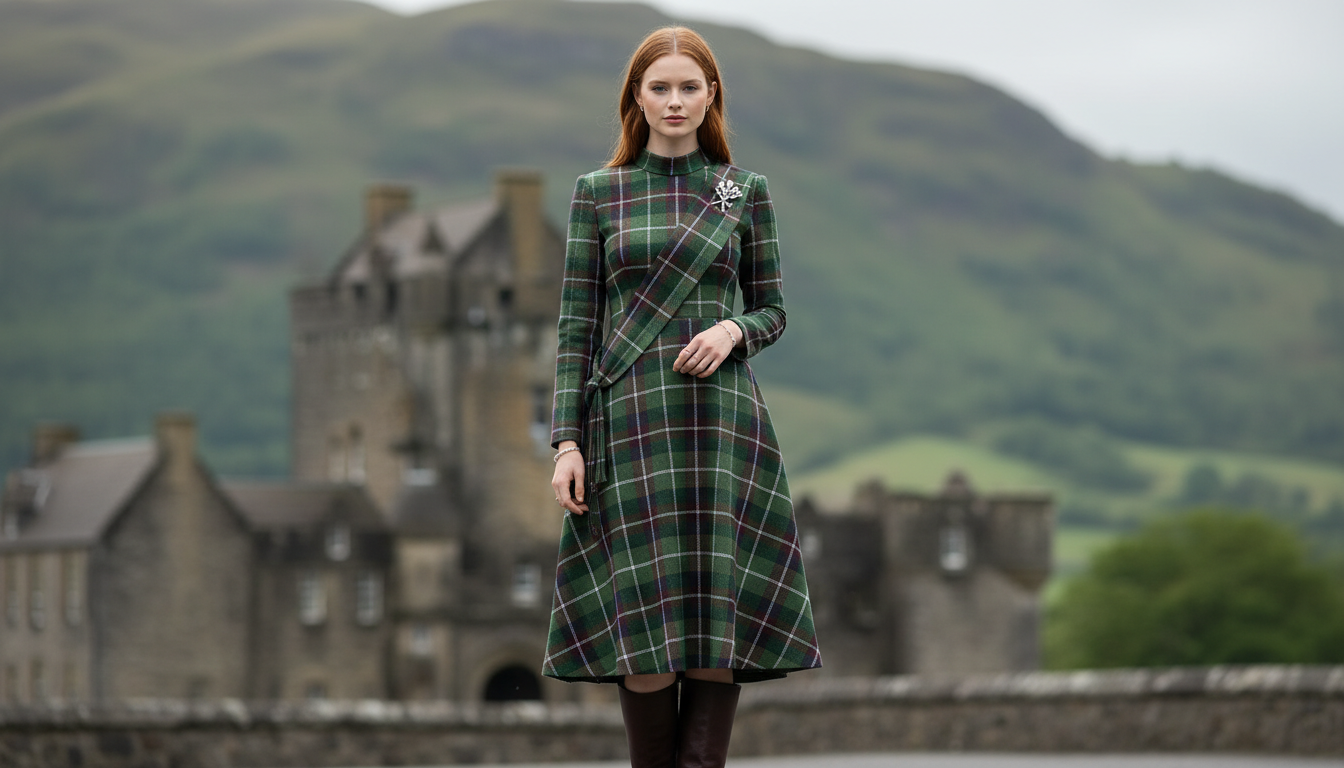
The Isle of Skye, known in Gaelic as ‘Eilean a’ Cheò’ or ‘The Misty Isle’, is a place of breathtaking beauty, where ancient landscapes meet the restless sea. It is a land of dramatic cliffs, verdant glens, and heather-clad moorlands, a muse that has inspired poets, artists, and, indeed, tartan designers for generations. Among the many contributions to Scottish heritage, the isle of skye tartan stands as a timeless emblem, its colours mirroring the very soul of this magical island.
Unlike many ancient clan tartans with roots stretching back centuries, the Isle of Skye tartan is a relatively modern creation, yet its embrace by Scots and enthusiasts worldwide has been swift and profound. Designed in 1992 by Angus MacLeod from the neighbouring Isle of Lewis, it was commissioned by Mrs. Rosemary Nicolson Samios, an Australian with deep Skye ancestry. Her vision was to capture the essence of Skye’s rugged beauty in a tartan, and MacLeod masterfully achieved this.
The palette of the Isle of Skye tartan is a direct translation of the island’s natural splendour. It features lush greens, representing the rolling hills and verdant pastures that define Skye’s terrain. Earthy browns reflect the rugged moorlands and the ancient peat bogs, speaking of the land’s raw, untamed character. Finally, heather purples echo the iconic bloom that carpets the hillsides, particularly in late summer, adding a touch of vibrant warmth to the design. This thoughtful blend of colours ensures that wearing the Isle of Skye tartan is akin to carrying a piece of the island with you, a constant reminder of its majestic beauty and mystical allure.
Despite its contemporary origins, the Isle of Skye tartan has been warmly embraced within Scottish traditional wear, proving that a tartan doesn’t need centuries of history to be meaningful and enduring. It has become a popular choice for kilts, suitable for both formal occasions and everyday wear, and is frequently used in Highland dress accessories like scarves, ties, and sashes. Its harmonious colour scheme and evocative connection to one of Scotland’s most beloved regions make it a truly special tartan, transcending specific clan affiliations to become a district tartan, celebrating the island itself.
At Scottish Kilt Shop, we take immense pride in offering the Isle of Skye tartan, crafted with the same dedication to authenticity and quality that inspired its creation. We ensure that every thread, every sett, faithfully represents the spirit of ‘Eilean a’ Cheò’, providing you with a garment that is not merely clothing, but a wearable piece of Scottish landscape and lore.
From Misty Shores to Martial Deeds: The Legacy of Clan Tartans
While district tartans like the Isle of Skye draw inspiration from the land, clan tartans tell tales of ancestry, loyalty, and often, formidable histories. They are a visual shorthand for a shared past, connecting individuals to a collective identity that spans generations. Each thread woven into a clan tartan carries the weight of battles fought, alliances forged, and the enduring spirit of a family name. This profound connection to heritage is central to what we do at Scottish Kilt Shop, ensuring that when you choose a clan tartan, you are choosing a genuine link to your ancestral story.
The Black and Grey: Honouring the Noble Douglas Clan
Stepping back into the annals of Scottish history, few names resonate with as much power and influence as Douglas. The Clan Douglas is one of Scotland’s great noble families, whose legacy of military prowess, political influence, and unwavering loyalty – and at times, fierce independence – spans centuries. The very name “Douglas” is believed to derive from the Gaelic “Dubh glas,” meaning “dark water” or “black stream,” referencing the area in Lanarkshire where the family first settled. This etymology is directly reflected in the characteristic colours of the douglas clan tartan itself.
The earliest recorded Douglas, William of Douglas, appeared as a witness to charters between 1175 and 1211 in Lanarkshire. However, it was during the Wars of Scottish Independence in the 13th and 14th centuries that the Douglases truly rose to prominence. Sir James “The Good Sir James” Douglas, a legendary companion of Robert the Bruce, became one of Scotland’s greatest patriots, renowned for his courage and leadership against the English. His exploits earned him the moniker “Black Douglas” from the English, a testament to his formidable reputation.
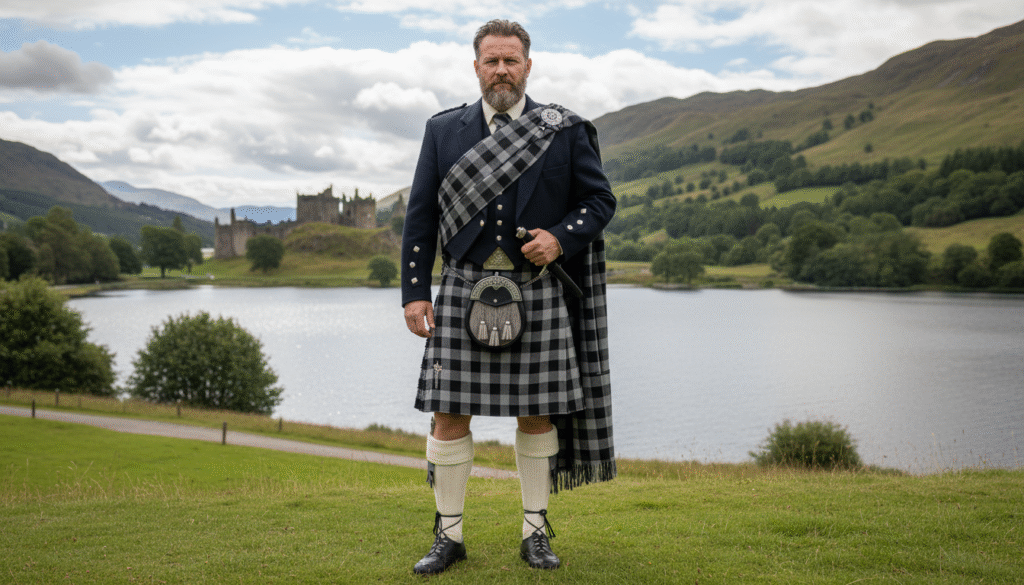
The Douglas clan tartan, an esteemed member of Scotland’s rich textile heritage, boasts a timeless beauty that evokes this proud history. True to their name’s Gaelic origins, the primary colours in the Douglas tartan are black and grey. This simple yet striking two-colour pattern, while not uncommon in tartans, is distinctive in its lack of bolder colours such as vibrant reds or forest greens, making it immediately recognisable. The absence of more vibrant hues lends the Douglas tartan an air of understated dignity and strength, perfectly befitting a clan known for its enduring power and resilience through tumultuous times.
The history of the Douglas family is intertwined with that of Scotland itself, marked by periods of immense power, land ownership, and even conflict with the Crown, notably the infamous struggles between the Black Douglases and King James II. Despite these dramatic twists and turns, the essence of the original Douglas family tartan has remained largely unchanged, a steadfast symbol of an indomitable lineage.
The Art of Craftsmanship: Scottish Kilt Shop’s Unwavering Commitment
The true value of a tartan garment extends far beyond its pattern or historical association; it lies in the authenticity of its creation. At Scottish Kilt Shop, this is not merely a business principle, but a heartfelt philosophy. Our unique selling proposition is rooted in an unwavering commitment to authentic craftsmanship, ensuring that every kilt, every sash, and every accessory is not just made, but *crafted* in Scotland.
We understand that a kilt is often a once-in-a-lifetime investment, a treasured heirloom destined to be passed down through generations. This understanding drives our meticulous approach to every stage of production. Each of our kilts is hand-tailored by skilled artisans who possess an intimate knowledge of traditional kiltmaking techniques, honed over years, if not decades. This isn’t ‘fast fashion’; it’s ‘slow fashion’ – a deliberate, precise process that respects the heritage of the craft.
Our dedication to quality begins with the very foundation of our products: the wool. We are staunch advocates for ethical wool sourcing, primarily using pure new wool from Scottish mills. While some raw wool may originate from Australia or New Zealand due to its exceptional properties, it is always transformed and finished locally in Scotland. This commitment ensures that our materials are not only of the highest quality, offering exceptional drape, warmth, and durability, but also contribute to the sustainability of Scottish textile industries. We believe in supporting local suppliers and reducing environmental impact, making choices that respect our planet and our communities.
The selection of a specific wool weight is also crucial for the lifespan and aesthetic of a kilt. We offer various weights, with our 16oz heavy-weight wool being particularly prized for its ability to hold sharp pleats and its enduring resilience, ensuring your kilt will stand the test of time and many a ceilidh. The choice of natural fibres means our kilts are not only breathable and comfortable but also inherently sustainable and biodegradable.
Our artisans meticulously hand-stitch every pleat, ensuring the perfect ‘swing’ and fit that is the hallmark of a truly bespoke kilt. This is a skill passed down through generations, an art form that cannot be replicated by machinery alone. When you choose a kilt from Scottish Kilt Shop, you are investing in a piece of living history, a garment crafted with personal care, attention to detail, and a deep respect for Scottish tradition. We offer a bespoke service, ensuring each kilt is made to your exact measurements for unparalleled comfort and a flawless appearance.
The Enduring Legacy of Tartan
The power of tartan lies in its ability to connect. It links us to our past, to the rolling hills and misty glens of Scotland, to the stories of our ancestors, and to a global community that cherishes Scottish culture. Whether it’s the evocative landscape reflected in the Isle of Skye tartan or the noble history etched into the Douglas clan tartan, each pattern is a vibrant tapestry of identity.
In a world increasingly dominated by mass production, the commitment of Scottish Kilt Shop to ethical, hand-tailored craftsmanship stands as a beacon of authenticity. We are not just selling garments; we are preserving an art form, championing sustainable practices, and helping individuals around the world celebrate their connection to Scotland with pride and genuine heritage.
We invite you to explore our extensive range, discover the tartan that speaks to your soul, and experience the unparalleled quality and authenticity of a hand-tailored garment from Scottish Kilt Shop. Embrace your heritage, celebrate Scottish culture, and invest in a piece of history that will last a lifetime.