





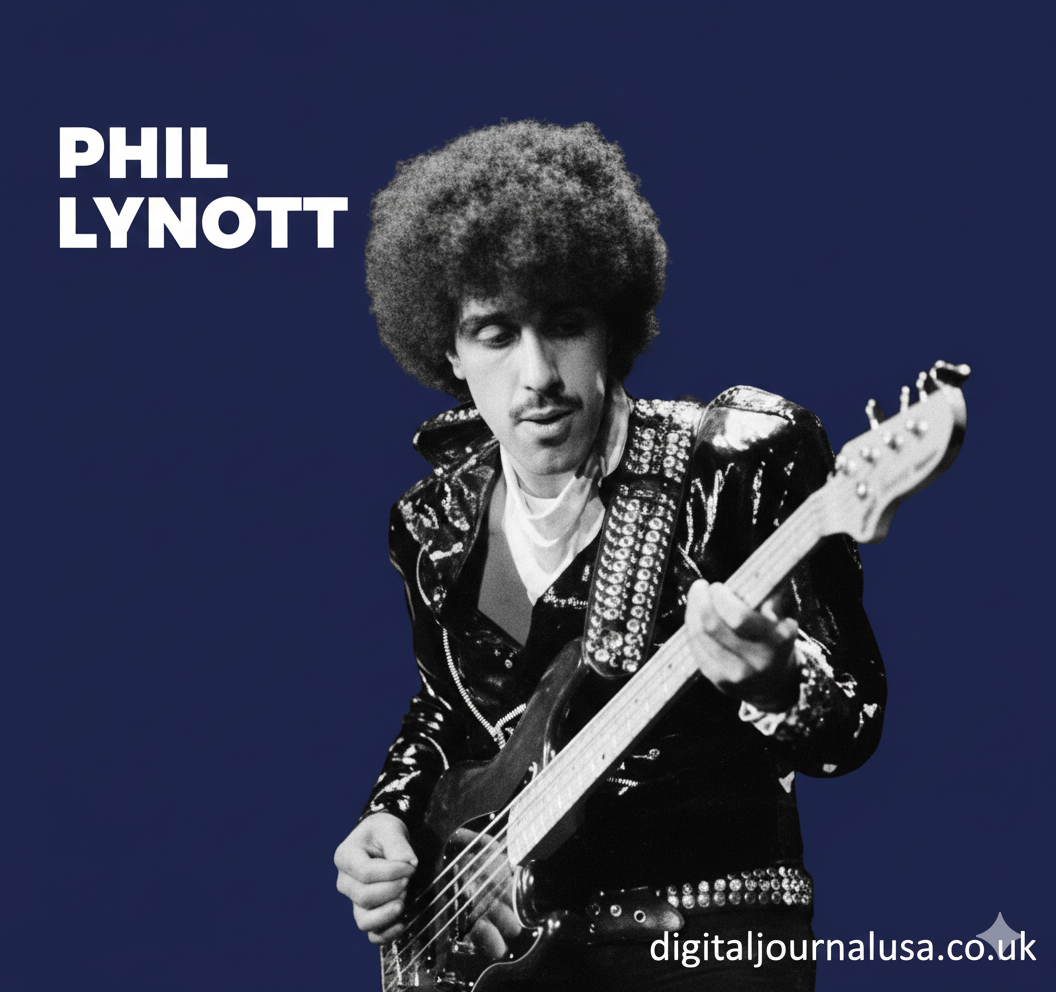
Phil Lynott, born Philip Parris Lynott on August 20, 1949, in West Bromwich, England, is remembered as one of the most influential musicians in the history of rock music. A gifted singer, songwriter, bassist, and the creative force behind the iconic rock band Thin Lizzy, Lynott’s legacy continues to inspire new generations of fans and musicians. His life, though marked by brilliance and creativity, was also one of struggle and tragedy. Lynott’s story is a blend of musical genius, personal turmoil, and an undeniable connection to both Ireland and the world of rock music.
Phil Lynott Early Life and Background
Phil Lynott’s early years were shaped by his mixed heritage. His father, Cecil Parris, was from Guyana, while his mother, Philomena Lynott, hailed from Ireland. When Lynott was just a child, his father abandoned the family, leaving Philomena to raise her son alone in Dublin, Ireland. This move to Ireland when Lynott was only three years old became a defining moment in his life. His Irish roots would later play a significant role in his identity, both personally and musically.
Lynott attended Crusoe College and later Crumlin National School in Dublin. During his teenage years, he developed an interest in music, inspired by the growing rock scene in the late 1960s. His first musical ventures involved playing guitar, but it wasn’t until he took up the bass guitar that he began to find his true voice. His early musical influences included artists like The Beatles, Jimi Hendrix, and The Rolling Stones, and his blend of rock and Irish folk music would soon shape the sound of Thin Lizzy.
Formation of Thin Lizzy and Musical Success
In 1969, Lynott formed the band that would become legendary: Thin Lizzy. Along with guitarist Eric Bell, Lynott brought together a group of musicians that would go on to define rock music in the 1970s. The band was originally known for its hard rock sound, but it was Lynott’s songwriting that set them apart. His lyrics, often personal and poetic, resonated deeply with listeners. The band’s lineup would change over the years, with notable guitarists like Scott Gorham, Brian Robertson, and Gary Moore joining at different points.
Thin Lizzy’s breakthrough came with the release of the album “Jailbreak” in 1976. The title track, “Jailbreak”, became one of the band’s most famous songs, and “The Boys Are Back in Town”, another hit from the same album, would go on to be an anthem for generations of rock fans. Lynott’s songwriting often explored themes of love, rebellion, and personal struggle, but it was his portrayal of life in Ireland—capturing the feeling of alienation, hope, and longing—that endeared him to audiences around the world.
Throughout the 1970s and early 1980s, Thin Lizzy released several albums, including “Black Rose” (1979) and “Renegade” (1981), both of which solidified their status as one of the most dynamic and innovative rock bands of the era. Lynott’s distinctive voice, bass-playing skills, and commanding stage presence were central to Thin Lizzy’s appeal. Beyond his work with the band, Lynott also enjoyed a successful solo career, releasing “Solo in Soho” (1980), which featured his hit “Yellow Pearl”. This song became one of his most recognizable solo works and even served as the theme tune for the BBC television show “Top of the Pops” for many years.
Phil Lynott Personal Life: Marriage, Family, and Struggles
Despite his success on stage, Lynott’s personal life was fraught with difficulty. In 1980, Lynott married Caroline Crowther, the daughter of British television personality Leslie Crowther. Together, they had two daughters: Sarah (born 1978) and Cathleen (born 1980). However, their marriage suffered due to Lynott’s increasing struggles with substance abuse, which deeply affected his relationships. While Caroline did her best to support her husband, the toll of his addiction became too much, and their marriage eventually ended in the mid-1980s.
Phil Lynott’s battles with alcohol and drugs were well-known, and they became more severe as the years went on. His addiction led to a decline in his health, and by the mid-1980s, Thin Lizzy had disbanded, and Lynott’s career was in turmoil. Despite these personal struggles, Lynott remained a beloved figure, admired for his vulnerability, honesty, and ability to transform his pain into art.
In his final years, Lynott lived a reclusive existence. His last performance with Thin Lizzy was in 1983, and in the following year, he recorded his last solo album, “The Philip Lynott Album”. During this time, he was working on new music, but his health was rapidly deteriorating. It was during this period that Lynott’s addiction led to several close calls, culminating in a near-fatal collapse on Christmas Day in 1985.
Phil Lynott Death: Tragic End to a Brilliant Life
Phil Lynott passed away on January 4, 1986, at the age of 36. He had been suffering from heart failure, pneumonia, and septicaemia caused by his long-term substance abuse. His death shocked the music world, and the outpouring of grief from fans and fellow musicians was immense. Thin Lizzy’s former guitarist, Gary Moore, was among those who mourned Lynott’s passing, remembering him as not only a talented musician but as a close friend.
Lynott was buried in St. Fintan’s Cemetery in Dublin, and his death marked the end of an era for Irish rock music. However, his legacy has never faded. His influence is still felt today, not just in rock music, but in the broader culture of Ireland, where his work is seen as a symbol of both artistic greatness and personal resilience.
Phil Lynott Statue: A Symbol of Immortality
In 2005, a bronze statue of Phil Lynott was unveiled in Dublin, not far from Grafton Street, in recognition of his contribution to both music and Irish culture. The statue, which stands on Harry Street, has become an iconic landmark in Dublin. Fans from all over the world visit the site, often leaving tributes, flowers, and messages to honor the rock legend. The statue’s location is particularly significant as it sits in the heart of Dublin, where Lynott spent much of his life and drew much of his inspiration.
The unveiling of the statue was a momentous occasion for the fans who loved him and the musicians who were influenced by him. It was a fitting tribute to a man whose life and music continue to resonate today.
Phil Lynott Legacy: Influence on Music and Culture
Phil Lynott’s impact on rock music is immeasurable. His innovative blend of hard rock, blues, and Irish folk created a sound that was distinctly his own and remains influential to this day. Artists from across the spectrum, from rock legends like Guns N’ Roses to newer Irish rock bands, cite Lynott and Thin Lizzy as a key influence.
Lynott’s songs, which often explored themes of love, loneliness, rebellion, and Irish identity, continue to inspire musicians and listeners alike. His ability to express deep personal struggles through his music made him a voice for those who felt marginalized, and his work transcends time and genre.
Moreover, Lynott’s death did not mark the end of his music. Thin Lizzy’s legacy continues through various tribute concerts, albums, and live performances. Even decades after his passing, his music remains a defining part of the rock canon. The annual “Vibe for Philo” festival in Dublin celebrates his life and contributions, ensuring that his memory lives on for future generations.
Conclusion
Phil Lynott’s life was one of both triumph and tragedy. His influence as the frontman of Thin Lizzy helped shape the sound of rock music in the 1970s and beyond. While his life was cut tragically short due to addiction, his contributions to music and his impact on popular culture remain indelible. Through his lyrics, performances, and legacy, Lynott’s spirit continues to live on. His Dublin statue and the ongoing tributes from fans worldwide are a testament to his enduring influence.
Phil Lynott may have died young, but his music and his story will never be forgotten. His ability to blend his Irish roots with universal themes of longing and rebellion has ensured that his music transcends time, continuing to inspire artists and fans all over the world.