





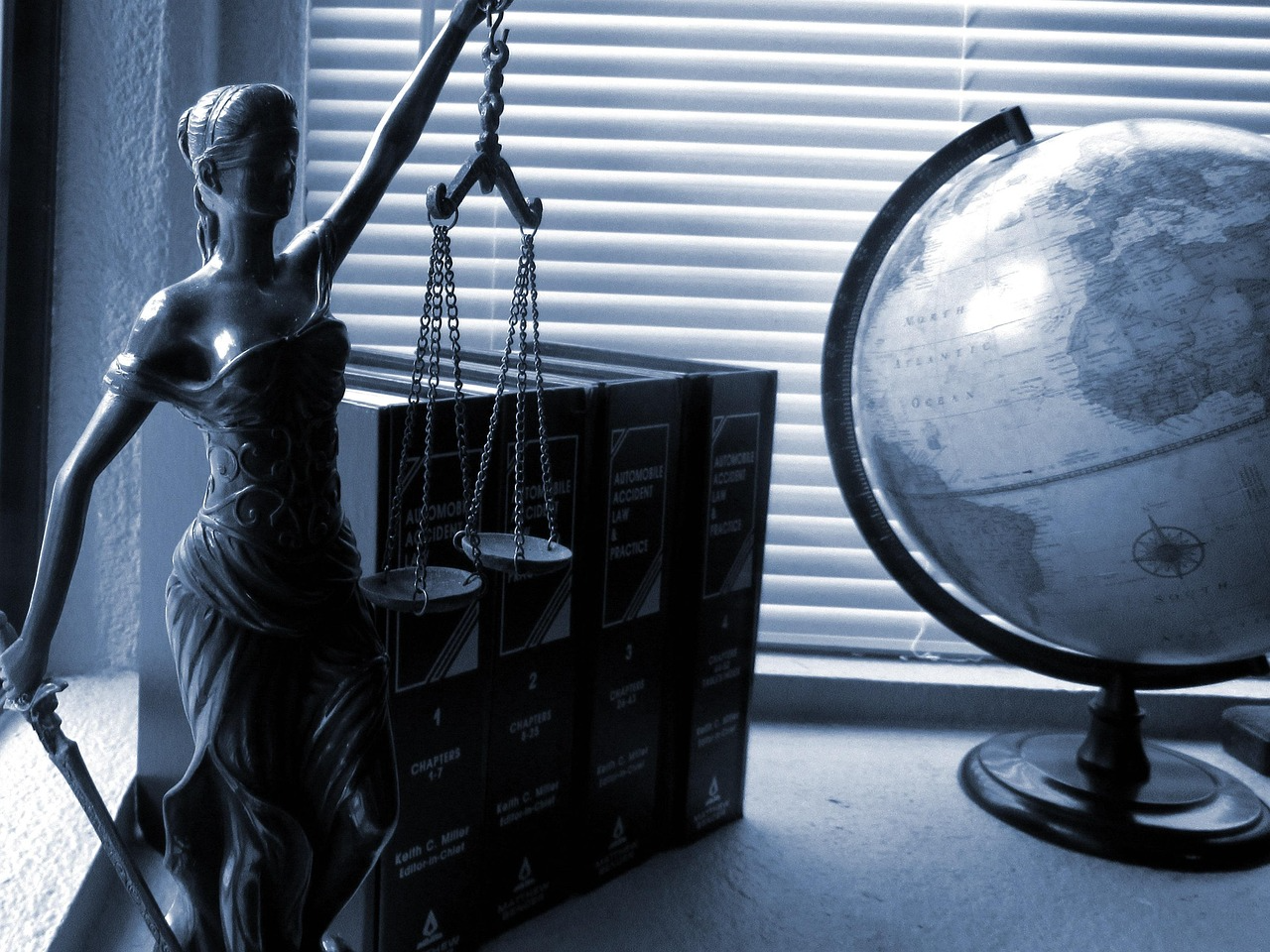
For a profession built on precedent, law has a complicated relationship with change. The courtroom still runs on rituals older than the country. Judges wear robes. Lawyers “approach the bench.” Documents get filed, served, and stamped in ways a nineteenth-century attorney would mostly recognize. And yet, beneath that stately surface, the actual work of practicing law is being transformed faster than at any point in its history, by technology that would have seemed like science fiction a generation ago.
The interesting part isn’t the flashy stuff. It’s not robot judges or AI replacing trial lawyers, both of which are mostly hype. The real revolution is happening in the unglamorous machinery of how cases get built, how evidence gets analyzed, and how firms understand the systems they operate in. And it’s quietly separating the firms that have adapted from the ones still working the way they did in 2010.
The death of the document review marathon
Start with the part of legal work that consumed the most hours and produced the most misery: document review.
For decades, a serious case meant boxes. Then it meant gigabytes. A complex matter could generate hundreds of thousands of pages of discovery, emails, contracts, financial records, text messages, and somewhere in that haystack might be the three documents that won or lost the case. The traditional solution was brute force: armies of junior associates and contract attorneys reading page after page, highlighting in shifts, burning out and billing hours.
Modern e-discovery tools changed the math entirely. Technology-assisted review, often called predictive coding, lets software learn from a lawyer’s decisions on a sample set and then surface the likely-relevant documents from the full mountain. What once took a team weeks now takes a fraction of the time, and studies have repeatedly found that well-tuned machine review can match or beat human reviewers on consistency. The lawyer still makes the judgment calls. The machine just stops them from drowning before they get there.
The downstream effect is subtle but profound. When the cost of finding the needle drops, more needles get found. Cases that would once have settled simply because nobody could afford to review the evidence now get litigated on their merits. The technology didn’t replace the lawyer’s judgment; it made that judgment economically possible to apply.
Evidence got smarter, and so did the challenges to it
The same forces reshaping document review are transforming how physical and forensic evidence works, and this is where criminal defense in particular has been forced to evolve.
Consider the modern traffic stop. A generation ago, a drunk driving case came down largely to an officer’s word, his notes, his recollection of how you performed on the roadside tests. Today that same stop generates dashcam video, bodycam footage, GPS data, in-car computer logs, and increasingly precise breath and blood analysis. On its face, that looks like an open-and-shut advantage for the prosecution. More data, more proof.
But more data cuts both ways, and this is the part that separates firms who understand the technology from those who fear it. Bodycam footage has an inconvenient habit of contradicting the reason an officer wrote down for a stop. Breath-testing instruments require maintenance logs, calibration records, and trained operators, each of which is a digital paper trail that can be examined and challenged. Blood results depend on lab equipment, chain-of-custody records, and technicians whose own documented problems become discoverable. A lawyer who knows how to read maintenance records and interrogate the data behind a number is operating in a completely different league than one who simply accepts the lab report at face value. This is exactly why anyone facing an intoxication charge benefits from a Fort Worth DWI lawyer who treats the technology as terrain to be challenged rather than evidence to be conceded. The high number on a screen is a starting point for scrutiny, not the end of the conversation.
The broader lesson runs through every kind of criminal case. As evidence becomes more technological, defense becomes more technical. Cell-site location data, surveillance footage, digital forensics from phones and computers, all of it carries an aura of objective certainty that can be misleading. Metadata can be misread. Timestamps can be wrong. Location data is fuzzier than juries assume. The firms that have invested in understanding this evidence, rather than being intimidated by it, are the ones holding the government to its actual burden of proof. A modern criminal defense attorney in Fort Worth increasingly needs to be as comfortable questioning a forensic data extraction as cross-examining a witness, because in many cases the data is the witness.
Data as a strategic weapon, not just evidence
Here’s where the truly forward-looking firms have gone beyond using technology to handle evidence and started using it to understand the system itself.
Most law firms claim to “know the local courts.” It’s the single most common promise in legal marketing, and it’s almost always asserted rather than proven. But knowledge that can’t be measured is just confidence, and confidence is cheap. What technology now makes possible is the ability to actually quantify local practice, to turn the accumulated folklore of “this judge tends to do that” into something rigorous.
A concrete example: rather than relying on gut feeling about what bond a given charge will draw, a firm can pull and analyze tens of thousands of real bond records from a single county over a single year, and discover that the average bond and the typical bond are wildly different numbers, that the most common bond for the most common charge is far lower than television would suggest, and that a handful of extraordinary cases distort the whole picture. That kind of analysis transforms the two-in-the-morning phone call from a jail. Instead of telling a terrified family “it depends,” a data-equipped lawyer can tell them realistically what to expect, which magistrates tend toward lower bonds, and how amounts shift across the year.
This is the part of the revolution that’s easiest to miss because it doesn’t look like technology at all. It looks like a lawyer who simply knows things. But behind that knowledge is data work, analysis, and a willingness to treat the legal system as something that can be studied empirically rather than just absorbed by osmosis over the years. The firms doing this are building a genuine, measurable edge.
Where the human stays irreplaceable
It would be easy to read all this and conclude that law is becoming an engineering discipline. It isn’t, and the places where technology hits its limits are revealing.
Family law is the clearest example. You can automate document review. You can quantify bond patterns. You can challenge a breath test with calibration records. But you cannot automate the judgment required to help a parent through the worst year of their life, or the strategic instinct to recognize that a temporary orders hearing, which feels preliminary, will quietly determine the permanent custody arrangement because judges hesitate to disrupt children’s routines once they’re set.
Technology helps here too, of course. Child support calculators apply the statutory formulas instantly. Forensic accounting software can trace hidden assets through commingled accounts, surfacing the transfers of a spouse buried in accounts under his own name. Document automation drafts decrees that once took hours. But the core of the work, reading a judge’s tendencies, knowing when to push and when to settle, understanding what a particular family actually needs versus what they say they want, remains stubbornly, irreducibly human. The most valuable thing a family law team with deep roots in Tarrant County courts offers isn’t software. It’s the accumulated human judgment of attorneys, including specialists and former judges, who have watched thousands of these cases unfold and know where the real leverage points are. Technology informs that judgment. It doesn’t replace it.
This is the pattern across the whole profession. The tools handle the volume, the calculation, the pattern-matching at scale. The lawyer handles the judgment, the strategy, the human reading of a situation that no dataset fully captures. The firms that thrive aren’t the ones that resist the tools or the ones that surrender to them. They’re the ones that understand exactly where the line between the two falls.
The AI question everyone is asking
No honest discussion of legal technology in this era can skip the obvious topic. Generative AI has arrived in the profession, and it’s already changing daily practice in ways both genuinely useful and genuinely hazardous.
On the useful side, AI drafts first versions of routine documents, summarizes long records, surfaces relevant case law, and turns a blank page into a starting point in seconds. Used well, it compresses the grunt work that used to eat associate hours and lets lawyers spend more time on actual lawyering.
On the hazardous side, the cautionary tales are already legendary. Lawyers have been sanctioned for filing briefs full of AI-invented “hallucinated” cases that didn’t exist, complete with fabricated citations and quotes. The lesson the profession is rapidly internalizing is that AI is a powerful assistant and a terrible authority. It can accelerate the work, but a human lawyer must verify every output, because the consequences of an unverified error land on a real person whose freedom, money, or family is at stake. The firms handling this responsibly treat AI the way a good surgeon treats a new instrument: a tool that extends capability in skilled hands and causes damage in careless ones.
What’s emerging is a clear divide. Some firms use these tools thoughtfully, with verification and human oversight built into every step. Others either ignore them entirely, falling behind on efficiency, or use them recklessly, courting disaster. The responsible middle path, embracing the speed while owning the judgment, is becoming the mark of a firm that’s serious about both quality and ethics.
What it means for the people who need a lawyer
Strip away the jargon and the technology question comes down to something simple for the person actually facing a legal problem: you want a firm that has adapted without losing what made good lawyering good in the first place.
That means a firm that uses e-discovery to find the document that matters, that knows how to challenge the data behind a breath test or a cell-tower ping, that studies its own local courts empirically instead of just claiming to know them, and that deploys AI to work faster while never trusting it to work alone. But it also means a firm that understands the limits, that knows the temporary orders hearing matters more than the software, that a frightened family at 2 a.m. needs a human voice, and that judgment, the thing no tool can replicate, is still the whole game.
The quiet revolution in legal technology isn’t about machines replacing lawyers. It’s about separating the lawyers who use the machines well from the ones who don’t. For someone choosing who to trust with the worst problem of their life, that distinction is everything. The robes and the rituals will stay the same. What’s changed is what happens behind them, and the firms worth hiring are the ones who’ve noticed.